A resolution designating April 2026 as "Second Chance Month".
Sponsor
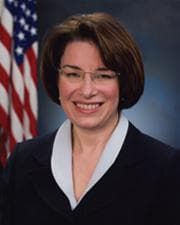
Full profile: /officials/K000367
Source: Congress.gov · FEC
Cosponsors (5)
Members who have signed on to support this bill since introduction. Source: Congress.gov.
Latest Action
The most recent step in the bill's legislative path. Committee Activity below shows referrals and reports; the full action-by-action history including floor proceedings lives at Congress.gov →
Resolution agreed to in Senate without amendment and with a preamble by Unanimous Consent. (consideration: CR S2075)
2026-04-28
Source: Congress.gov
Committee Activity
Currently in
- Senate Committee on the JudiciaryDischarged From · 2026-04-28
Previously
- Judiciary CommitteeDischarged From · 2026-04-28
- Judiciary CommitteeReferred To · 2026-04-14
- Senate Committee on the JudiciaryReferred To · 2026-04-14
Plain-English Summary
This resolution would officially recognize April 2026 as "Second Chance Month" to raise awareness about criminal justice reform and support for people who have been incarcerated or have criminal records. The designation aims to highlight programs and initiatives that help formerly incarcerated individuals reintegrate into society through job training, education, and other rehabilitation efforts. It's a symbolic measure meant to encourage public recognition of redemption and rehabilitation in the criminal justice system.
AI-assisted summary generated from the official bill metadata (title, subjects, actions) sourced from Congress.gov. Cached and reviewed. Always verify against the official text linked below.
Subjects
Full Bill Text
Verbatim text published on Congress.gov via GovInfo. Use Cmd+F / Ctrl+F to search within this excerpt.
[Congressional Bills 119th Congress] [From the U.S. Government Publishing Office] [S. Res. 668 Introduced in Senate (IS)] <DOC> 119th CONGRESS 2d Session S. RES. 668 Designating April 2026 as ``Second Chance Month''. _______________________________________________________________________ IN THE SENATE OF THE UNITED STATES April 14, 2026 Ms. Klobuchar (for herself, Mr. Cramer, Mr. Markey, Mr. Lankford, Mr. Padilla, and Mrs. Capito) submitted the following resolution; which was referred to the Committee on the Judiciary _______________________________________________________________________ RESOLUTION Designating April 2026 as ``Second Chance Month''. Whereas every individual is endowed with human dignity and value; Whereas redemption and second chances are values of the United States; Whereas millions of citizens of the United States have a criminal record; Whereas hundreds of thousands of individuals return to their communities from Federal and State prisons every year; Whereas individuals returning from Federal and State prisons have paid their debt for committing crimes but still face significant legal and societal barriers (referred to in this preamble as ``collateral consequences''); Whereas collateral consequences for an individual returning from a Federal or State prison are mandatory and take effect automatically, regardless of-- (1) whether there is a nexus between the crime and public safety; (2) the seriousness of the crime; (3) the time that has passed since the individual committed the crime; or (4) the efforts of the individual to make amends or earn back the trust of the public; Whereas, for individuals returning to their communities from Federal and State prisons, gaining meaningful employment is one of the most significant predictors of successful reentry and has been shown to reduce future criminal activity; Whereas many individuals who have been incarcerated struggle to find employment and access capital to start a small business because of collateral consequences, which are sometimes not directly related to the offenses the individuals committed or to any proven public safety benefit; Whereas many States have laws that prohibit an individual with a criminal record from working in certain industries or obtaining professional licenses; Whereas, in addition to employment, education has also been shown to be a significant predictor of successful reentry for individuals returning from Federal and State prisons; Whereas an individual with a criminal record often has a lower level of educational attainment than the general population and has significant difficulty acquiring admission to, and funding for, educational programs; Whereas an individual who has been convicted of certain crimes is often barred from receiving the financial aid necessary to acquire additional skills and knowledge through some formal educational programs; Whereas an individual with a criminal record-- (1) faces collateral consequences in securing a place to live; and (2) is often barred from seeking access to public housing; Whereas collateral consequences can prevent millions of individuals in the United States from contributing fully to their families and communities; Whereas collateral consequences can have an impact on public safety by contributing to recidivism; Whereas collateral consequences have particularly impacted underserved communities of color and community rates of employment, housing stability, and recidivism; Whereas the inability to find gainful employment and other collateral consequences of conviction inhibit the economic mobility of an individual with a criminal record, which can negatively impact the well- being of the children and families of the individual for generations; Whereas the bipartisan First Step Act of 2018 (Public Law 115-391; 132 Stat. 5194) was signed into law on December 21, 2018, to increase opportunities for individuals incarcerated in Federal prisons to participate in meaningful recidivism reduction programs and prepare for their second chances; Whereas the programs authorized by the Second Chance Act of 2007 (Public Law 110-199; 122 Stat. 657)-- (1) have…
Show the remaining 242 wordsHide the remaining 242 words
provided reentry services to more than 442,000 individuals in 49 States and the District of Columbia since the date of enactment of the Act; and (2) were reauthorized by the First Step Act of 2018 (Public Law 115- 391; 132 Stat. 5194); Whereas the anniversary of the death of Charles Colson, who used his second chance following his incarceration for a Watergate-related crime to found Prison Fellowship, the largest program in the United States that provides outreach to prisoners, former prisoners, and their families, falls on April 21; and Whereas the designation of April as ``Second Chance Month'' may contribute to-- (1) increased public awareness about-- G (A) the impact of collateral consequences; and G (B) the need for closure for individuals with a criminal record who have paid their debt; and (2) opportunities for individuals, employers, congregations, and communities to extend second chances to those individuals: Now, therefore, be it Resolved, That the Senate-- (1) designates April 2026 as ``Second Chance Month''; (2) honors the work of communities, governmental institutions, nonprofit organizations, congregations, employers, and individuals to remove unnecessary legal and societal barriers that prevent individuals with criminal records from becoming productive members of society; and (3) calls upon the people of the United States to observe Second Chance Month through actions and programs that-- (A) promote awareness of those unnecessary legal and social barriers; and (B) provide closure for individuals with a criminal record who have paid their debt. <all>
Related legislation
Bills by the same sponsor or covering overlapping subjects.
- S2339EARLY Act Reauthorization of 2025Passed Senate · 2026-10-05
- SRES908A resolution supporting the designation of the week of September 21 through September 25, 2026, as "National Hazing Awareness Week".Referred to Committee · 2026-09-24
- S3467Virginia Graeme Baker Pool and Spa Safety Reauthorization ActReferred to Committee · 2026-09-16
- SRES858A resolution honoring the life and legacy of the late Constance Benjamin Clery.Referred to Committee · 2026-09-16