HR10025Referred to Committee
Preventing Abuse of Digital Replicas Act
Introduced
In Committee
3
Passed One Chamber4
Passed Both5
Signed into Law119th
Congress
2026-08-03
Introduced
0
Cosponsors
HR
ⓘType
Sponsor
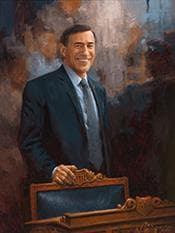
Darrell Issa
Republican · CA · Representative
Votes with party: 97.6% (666 recorded votes)
Full profile: /officials/I000056
Source: Congress.gov · FEC
Cosponsors (0)
Members who have signed on to support this bill since introduction. Source: Congress.gov.
No cosponsors on record. Bills can pass without cosponsors — this often means the sponsor introduced the bill alone, either because it's a messaging bill, a chairman's mark, or simply early in the legislative cycle.
Latest Action
The most recent step in the bill's legislative path. Committee Activity below shows referrals and reports; the full action-by-action history including floor proceedings lives at Congress.gov →
Committee Activity
Currently in
- House Committee on the JudiciaryReferred To · 2026-08-03
Plain-English Summary
The legislation would update trademark law to clarify how federal rules apply to digital copies of people's distinctive personal characteristics—like their voice, face, or likeness—when used online or in digital products. This would give individuals and companies clearer legal guidance on when they can or cannot use someone's digital replica without permission, potentially affecting tech companies, entertainment producers, and anyone whose image or voice might be recreated digitally.
AI-assisted summary generated from the official bill metadata (title, subjects, actions) sourced from Congress.gov. Cached and reviewed. Always verify against the official text linked below.
Subjects
Commerce
Full Bill Text
Verbatim text published on Congress.gov via GovInfo. Use Cmd+F / Ctrl+F to search within this excerpt.
[Congressional Bills 119th Congress] [From the U.S. Government Publishing Office] [H.R. 10025 Introduced in House (IH)] <DOC> 119th CONGRESS 2d Session H. R. 10025 To amend the Trademark Act of 1946 to clarify the applicability of Federal trademark law in the area of digital replicas of identifying characteristics of individuals, and for other purposes. _______________________________________________________________________ IN THE HOUSE OF REPRESENTATIVES August 3, 2026 Mr. Issa introduced the following bill; which was referred to the Committee on the Judiciary _______________________________________________________________________ A BILL To amend the Trademark Act of 1946 to clarify the applicability of Federal trademark law in the area of digital replicas of identifying characteristics of individuals, and for other purposes. Be it enacted by the Senate and House of Representatives of the United States of America in Congress assembled, SECTION 1. SHORT TITLE. This Act may be cited as the ``Preventing Abuse of Digital Replicas Act''. SEC. 2. FINDINGS; SENSE OF CONGRESS. (a) Findings.--Congress finds the following: (1) Recent advances in artificial intelligence (AI) technology, including generative AI technology, represent an important opportunity for continued technological leadership by the United States in a critical and emerging technology area. (2) Leadership in AI development will be vital for the United States economy and the competitiveness of American businesses abroad, as well as for the national security of the United States. (3) Excessive regulation of AI technology development and applications would hinder their advancement and place the United States at a disadvantage compared to strategic competitors, including the People's Republic of China. (4) AI technology and its myriad applications are already subject to numerous existing laws and regulations, including at the Federal level, which should be considered when determining whether further legislation or regulation is necessary. (5) AI technology is already starting to transform numerous industries, create new industries and markets, and contribute to countless new products and services that benefit American consumers and consumers abroad, including with respect to health care, communications, transportation and mobility, education, and entertainment. (6) While AI technology will provide many benefits to Americans, it also presents significant risks to individuals and society in general, one of which is the abuse of ``deepfakes'' and other digital replicas. (7) The internet is already plagued with countless advertisements and other media using unauthorized, AI-generated digital replicas of individuals to falsely imply those individuals' endorsement of various products, services, businesses, and other entities. (8) Abusive use of an unauthorized digital replica to fraudulently ascribe endorsement or other statements to a person without his or her knowledge or consent can cause tremendous distress and inflict serious harm on that person as well as his or her reputation, dignity, and livelihood. (9) False endorsements, advertisements, or other commercial speech or promotion using unauthorized AI-generated digital replicas can also cause substantial confusion and harm to consumers, including by fraudulently inducing them to purchase and use dangerous products that pose risks to their health and safety based on the consumers' mistaken belief that a trusted individual endorsed the products. (10) Section 43 of the Trademark Act of 1946 already provides a cause of action for the improper use in commerce of a replica of a person's name, image, likeness, signature or device, voice, logo, etc. (11) Some individuals have encountered difficulties in some jurisdictions in protecting their rights via section 43, such as due to their lack of general fame or their lack of the resources necessary to gather sufficient evidence of consumer confusion, as may be required under the case law of certain jurisdictions. (12) Due to the seriousness of the potential harms and the high risk of consumer confusion when the…
Show the remaining 827 wordsHide the remaining 827 words
prohibited activity involves the use of an identical or indistinguishable digital replica of an individual's face or voice or other identifying personal characteristics, the amendments to section 43 of the Trademark Act of 1946 in this Act are necessary to provide protection against such abuses throughout the country. (b) Sense of Congress.--It is the sense of Congress that the Trademark Act of 1946 should remain constrained to its historical scope, prevent the improper recapture of works in the public domain, and avoid conflicting with copyright laws that govern primarily creative expression, including when aided by AI technology such as in films depicting historical figures or music that samples preexisting audio. SEC. 3. APPLICABILITY OF FEDERAL TRADEMARK LAW IN THE AREA OF DIGITAL REPLICAS OF IDENTIFYING CHARACTERISTICS OF INDIVIDUALS. (a) In General.--Section 43(a) of the Trademark Act of 1946 (15 U.S.C. 1125) is amended by adding at the end the following: ``(4) In a civil action brought pursuant to paragraph (1)(A), the court shall apply a rebuttable presumption that the use is likely to cause confusion, or to cause mistakes, or to deceive as to the affiliation, connection, or association of such person with another person, or as to the origin, sponsorship, or approval of his or her goods, services, or commercial activities by another person, if-- ``(A) the claim asserted under paragraph (1)(A) is for a use of a digital replica by a person on or in connection with any goods or services, or any container for goods; and ``(B) the person bringing the civil action expressly invokes the rebuttable presumption in a pleading. ``(5) The rebuttable presumption in paragraph (4) shall not be available in a civil action brought pursuant to paragraph (1)(A) for the use of a digital replica on or in connection with any goods or services, or any container for goods-- ``(A) for any claim asserted under paragraph (1)(A) for indirect liability; ``(B) if the use is in an expressive work or in promotional material for that expressive work; or ``(C) if the use is otherwise protected by the First Amendment to the Constitution of the United States. ``(6) With the exception of relief sought under sections 32 and 43(c) of this Act, section 501 of title 17, and section 271 of title 35, a person may not seek relief under any other provision of Federal, State, local, or municipal law for any use of a digital replica for which the person files a civil action asserting liability under this section and expressly invokes the rebuttable presumption in paragraph (4) in a pleading. ``(7) This subsection shall be considered a law pertaining to intellectual property for the purposes of section 230(e) of the Communications Act of 1934 (47 U.S.C. 230). ``(8) In this subsection-- ``(A) the term `digital replica' means a computer- generated representation that is identical to, or substantially indistinguishable from, an identifying characteristic of a subject person, who at the time of the use of the representation is a living individual human being, where-- ``(i) the identifying characteristic is an image, voice, or likeness of the subject person, which is distinctive to the subject person such that the use of such characteristic is likely to be associated with the subject person and no other person by reasonable and ordinary participants in the relevant industry or market; and ``(ii) based on the representation itself, it is apparent to reasonable and ordinary participants in the relevant industry or market that the purpose of the representation, in whole or in part, was to duplicate the identifying characteristic of the subject person; and ``(B) the term `relevant industry or market' means the industry or market for the goods or services that are the subject of the civil action brought pursuant to paragraph (1)(A).''. (b) Rule of Construction.--Nothing in this Act, or the amendments made by this Act, may be construed so as to limit the scope of section 43 of the Trademark Act of 1946 (15 U.S.C. 1125) as such section existed prior to the enactment of this Act. (c) Application.--This Act, and the amendments made by this Act, shall apply only to a civil action-- (1) brought pursuant to section 43(a) of the Trademark Act of 1946 after the date of the enactment of this Act; and (2) for the use of a digital replica on or in connection with any goods or services, or any container for goods, after the date of the enactment of this Act. (d) Severability.--If any provision of this Act, or the application thereof to any person or circumstance, is held invalid, the remainder of the Act, and the application of such provision to other persons or circumstances shall not be affected thereby. (e) Definition.--In this section, the term ``Trademark Act of 1946'' means the Act entitled ``An Act to provide for the registration and protection of trademarks used in commerce, to carry out the provisions of certain international conventions, and for other purposes'', approved July 5, 1946. <all>
Related legislation
Bills by the same sponsor or covering overlapping subjects.
- HR8483Barona Group of Capitan Grande Band of Mission Indians Land Transfer Act of 2026Referred to Committee · 2026-09-15
- HR10364American Copyright Protection Act of 2026Referred to Committee · 2026-09-14
- HR8546Pechanga Band of Indians Water Rights Settlement Technical Amendments ActReferred to Committee · 2026-09-10
- HR10317Inventory Act of 2026Referred to Committee · 2026-09-08