QUIET Act
Sponsor
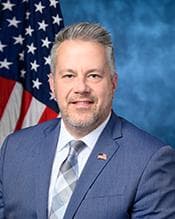
Full profile: /officials/S001225
Source: Congress.gov · FEC
Cosponsors (28)
Members who have signed on to support this bill since introduction. Source: Congress.gov.
- Juan Ciscomani (R-AZ-6)Original· 2025-02-05
- Brian K. Fitzpatrick (R-PA-1)· 2025-02-06
- Eric Swalwell (D-CA-14)· 2025-02-06
- Darren Soto (D-FL-9)· 2025-02-12
- Eleanor Holmes Norton (D-DC)· 2025-02-21
- Eugene Simon Vindman (D-VA-7)· 2025-02-24
- Gilbert Ray Cisneros, Jr. (D-CA-31)· 2025-03-25
- Zachary Nunn (R-IA-3)· 2025-04-08
- Sarah McBride (D-DE)· 2025-04-24
- Thomas R. Suozzi (D-NY-3)· 2025-04-24
- Melanie A. Stansbury (D-NM-1)· 2025-04-28
- Kristen McDonald Rivet (D-MI-8)· 2025-05-07
- Ted Lieu (D-CA-36)· 2025-05-20
- Jefferson Van Drew (D-NJ-2)· 2025-06-04
- Pablo José Hernández (D-PR)· 2025-07-02
- Janelle S. Bynum (D-OR-5)· 2025-07-10
- Angie Craig (D-MN-2)· 2025-07-14
- Kelly Morrison (D-MN-3)· 2025-07-14
- Josh Gottheimer (D-NJ-5)· 2025-08-08
- Christopher R. Deluzio (D-PA-17)· 2025-08-29
- Veronica Escobar (D-TX-16)· 2025-11-07
- Adelita S. Grijalva (D-AZ-7)· 2025-11-20
- Yassamin Ansari (D-AZ-3)· 2025-11-25
- Suhas Subramanyam (D-VA-10)· 2025-12-16
- Robert P. Bresnahan, Jr. (R-PA-8)· 2025-12-18
- George Latimer (D-NY-16)· 2026-05-13
Latest Action
The most recent step in the bill's legislative path. Committee Activity below shows referrals and reports; the full action-by-action history including floor proceedings lives at Congress.gov →
Committee Activity
Currently in
- House Committee on Energy and CommerceReferred To · 2025-02-05
Plain-English Summary
Quashing Unwanted and Interruptive Electronic Telecommunications Act or the QUIET Act This bill establishes a disclosure requirement for robocalls that use artificial intelligence (AI) to emulate a human being and increases forfeiture and fine amounts for certain violations of the Telephone Consumer Protection Act (TCPA). (The TCPA prohibits certain telemarketing calls made without the recipient’s consent and using specified automated technologies.) Specifically, any robocall that uses AI to emulate a human being must include a disclosure at the beginning of the message indicating that AI is being used. Under the bill, robocalls are defined as calls made or text messages sent (1) using automatic dialing technology, or (2) using an artificially generated message or an artificial or prerecorded voice. Calls or texts that are made or sent using equipment that requires substantial human intervention are excluded. Further, the bill doubles the maximum forfeiture penalty and criminal fine that may be imposed for certain violations of the TCPA involving the use of AI to impersonate an individual or entity with the intent to defraud, cause harm, or wrongfully obtain anything of value. This provision applies to violations that occur after the bill’s enactment.
Plain-English rewrite of the Congressional Research Service summary published on Congress.gov. Cached and reviewed.
Subjects
Related legislation
Bills by the same sponsor or covering overlapping subjects.
- HR10605SUNRAY for Energy ActReferred to Committee · 2026-09-24
- HR2466To designate the facility of the United States Postal Service located at 5225 Harrison Avenue in Rockford, Illinois, as the "Jay P. Larson Post Office Building".Passed House · 2026-09-14
- HR8908STOP GAMES Act of 2026Referred to Committee · 2026-05-19
- HR8636Strengthening Educator Workforce Data ActReferred to Committee · 2026-04-30