HR10653Referred to Committee
Police Training and Independent Review Act of 2026
Introduced
In Committee
3
Passed One Chamber4
Passed Both5
Signed into Law119th
Congress
2026-10-01
Introduced
0
Cosponsors
HR
ⓘType
Sponsor
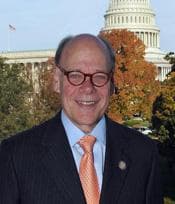
Steve Cohen
Democrat · TN · Representative
Votes with party: 97.8% (636 recorded votes)
Full profile: /officials/C001068
Source: Congress.gov · FEC
Cosponsors (0)
Members who have signed on to support this bill since introduction. Source: Congress.gov.
No cosponsors on record. Bills can pass without cosponsors — this often means the sponsor introduced the bill alone, either because it's a messaging bill, a chairman's mark, or simply early in the legislative cycle.
Latest Action
The most recent step in the bill's legislative path. Committee Activity below shows referrals and reports; the full action-by-action history including floor proceedings lives at Congress.gov →
Committee Activity
Currently in
- House Committee on the JudiciaryReferred To · 2026-10-01
Plain-English Summary
Plain-English summary pending. Introduced on 2026-10-01. Check back soon — summaries are generated as bills progress through Congress.
Full Bill Text
Verbatim text published on Congress.gov via GovInfo. Use Cmd+F / Ctrl+F to search within this excerpt.
[Congressional Bills 119th Congress] [From the U.S. Government Publishing Office] [H.R. 10653 Introduced in House (IH)] <DOC> 119th CONGRESS 2d Session H. R. 10653 To provide for grants for States that require fair and impartial police training for law enforcement officers of that State and to incentivize States to enact laws requiring the independent investigation and prosecution of the use of deadly force by law enforcement officers, and for other purposes. _______________________________________________________________________ IN THE HOUSE OF REPRESENTATIVES October 1, 2026 Mr. Cohen introduced the following bill; which was referred to the Committee on the Judiciary _______________________________________________________________________ A BILL To provide for grants for States that require fair and impartial police training for law enforcement officers of that State and to incentivize States to enact laws requiring the independent investigation and prosecution of the use of deadly force by law enforcement officers, and for other purposes. Be it enacted by the Senate and House of Representatives of the United States of America in Congress assembled, SECTION 1. SHORT TITLE. This Act may be cited as the ``Police Training and Independent Review Act of 2026''. SEC. 2. GRANTS FOR TRAINING AND INDEPENDENT INVESTIGATION AND PROSECUTION. Title I of the Omnibus Crime Control and Safe Streets Act of 1968 (34 U.S.C. 10101 et seq.) is amended by adding at the end the following: ``PART PP--GRANTS FOR TRAINING AND INDEPENDENT INVESTIGATION AND PROSECUTION ``SEC. 3061. GRANT AUTHORITY. ``(a) In General.--The Attorney General may make a grant to a State for purposes of implementing the training requirements described in section 3062(a) and an independent prosecution of law enforcement statute as described in section 3063. ``(b) Term.--The term of a grant under subsection (a) shall be 1 fiscal year. ``SEC. 3062. TRAINING ON FAIR AND IMPARTIAL POLICING. ``(a) Training Requirements.--The requirements of this subsection are as follows: ``(1) A State shall require that all individuals enrolled in an academy of a law enforcement agency of the State and all law enforcement officers of the State complete a training session on fair and impartial policing each year that includes-- ``(A) anti-bias training on implicit and explicit bias on the basis of race, religion, ethnicity, national origin, gender, sexual orientation, gender identity, and disability; ``(B) training regarding-- ``(i) cultural diversity; ``(ii) police interaction with individuals with mental illness or behavioral, mental, or physical disabilities; ``(iii) crisis intervention; and ``(iv) de-escalation tactics; ``(C) scenario-based training; and ``(D) a requirement that officers demonstrate proficiency in the subjects of the training through scenario-based tests. ``(2) Each law enforcement officer and each individual enrolled in an academy of a law enforcement agency of a State shall complete-- ``(A) initial training described in paragraph (1) of not less than 8 hours; and ``(B) not less than 4 hours of training described in paragraph (1) every year thereafter. ``(3) A State shall certify to the Attorney General that all individuals enrolled in an academy of a law enforcement agency of the State and all law enforcement officers of the State have completed the training sessions described in paragraph (1) in accordance with paragraph (2). ``(b) Compliance and Ineligibility.-- ``(1) Compliance date.--To be eligible for a grant under this part, a State shall, subject to paragraphs (2) and (3), be in compliance with the training requirements under subsection (a) not later than 240 days after the date of enactment of this part, except that the Attorney General may grant an additional 120 days to a State that is making good faith efforts to comply with that subsection. ``(2) Compliance before start of fiscal year.--A State that fails to achieve compliance with the training requirements under…
Show the remaining 593 wordsHide the remaining 593 words
subsection (a) in accordance with paragraph (1) of this subsection shall be eligible for a grant under this part for a fiscal year (subject to section 3063) if, on the last day of the previous fiscal year, the State was in compliance with those requirements. ``(3) Ineligibility.--A State that was eligible for a grant under this part and that, as of the last day of a fiscal year, is not in compliance with the training requirements under subsection (a) shall not be eligible for a grant under this part during the next fiscal year. ``(c) Verification.--The attorney general of a State receiving a grant under this part shall verify that the training of individuals enrolled in an academy of a law enforcement agency of the State and all law enforcement officers of the State meets the requirements under subsection (a). ``(d) Audit Requirements.--For each fiscal year for which grants are made under this part, the Inspector General of the Department of Justice shall conduct audits of an appropriate number, as determined by the Inspector General, of States receiving such a grant to ensure compliance with the training requirements under subsection (a). ``SEC. 3063. INDEPENDENT REVIEW OF LAW ENFORCEMENT USE OF DEADLY FORCE. ``To be eligible for a grant under this part for a fiscal year, a State shall, as of the last day of the prior fiscal year, have enacted and have in effect an independent prosecution of law enforcement statute. ``SEC. 3064. DEFINITIONS. ``In this part: ``(1) The term `deadly force' means force that a reasonable person would consider likely to cause death or serious bodily harm. ``(2) The term `independent prosecution', with respect to a criminal investigation or prosecution of a law enforcement officer's use of deadly force, includes using 1 or more of the following methods: ``(A) Using an agency or civilian review board that investigates and independently reviews all officer use- of-force allegations. ``(B) Assigning the attorney general of the State in which the alleged crime was committed to conduct the criminal investigation and prosecution. ``(C) Adopting a procedure under which an automatic referral is made to a special prosecutor appointed and overseen by the attorney general of the State in which the alleged crime was committed. ``(D) Having law enforcement agencies agree to and implement memoranda of understanding with other law enforcement agencies under which the other law enforcement agencies-- ``(i) shall conduct the criminal investigation; and ``(ii) upon conclusion of the criminal investigation, shall file a report with the attorney general of the State containing a determination regarding whether-- ``(I) the use of deadly force was appropriate; and ``(II) any action should be taken by the attorney general of the State. ``(E) Using an independent prosecutor. ``(3) The term `independent prosecution of law enforcement statute' means a statute requiring an independent prosecution in a criminal matter in which-- ``(A) 1 or more of the possible defendants is a law enforcement officer; ``(B) 1 or more of the alleged offenses involves the law enforcement officer's use of deadly force in the course of carrying out that officer's duty; and ``(C) the law enforcement officer's use of deadly force resulted in a death or injury. ``(4) The term `independent prosecutor' means, with respect to a criminal investigation or prosecution of a law enforcement officer's use of deadly force, a prosecutor who-- ``(A) does not live or work in the same county as the county in which the alleged crime was committed; and ``(B) would not be involved in the prosecution in the ordinary course of that prosecutor's duties.''. <all>
Related legislation
Bills by the same sponsor or covering overlapping subjects.
- HJRES218Proposing an amendment to the Constitution of the United States to abolish the electoral college and to provide for the direct election of the President and Vice President of the United States.Referred to Committee · 2026-10-01
- HRES1575Impeaching Donald J. Trump, President of the United States, for high crimes and misdemeanors.Referred to Committee · 2026-09-24
- HR10516FAIR Fees Act of 2026Referred to Committee · 2026-09-21
- HR10517Fair Fees ActReferred to Committee · 2026-09-21