HR10674Referred to Committee
National Institutes of Clean Energy Act of 2026
Introduced
In Committee
3
Passed One Chamber4
Passed Both5
Signed into Law119th
Congress
2026-10-01
Introduced
5
Cosponsors
HR
ⓘType
Sponsor
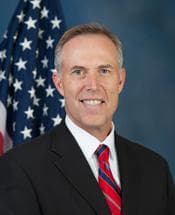
Jared Huffman
Democrat · CA · Representative
Votes with party: 97.6% (655 recorded votes)
Full profile: /officials/H001068
Source: Congress.gov · FEC
Cosponsors (5)
Members who have signed on to support this bill since introduction. Source: Congress.gov.
Latest Action
The most recent step in the bill's legislative path. Committee Activity below shows referrals and reports; the full action-by-action history including floor proceedings lives at Congress.gov →
Committee Activity
Currently in
- House Committee on Science, Space, and TechnologyReferred To · 2026-10-01
Plain-English Summary
Plain-English summary pending. Introduced on 2026-10-01. Check back soon — summaries are generated as bills progress through Congress.
Full Bill Text
Verbatim text published on Congress.gov via GovInfo. Use Cmd+F / Ctrl+F to search within this excerpt.
[Congressional Bills 119th Congress] [From the U.S. Government Publishing Office] [H.R. 10674 Introduced in House (IH)] <DOC> 119th CONGRESS 2d Session H. R. 10674 To establish the National Institutes of Clean Energy. _______________________________________________________________________ IN THE HOUSE OF REPRESENTATIVES October 1, 2026 Mr. Huffman (for himself, Ms. Simon, Mr. Cohen, Ms. Ansari, Mr. Jackson of Illinois, and Mrs. Grijalva) introduced the following bill; which was referred to the Committee on Science, Space, and Technology _______________________________________________________________________ A BILL To establish the National Institutes of Clean Energy. Be it enacted by the Senate and House of Representatives of the United States of America in Congress assembled, SECTION 1. SHORT TITLE. This Act may be cited as the ``National Institutes of Clean Energy Act of 2026''. SEC. 2. NATIONAL INSTITUTES OF CLEAN ENERGY. (a) Definitions.--In this section: (1) Advanced energy technology.--The term ``advanced energy technology'' means a technology that-- (A) reduces greenhouse gas emissions with high conversion efficiency; (B) minimizes energy, water, and material resource use; (C) was produced by or helps generate a renewable energy source; and (D) minimizes environmental harms to or negative public health impacts on frontline, vulnerable, and disadvantaged communities. (2) Frontline, vulnerable, and disadvantaged community.-- The term ``frontline, vulnerable, and disadvantaged community'' means a community-- (A) in an area described in section 301(a) of the Public Works and Economic Development Act of 1965 (42 U.S.C. 3161(a)); and (B) in which climate change, pollution, or environmental destruction have exacerbated systemic racial, regional, social, environmental, gender, and economic injustices by disproportionately affecting Black, Brown, and Indigenous peoples, other communities of color, migrant communities, deindustrialized communities, depopulated rural communities, the poor, low-income workers, women, the elderly, the unhoused, people with disabilities, or youth. (3) Institutes.--The term ``Institutes'' means the National Institutes of Clean Energy established under subsection (b). (4) Land-grant college or university.--The term ``land- grant college or university'' means-- (A) an institution that is eligible to receive funds under the Act of July 2, 1862 (commonly known as the ``First Morrill Act'') (12 Stat. 503, chapter 130; 7 U.S.C. 301 et seq.) or the Act of August 30, 1890 (commonly known as the ``Second Morrill Act'') (26 Stat. 417, chapter 841; 7 U.S.C. 321 et seq.), including Tuskegee University; and (B) a 1994 Institution (as defined in section 532 of the Equity in Educational Land-Grant Status Act of 1994 (7 U.S.C. 301 note; Public Law 103-382)). (5) Minority-serving institution.--The term ``minority- serving institution'' means an institution of higher education described in section 371(a) of the Higher Education Act of 1965 (20 U.S.C. 1067q(a)). (6) Renewable energy source.--The term ``renewable energy source'' means energy generated from a renewable source, including the following renewable energy sources: (A) Solar, including electricity. (B) Wind. (C) Ocean, including tidal, wave, current, and thermal. (D) Geothermal, including electricity and heat pumps. (E) Hydroelectric generation capacity achieved from increased efficiency or additions of new capacity at an existing hydroelectric project that was placed in service on or after January 1, 1999. (F) Hydrogen derived from a renewable energy source that meets the requirements of incrementality, temporal matching, and deliverability described in section 1.45V-4 of title 26, Code of Federal Regulations (or a successor regulation). (G) Thermal energy generated by any of the sources described in subparagraphs (A) through (F). (b) Establishment.--Not later than January 1, 2030, there shall be established the National Institutes of Clean Energy, which shall be an agency of the Department of Energy. (c) Activities.-- (1) In general.--The Institutes shall-- (A) invest in clean energy science, climate science, innovation, and research and development to reduce emissions and build climate resilience; and (B) support-- (i) clean…
Show the remaining 291 wordsHide the remaining 291 words
energy research areas, including-- (I) demonstration projects for clean energy and climate research and development priorities, including microgrids, energy storage, electric vehicles, and advanced energy technologies in hard-to-decarbonize sectors, such as the aviation and shipping sectors; and (II) clean energy research areas that are underrepresented in existing Federal research and development funding, such as long-duration grid storage; (ii) research and development projects focusing on the impacts of energy production in frontline communities, including communities of color and low-income communities, that have been disproportionately impacted by environmental injustices; and (iii) research and development projects focused on impacts of clean energy and energy production on job loss, job creation, and workforce development, particularly in heavily unionized workforce sectors. (2) Priority.--In carrying out paragraph (1), the Institutes shall give priority to-- (A) the development of technologies that will-- (i) minimize environmental harms to or negative public health impacts on frontline, vulnerable, and disadvantaged communities; (ii) improve the public health of frontline, vulnerable, and disadvantaged communities; or (iii) create high-quality jobs with strong labor standards in frontline, vulnerable, and disadvantaged communities; (B) research and development of advanced energy technologies; (C) climate science and innovation and clean energy technology; (D) research and development that will be conducted at-- (i) public universities and colleges; (ii) land-grant colleges and universities; (iii) minority-serving institutions, including historically Black colleges and universities; and (iv) consortia comprising 1 or more of the entities described in clauses (i) through (iii); and (E) research and development in geographic areas that have seen the worst job losses between 2018 and 2026, including rural areas and areas impacted by deindustrialization. (d) Authorization of Appropriations.--There is authorized to be appropriated $400,000,000,000 for the period of fiscal years 2027 through 2036 to establish and operate the Institutes. <all>
Related legislation
Bills by the same sponsor or covering overlapping subjects.
- HR10623To reaffirm the applicability of the Indian Reorganization Act to the Lytton Rancheria of California, and for other purposes.Referred to Committee · 2026-09-28
- HR7254To amend the National Trails System Act to direct the Secretary of the Interior to conduct a study on the feasibility of designating the Bay Area Ridge National Scenic Trail, and for other purposes.Referred to Committee · 2026-09-15
- HR10073Critically Endangered Animals Conservation Act of 2026Referred to Committee · 2026-08-10
- HRES1415Celebrating the country's history of church-state separation and recognizing the 250th anniversary of the founding of the United States.Referred to Committee · 2026-07-02