HR1717Passed House
Communications Security Act
Introduced
In Committee
Passed One Chamber
4
Passed Both5
Signed into Law119th
Congress
2025-02-27
Introduced
1
Cosponsors
HR
ⓘType
Sponsor
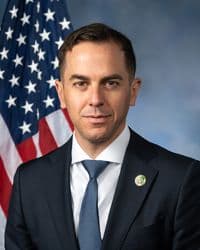
Robert Menendez
Democrat · NJ · Representative
Votes with party: 97.2% (673 recorded votes)
Full profile: /officials/M001226
Source: Congress.gov · FEC
Cosponsors (1)
Members who have signed on to support this bill since introduction. Source: Congress.gov.
1 cosponsor on record at Congress.gov. The named list is syncing into Govwatch and will appear here shortly — view on Congress.gov in the meantime.
Latest Action
The most recent step in the bill's legislative path. Committee Activity below shows referrals and reports; the full action-by-action history including floor proceedings lives at Congress.gov →
Received in the Senate and Read twice and referred to the Committee on Commerce, Science, and Transportation.
2025-07-16
Source: Congress.gov
Committee Activity
Currently in
- Senate Committee on Commerce, Science, and TransportationReferred To · 2025-07-16
- House Committee on Energy and CommerceReported By · 2025-07-10
Previously
- House Committee on Energy and CommerceMarkup By · 2025-04-08
- House Committee on Energy and CommerceReferred To · 2025-02-27
Plain-English Summary
Communications Security Act This bill provides statutory authority for a council established by the Federal Communications Commission (FCC) to provide advice regarding the security, reliability, and interoperability of communications networks. (This advice is currently provided by the FCC’s Communications Security, Reliability, and Interoperability Council.) The bill specifies that the FCC may designate an existing advisory committee to fulfill this role, provided the committee’s membership is modified, as necessary, to comply with membership requirements set forth in the bill. Specifically, the bill requires the council to include, to the extent practicable, representatives of companies in the communications industry; public interest organizations or academic institutions; and federal, state, tribal, and local governments (with at least one member representing each level of government). Members are to be selected by the FCC's chair and generally may not include representatives of entities owned or controlled by, or subject to the influence of, a foreign adversary, or otherwise deemed to pose a threat to U.S. national security. Under current law, federal advisory committees must generally terminate after two years unless they are renewed or a statute specifies a different termination date. However, the bill exempts the council from this requirement.
Plain-English rewrite of the Congressional Research Service summary published on Congress.gov. Cached and reviewed.
Subjects
Science, Technology, Communications
Full bill text is not yet cached locally.
Related legislation
Bills by the same sponsor or covering overlapping subjects.
- HR5967Strategic Task Force on Scam Prevention ActReferred to Committee · 2026-09-16
- HR7294AI for Secure Networks ActReported by Committee · 2026-09-16
- HR9614NRC Staff Pay Alignment ActReferred to Committee · 2026-07-14
- HR8620CARES Hotline ActReferred to Committee · 2026-04-30