HR2004Passed House
Tyler’s Law
Introduced
In Committee
Passed One Chamber
4
Passed Both5
Signed into Law119th
Congress
2025-03-10
Introduced
65
Cosponsors
HR
ⓘType
Sponsor
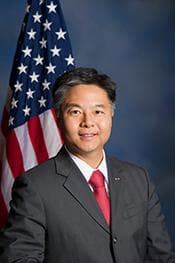
Ted Lieu
Democrat · CA · Representative
Votes with party: 97.9% (656 recorded votes)
Full profile: /officials/L000582
Source: Congress.gov · FEC
Cosponsors (65)
Members who have signed on to support this bill since introduction. Source: Congress.gov.
- Dan Crenshaw (R-TX-2)Original· 2025-03-10
- David G. Valadao (R-CA-22)Original· 2025-03-10
- Debbie Dingell (D-MI-6)Original· 2025-03-10
- Dina Titus (D-NV-1)Original· 2025-03-10
- Don Bacon (R-NE-2)Original· 2025-03-10
- Eleanor Holmes Norton (D-DC)Original· 2025-03-10
- Juan Ciscomani (R-AZ-6)Original· 2025-03-10
- Marc A. Veasey (D-TX-33)Original· 2025-03-10
- Michael Lawler (R-NY-17)Original· 2025-03-10
- Nanette Diaz Barragán (D-CA-44)Original· 2025-03-10
- Raja Krishnamoorthi (D-IL-8)Original· 2025-03-10
- Robert E. Latta (R-OH-5)Original· 2025-03-10
- Sarah McBride (D-DE)Original· 2025-03-10
- Scott H. Peters (D-CA-50)Original· 2025-03-10
- Sharice Davids (D-KS-3)Original· 2025-03-10
- Sheila Cherfilus-McCormick (D-FL-20)Original· 2025-03-10
- Sydney Kamlager-Dove (D-CA-37)Original· 2025-03-10
- Troy Balderson (R-OH-12)Original· 2025-03-10
- Brian K. Fitzpatrick (R-PA-1)· 2025-03-18
- Rudy Yakym III (R-IN-2)· 2025-03-18
- Greg Landsman (D-OH-1)· 2025-03-24
- Josh Gottheimer (D-NJ-5)· 2025-03-24
- Zachary Nunn (R-IA-3)· 2025-03-24
- Angie Craig (D-MN-2)· 2025-04-01
- Mariannette Miller-Meeks (R-IA-1)· 2025-04-01
- Gus M. Bilirakis (R-FL-12)· 2025-04-07
- Robin L. Kelly (D-IL-2)· 2025-04-08
- Carol D. Miller (R-WV-1)· 2025-04-14
- Young Kim (R-CA-40)· 2025-05-20
- Alexandria Ocasio-Cortez (D-NY-14)· 2025-05-21
- Monica De La Cruz (R-TX-15)· 2025-05-21
- Paul Tonko (D-NY-20)· 2025-06-04
- Gabe Evans (R-CO-8)· 2025-07-16
- Lori Trahan (D-MA-3)· 2025-10-03
- Randy K. Weber, Sr. (R-TX-14)· 2025-10-03
- Jennifer L. McClellan (D-VA-4)· 2025-10-17
- Kim Schrier (D-WA-8)· 2025-10-17
- Janice D. Schakowsky (D-IL-9)· 2025-11-07
- Raul Ruiz (D-CA-25)· 2025-11-12
- Darren Soto (D-FL-9)· 2025-12-12
- Jay Obernolte (R-CA-23)· 2025-12-12
- Nikki Budzinski (D-IL-13)· 2025-12-12
- Robert P. Bresnahan, Jr. (R-PA-8)· 2025-12-18
- Madeleine Dean (D-PA-4)· 2026-01-22
- Chrissy Houlahan (D-PA-6)· 2026-01-30
- Timothy M. Kennedy (D-NY-26)· 2026-01-30
- Ryan Mackenzie (R-PA-7)· 2026-02-20
- Thomas R. Suozzi (D-NY-3)· 2026-02-20
- August Pfluger (R-TX-11)· 2026-03-26
- Chris Pappas (D-NH-1)· 2026-04-09
- Debbie Wasserman Schultz (D-FL-25)· 2026-04-09
- John H. Rutherford (R-FL-5)· 2026-04-15
- Russell Fry (R-SC-7)· 2026-04-15
- Randy Fine (R-FL-6)· 2026-05-19
- Cory Mills (R-FL-7)· 2026-06-02
- Neal P. Dunn (R-FL-2)· 2026-06-10
- Gabe Vasquez (D-NM-2)· 2026-06-24
- Mark Alford (R-MO-4)· 2026-06-24
- Robert Menendez (D-NJ-8)· 2026-06-29
- Joe Neguse (D-CO-2)· 2026-07-13
- Joe Wilson (R-SC-2)· 2026-07-13
- Joyce Beatty (D-OH-3)· 2026-07-14
- Daniel Meuser (R-PA-9)· 2026-07-15
- Tim Moore (R-NC-14)· 2026-07-21
Latest Action
The most recent step in the bill's legislative path. Committee Activity below shows referrals and reports; the full action-by-action history including floor proceedings lives at Congress.gov →
Received in the Senate. Read twice. Placed on Senate Legislative Calendar under General Orders. Calendar No. 625.
2026-09-16
Source: Congress.gov
Committee Activity
Currently in
- House Committee on Energy and CommerceReported By · 2026-09-14
Previously
- House Committee on Energy and CommerceMarkup By · 2026-07-20
- Energy and Commerce CommitteeReferred To · 2025-03-10
- House Committee on Energy and CommerceReferred To · 2025-03-10
Plain-English Summary
Tyler’s Law This bill requires the Department of Health and Human Services (HHS) to complete, within one year after the bill’s enactment, a study on how frequently Medicare-participating hospital emergency departments test for fentanyl in patients experiencing an overdose, the costs associated with such testing, and how such testing may impact patients. Within six months after the study’s completion and based on its results, HHS must issue guidance regarding (1) whether hospital emergency departments should implement fentanyl testing as a routine procedure for patients experiencing an overdose, (2) how to ensure clinicians know which substances they are testing for in routine drug tests, and (3) how fentanyl testing may affect the future risk of overdose and other health outcomes.
Plain-English rewrite of the Congressional Research Service summary published on Congress.gov. Cached and reviewed.
Subjects
Health
Full Bill Text
Verbatim text published on Congress.gov via GovInfo. Use Cmd+F / Ctrl+F to search within this excerpt.
[Congressional Bills 119th Congress] [From the U.S. Government Publishing Office] [H.R. 2004 Introduced in House (IH)] <DOC> 119th CONGRESS 1st Session H. R. 2004 To direct the Secretary of Health and Human Services to issue guidance on whether hospital emergency departments should implement fentanyl testing as a routine procedure for patients experiencing an overdose, and for other purposes. _______________________________________________________________________ IN THE HOUSE OF REPRESENTATIVES March 10, 2025 Mr. Lieu (for himself, Mr. Latta, Ms. Kamlager-Dove, Mr. Grijalva, Mr. Crenshaw, Mr. Balderson, Mr. Ciscomani, Mr. Valadao, Mr. Lawler, Ms. Davids of Kansas, Ms. Norton, Mr. Krishnamoorthi, Mrs. Cherfilus- McCormick, Ms. Barragan, Mr. Veasey, Ms. Titus, Ms. McBride, Mrs. Dingell, Mr. Bacon, and Mr. Peters) introduced the following bill; which was referred to the Committee on Energy and Commerce _______________________________________________________________________ A BILL To direct the Secretary of Health and Human Services to issue guidance on whether hospital emergency departments should implement fentanyl testing as a routine procedure for patients experiencing an overdose, and for other purposes. Be it enacted by the Senate and House of Representatives of the United States of America in Congress assembled, SECTION 1. SHORT TITLE. This Act may be cited as ``Tyler's Law''. SEC. 2. TESTING FOR FENTANYL IN HOSPITAL EMERGENCY DEPARTMENTS. (a) Study.--Not later than 1 year after the date of enactment of this Act, the Secretary of Health and Human Services shall complete a study to determine-- (1) how frequently hospital emergency departments test for fentanyl (in addition to testing for other substances such as amphetamines, phencyclidine, cocaine, opiates, and marijuana) when a patient is experiencing an overdose; (2) the costs associated with such testing for fentanyl; (3) the potential benefits and risks for patients receiving such testing for fentanyl; and (4) how fentanyl testing in hospital emergency departments may impact the experience of the patient, including-- (A) protections for the confidentiality and privacy of the patient's personal health information; and (B) the patient-physician relationship. (b) Guidance.--Not later than 6 months after completion of the study under subsection (a), based on the results of such study, the Secretary of Health and Human Services shall issue guidance on the following: (1) Whether hospital emergency departments should implement fentanyl testing as a routine procedure for patients experiencing an overdose. (2) How hospitals can ensure that clinicians in their hospital emergency departments are aware of which substances are being tested for in their routinely-administered drug tests, regardless of whether those tests screen for fentanyl. (3) How the administration of fentanyl testing in hospital emergency departments may affect the future risk of overdose and general health outcomes. (c) Definition.--In this section, the term ``hospital emergency department'' means a hospital emergency department as such term is used in section 1867(a) of the Social Security Act (42 U.S.C. 1395dd(a)). <all>
Related legislation
Bills by the same sponsor or covering overlapping subjects.
- HRES1544Electing a Member to a certain standing committee of the House of Representatives.Passed House · 2026-09-16
- HR10055Congressional Authorization for Federal Building Names ActReferred to Committee · 2026-08-06
- HR9917AI Kill Switch ActReferred to Committee · 2026-07-24
- HR955821st Century Federal Writers’ Project ActReferred to Committee · 2026-06-30