AI PLAN Act
Sponsor
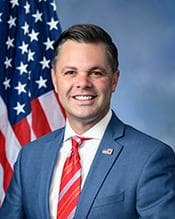
Full profile: /officials/N000193
Source: Congress.gov · FEC
Cosponsors (7)
Members who have signed on to support this bill since introduction. Source: Congress.gov.
Latest Action
The most recent step in the bill's legislative path. Committee Activity below shows referrals and reports; the full action-by-action history including floor proceedings lives at Congress.gov →
Committee Activity
Currently in
- House Committee on Financial ServicesReported By · 2026-06-24
Previously
- House Committee on Financial ServicesMarkup By · 2026-05-13
- House Committee on Financial ServicesReferred To · 2025-03-14
Plain-English Summary
Artificial Intelligence Practices, Logistics, Actions, and Necessities Act or the AI PLAN Act This bill requires the Department of the Treasury, the Department of Homeland Security (DHS), and the Department of Commerce to submit a report on the risks posed by the use of artificial intelligence in the commission of financial crimes by adversarial actors. The report must describe interagency, intergovernmental, and public-private partnership activities, policies, and procedures to defend U.S. interests against the national and economic security risks posed by the use of artificial intelligence in the commission of financial crimes; provide a list of readily available resources that can be immediately deployed by federal agencies to combat these risks, and provide a list of resources needed by federal agencies to combat these risks. Risks that must be considered by the report include deepfakes, voice cloning, foreign election interference, synthetic identities, false flags that disrupt market operations, AI-supported social engineering, and general digital fraud. After submission of this report, Treasury, DHS, and Commerce must make recommendations for legislation and best practices for businesses and government entities to address these risks.
Plain-English rewrite of the Congressional Research Service summary published on Congress.gov. Cached and reviewed.
Subjects
Full Bill Text
Verbatim text published on Congress.gov via GovInfo. Use Cmd+F / Ctrl+F to search within this excerpt.
[Congressional Bills 119th Congress] [From the U.S. Government Publishing Office] [H.R. 2152 Introduced in House (IH)] <DOC> 119th CONGRESS 1st Session H. R. 2152 To require a strategy to defend against the economic and national security risks posed by the use of artificial intelligence in the commission of financial crimes, including fraud and the dissemination of misinformation, and for other purposes. _______________________________________________________________________ IN THE HOUSE OF REPRESENTATIVES March 14, 2025 Mr. Nunn of Iowa (for himself and Mr. Himes) introduced the following bill; which was referred to the Committee on Financial Services _______________________________________________________________________ A BILL To require a strategy to defend against the economic and national security risks posed by the use of artificial intelligence in the commission of financial crimes, including fraud and the dissemination of misinformation, and for other purposes. Be it enacted by the Senate and House of Representatives of the United States of America in Congress assembled, SECTION 1. SHORT TITLE. This Act may be cited as the ``Artificial Intelligence Practices, Logistics, Actions, and Necessities Act'' or the ``AI PLAN Act''. SEC. 2. STRATEGY TO DEFEND AGAINST RISKS POSED BY THE USE OF ARTIFICIAL INTELLIGENCE. (a) Sense of Congress.--It is the sense of Congress that the development and use of artificial intelligence in the commission of financial crimes by adversarial actors poses a significant risk to the national and economic security of the United States. (b) Strategy To Defend Against Risks Posed by Misinformation, Fraud, and Financial Crime Conducted With Artificial Intelligence.-- (1) In general.--Not later than 180 days after the date of the enactment of this Act and annually thereafter, the Secretary of the Treasury, the Secretary of Homeland Security, and the Secretary of Commerce, in consultation with the officials specified in paragraph (3), shall jointly submit to Congress a report that includes the following: (A) A description of interagency policies and procedures to defend United States financial markets, United States persons, United States businesses, and global supply chains from the national and economic security risks posed by the use of artificial intelligence in the commission of financial crimes, including fraud and the dissemination of misinformation. (B) An itemized list of readily available resources, hardware, software, and technologies that can be immediately utilized to combat the use of artificial intelligence in the commission of financial crimes, including fraud and the dissemination of misinformation. (C) An itemized list of resources, hardware, software, technologies, people, and budgetary estimates needed to help Federal departments and agencies to combat the use of artificial intelligence in the commission of financial crimes, including fraud and the dissemination of misinformation. (2) Considerations.--Reports required pursuant to paragraph (1) shall take the following risks into consideration: (A) Deepfakes. (B) Voice cloning. (C) Foreign election interference. (D) Synthetic Identities. (E) False flags and false signals that disrupt market operations. (F) Overall digital fraud. (3) Officials specified.--The officials specified in this paragraph are the following: (A) The United States Trade Representative. (B) The Attorney General. (C) The Chairman of the Board of Governors of the Federal Reserve System. (D) The Director of the National Institute of Standards and Technology. (E) The Under Secretary of Commerce for Industry and Security. (F) The Chairman of the Securities and Exchange Commission. (c) Recommendations.--Not later than 90 days after each report under subsection (b) is submitted, the Secretary of the Treasury, the Secretary of Homeland Security, and the Secretary of Commerce shall jointly submit to Congress a set of recommendations relating to each such respective report that contain the following: (1) Legislative recommendations to address the risks posed by the use of artificial intelligence in the commission of financial crimes,…
Show the remaining 48 wordsHide the remaining 48 words
including fraud and the dissemination of misinformation. (2) Best practices to assist American businesses and government entities with risk mitigation and incident response to address the risks posed by the use of artificial intelligence in the commission of financial crimes, including fraud and the dissemination of misinformation. <all>
Related legislation
Bills by the same sponsor or covering overlapping subjects.
- HR10234CLEAR Forms ActReferred to Committee · 2026-09-16
- HR4936TRAPS ActReferred to Committee · 2026-09-16
- HRES1553Expressing support for the designation of the week of September 21, 2026, as the "Ray Gaesser Memorial Farm Safety Week" to recognize the life and legacy of Ray Gaesser, who passed away in a tragic farming accident, and promote farm safety in the honor of Ray Gaesser.Referred to Committee · 2026-09-16
- HR2978GUARD ActPassed House · 2026-09-16