No Hungry Kids in Schools Act
Sponsor
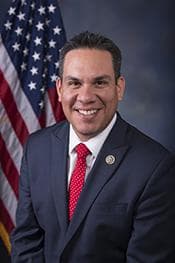
Full profile: /officials/A000371
Source: Congress.gov · FEC
Cosponsors (25)
Members who have signed on to support this bill since introduction. Source: Congress.gov.
25 cosponsors on record at Congress.gov. The named list is syncing into Govwatch and will appear here shortly — view on Congress.gov in the meantime.
Latest Action
The most recent step in the bill's legislative path. Committee Activity below shows referrals and reports; the full action-by-action history including floor proceedings lives at Congress.gov →
Committee Activity
Currently in
- House Committee on Education and WorkforceReferred To · 2025-03-27
Plain-English Summary
No Hungry Kids in Schools Act This bill directs the Department of Agriculture (USDA) to establish an option for states to utilize a statewide Community Eligibility Provision (CEP) for USDA school meal programs. As background, the CEP allows eligible schools, groups of schools, and school districts the option to offer free breakfast and lunch to all enrolled students without collecting household applications. Specifically, USDA must establish a statewide CEP option that may be used by a state agency. The state agency must provide state (nonfederal) funding to local educational agencies to reimburse applicable schools at the free reimbursement rate for 100% of the meals served. Eligibility for the statewide CEP must be based on a statewide calculation of the percentage of identified enrolled students, regardless of a school's local educational agency. Further, the bill lowers the CEP participation threshold for a statewide CEP to an identified student percentage (ISP) of zero, from a minimum of 25% under current regulations. The ISP is the percentage of students who are eligible for free school meals without a household application, primarily those who are directly certified through the Supplemental Nutrition Assistance Program (SNAP). In addition, the bill specifies that the reimbursement multiplier for school meals remains at the current level of 1.6. The reimbursement multiplier is used to calculate how many meals will be reimbursed at the free meal rate.
Plain-English rewrite of the Congressional Research Service summary published on Congress.gov. Cached and reviewed.
Subjects
Related legislation
Bills by the same sponsor or covering overlapping subjects.
- HRES1202Electing a Member to a certain standing committee of the House of Representatives.Passed House · 2026-04-21
- HRES1048Electing a Member to a certain standing committee of the House of Representatives.Passed House · 2026-02-10
- HRES954Electing a Member to a certain standing committee of the House of Representatives.Passed House · 2025-12-17
- HRES890Expressing support for the designation of November 19, 2025, as "National GIS Day".Referred to Committee · 2025-11-18