HALT Fentanyl Act
Sponsor
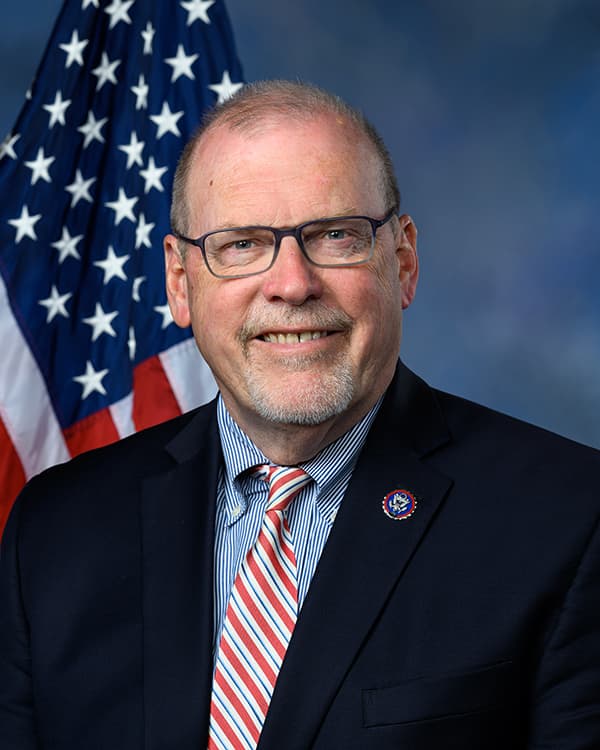
Full profile: /officials/G000568
Source: Congress.gov · FEC
Cosponsors (61)
Members who have signed on to support this bill since introduction. Source: Congress.gov.
61 cosponsors on record at Congress.gov. The named list is syncing into Govwatch and will appear here shortly — view on Congress.gov in the meantime.
Latest Action
The most recent step in the bill's legislative path. Committee Activity below shows referrals and reports; the full action-by-action history including floor proceedings lives at Congress.gov →
Received in the Senate and Read twice and referred to the Committee on the Judiciary.
2025-02-10
Source: Congress.gov
Committee Activity
Currently in
- Senate Committee on the JudiciaryReferred To · 2025-02-10
- House Committee on Energy and CommerceReferred To · 2025-01-03
- House Committee on the JudiciaryReferred To · 2025-01-03
Plain-English Summary
Halt All Lethal Trafficking of Fentanyl Act or the HALT Fentanyl Act This bill permanently places fentanyl-related substances as a class into schedule I of the Controlled Substances Act. A schedule I controlled substance is a drug, substance, or chemical that has a high potential for abuse; has no currently accepted medical value; and is subject to regulatory controls and administrative, civil, and criminal penalties under the Controlled Substances Act. Under the bill, offenses involving fentanyl-related substances are triggered by the same quantity thresholds and subject to the same penalties as offenses involving fentanyl analogues (e.g., offenses involving 100 grams or more trigger a 10-year mandatory minimum prison term). Additionally, the bill establishes a new, alternative registration process for certain schedule I research. The bill also makes several other changes to registration requirements for conducting research with controlled substances, including permitting a single registration for related research sites in certain circumstances, waiving the requirement for a new inspection in certain situations, and allowing a registered researcher to perform certain manufacturing activities with small quantities of a substance without obtaining a manufacturing registration. Finally, the bill expresses the sense that Congress agrees with the interpretation of Controlled Substances Act in United States v. McCray , a 2018 case decided by the U.S. District Court for the Western District of New York. In that case, the court held that butyryl fentanyl, a controlled substance, can be considered an analogue of fentanyl even though, under the Controlled Substances Act, the term controlled substance analogue specifically excludes a controlled substance.
Plain-English rewrite of the Congressional Research Service summary published on Congress.gov. Cached and reviewed.
Subjects
Related legislation
Bills by the same sponsor or covering overlapping subjects.
- HR10621Medicaid Fraud Fighting and Taxpayer Protection ActReferred to Committee · 2026-09-28
- HR10204Legislative Branch Agencies Clarification ActPassed House · 2026-09-15
- HR9724End Birthright Citizenship for Territories ActReferred to Committee · 2026-07-16
- HR5549Efficient Nuclear Licensing Hearings ActReferred to Committee · 2026-07-14