Jobs and Opportunity with Benefits and Services (JOBS) for Success Act of 2025
Sponsor
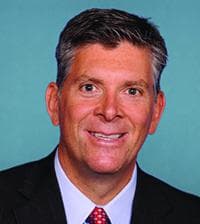
Full profile: /officials/L000585
Source: Congress.gov · FEC
Cosponsors (2)
Members who have signed on to support this bill since introduction. Source: Congress.gov.
Latest Action
The most recent step in the bill's legislative path. Committee Activity below shows referrals and reports; the full action-by-action history including floor proceedings lives at Congress.gov →
Committee Activity
Currently in
- House Committee on Ways and MeansReferred To · 2025-05-01
Plain-English Summary
Jobs and Opportunity with Benefits and Services (JOBS) for Success Act of 2025 This bill reauthorizes the Temporary Assistance for Needy Families (TANF) program through FY2030, establishes new metrics for measuring states’ performance within the program, and makes other changes to the program’s requirements. Under current law, states participating in TANF are required to meet certain minimum participation rates, or percentages of beneficiaries engaged in work. The bill eliminates minimum participation rates and replaces them with metrics tied to employment outcomes, such as former beneficiaries’ rates of unsubsidized employment and earnings at particular points in time. The Department of Health and Human Services must publish a website with information on each state’s performance. The bill also requires states to create an individual opportunity plan for each beneficiary and to meet with each work-eligible beneficiary at least every 90 days to review the individual’s progress under their plan. (Under current law, individual plans are optional.) Further, the bill prohibits states from using TANF funds to provide benefits to families with monthly incomes that exceed twice the poverty line. Finally, the bill requires states to spend at least 25% of their TANF grant funds on certain activities, including work supports, education and training, and apprenticeships. The bill also lowers the percentage of TANF funds that a state may spend on administrative costs to 10%, with an exception for costs related to case management necessary to assist in the development of individual opportunity plans.
Plain-English rewrite of the Congressional Research Service summary published on Congress.gov. Cached and reviewed.
Subjects
Related legislation
Bills by the same sponsor or covering overlapping subjects.
- HR10499Meals for Communities Tax Credit ActReferred to Committee · 2026-09-17
- HR5470Route 66 National Historic Trail Designation ActReferred to Committee · 2026-09-02
- HR10075First-Time Homebuyer Affordability ActReferred to Committee · 2026-08-10
- HR9518Health Savings for Families Act of 2026Referred to Committee · 2026-06-29