CRISIS Act of 2025
Sponsor
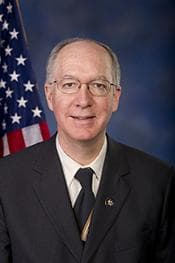
Full profile: /officials/F000454
Source: Congress.gov · FEC
Cosponsors (1)
Members who have signed on to support this bill since introduction. Source: Congress.gov.
1 cosponsor on record at Congress.gov. The named list is syncing into Govwatch and will appear here shortly — view on Congress.gov in the meantime.
Latest Action
The most recent step in the bill's legislative path. Committee Activity below shows referrals and reports; the full action-by-action history including floor proceedings lives at Congress.gov →
Committee Activity
Currently in
- House Committee on the JudiciaryReferred To · 2025-05-21
Plain-English Summary
Countering Russian Innovation and Safeguarding Individual Scientists Act of 2025 or the CRISIS Act of 2025 This bill makes certain Russian nationals with degrees in science, technology, engineering, and mathematics (STEM) eligible to become permanent residents of the United States. Under the bill, special immigrant status may be given to Russian nationals (and their spouse and children) who have a U.S. doctoral degree or a foreign equivalent in a STEM field and are seeking work in a STEM field in the United States. Candidates must satisfy vetting and interview requirements set by the Department of Homeland Security. Up to 3,000 individuals may be admitted under this bill each fiscal year FY2026 through FY2029. Individuals admitted under this bill do not count towards other statutory numerical limitations for immigration.
Plain-English rewrite of the Congressional Research Service summary published on Congress.gov. Cached and reviewed.
Subjects
Related legislation
Bills by the same sponsor or covering overlapping subjects.
- HR10298Public Service Loan Forgiveness Inclusion Act of 2026Referred to Committee · 2026-09-04
- HR10230Strengthening Oversight for the Financial Sector Act of 2026Referred to Committee · 2026-09-02
- HR9902Federal Naming Standards ActReferred to Committee · 2026-07-23
- HR9803Protecting Immigrants From Legal Exploitation Act of 2026Referred to Committee · 2026-07-21