HR3575Referred to Committee
ANTE Act
Introduced
In Committee
3
Passed One Chamber4
Passed Both5
Signed into Law119th
Congress
2025-05-23
Introduced
5
Cosponsors
HR
ⓘType
Sponsor
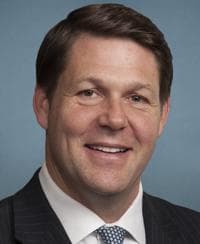
Jodey C. Arrington
Republican · TX · Representative
Votes with party: 96.3% (651 recorded votes)
Full profile: /officials/A000375
Source: Congress.gov · FEC
Cosponsors (5)
Members who have signed on to support this bill since introduction. Source: Congress.gov.
5 cosponsors on record at Congress.gov. The named list is syncing into Govwatch and will appear here shortly — view on Congress.gov in the meantime.
Latest Action
The most recent step in the bill's legislative path. Committee Activity below shows referrals and reports; the full action-by-action history including floor proceedings lives at Congress.gov →
Committee Activity
Currently in
- House Committee on Ways and MeansReferred To · 2025-05-23
Plain-English Summary
Axing Nonmarket Tariff Evasion Act or the ANTE Act This bill authorizes the Office of the U.S. Trade Representative (USTR) to investigate and take remedial action against covered entities that evade or attempt to evade duties (i.e., tariffs) that were imposed on nonmarket economy countries (e.g., China) by investing in other countries. Under the bill, a covered entity (e.g., business) (1) is owned, controlled, subject to the jurisdiction or direction of, or operated by a nonmarket economy country; and (2) includes an entity for which, on any date during the most recent 12-month period, at least 25% of the equity interests in such entity were held directly or indirectly by one or more entities organized under the laws of a nonmarket economy country. Currently, Section 301 of the Trade Act of 1974 allows the USTR to impose tariffs in response to actions by foreign countries that violate U.S. rights under international trade agreements or that burden or restrict U.S. commerce in unjustifiable, unreasonable, or discriminatory ways. In 2018, for example, the USTR used Section 301 to impose tariffs on many imports from China. This bill allows the USTR to investigate whether a covered entity is establishing or has established investments (e.g., manufacturing operations) in another country that is not subject to Section 301 tariffs in order to evade those tariffs. Upon an affirmative determination, the USTR may impose certain remedial measures, such as imposing a tariff equivalent to the original tariff on goods associated with the nonmarket economy country.
Plain-English rewrite of the Congressional Research Service summary published on Congress.gov. Cached and reviewed.
Subjects
Foreign Trade and International Finance
Full bill text is not yet cached locally.
Related legislation
Bills by the same sponsor or covering overlapping subjects.
- HR8781Title IX Clarification Act of 2026Referred to Committee · 2026-09-08
- HCONRES113Establishing the congressional budget for the United States Government for fiscal year 2027 and setting forth the appropriate budgetary levels for fiscal years 2028 through 2036.Passed House · 2026-07-23
- HR9172Applying Existing Tax Anti-Abuse Rules to Digital Assets ActReferred to Committee · 2026-06-08
- HR8917No Tax on Border Patrol Agent Overtime ActReferred to Committee · 2026-05-20