HR4805Referred to Committee
WINGS Act
Introduced
In Committee
3
Passed One Chamber4
Passed Both5
Signed into Law119th
Congress
2025-07-29
Introduced
14
Cosponsors
HR
ⓘType
Sponsor
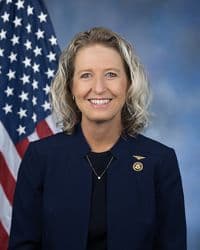
Jennifer A. Kiggans
Republican · VA · Representative
Votes with party: 96.5% (661 recorded votes)
Full profile: /officials/K000399
Source: Congress.gov · FEC
Cosponsors (14)
Members who have signed on to support this bill since introduction. Source: Congress.gov.
- Maggie Goodlander (D-NH-2)Original· 2025-07-29
- Don Bacon (R-NE-2)· 2025-08-05
- Jill N. Tokuda (D-HI-2)· 2025-08-05
- Seth Moulton (D-MA-6)· 2025-08-05
- Eugene Simon Vindman (D-VA-7)· 2025-08-15
- Abraham J. Hamadeh (R-AZ-8)· 2025-09-03
- Cory Mills (R-FL-7)· 2025-10-24
- August Pfluger (R-TX-11)· 2026-02-24
- Eric Sorensen (D-IL-17)· 2026-02-24
- Morgan Luttrell (R-TX-8)· 2026-02-24
- Nick LaLota (R-NY-1)· 2026-04-09
- Jimmy Patronis (R-FL-1)· 2026-06-02
Latest Action
The most recent step in the bill's legislative path. Committee Activity below shows referrals and reports; the full action-by-action history including floor proceedings lives at Congress.gov →
Committee Activity
Currently in
- House Committee on Veterans' AffairsReferred To · 2025-07-29
Previously
- Veterans' Affairs CommitteeReferred To · 2025-07-29
Plain-English Summary
The WINGS Act would likely establish or expand support programs for military service members and veterans, possibly focusing on health care, mental health services, or other benefits. Based on its referral to the Subcommittee on Health, the bill probably addresses medical or wellness issues affecting active-duty personnel, veterans, or their families. The specific provisions would determine whether it expands existing programs, creates new ones, or improves access to care for the military community.
AI-assisted summary generated from the official bill metadata (title, subjects, actions) sourced from Congress.gov. Cached and reviewed. Always verify against the official text linked below.
Subjects
Armed Forces and National Security
Full Bill Text
Verbatim text published on Congress.gov via GovInfo. Use Cmd+F / Ctrl+F to search within this excerpt.
[Congressional Bills 119th Congress] [From the U.S. Government Publishing Office] [H.R. 4805 Introduced in House (IH)] <DOC> 119th CONGRESS 1st Session H. R. 4805 To direct the Secretary of Veterans Affairs to conduct a study on the long-term physiological and psychological effects of military aviation veterans who served as aviators in the Armed Forces, and for other purposes. _______________________________________________________________________ IN THE HOUSE OF REPRESENTATIVES July 29, 2025 Mrs. Kiggans of Virginia (for herself and Ms. Goodlander) introduced the following bill; which was referred to the Committee on Veterans' Affairs _______________________________________________________________________ A BILL To direct the Secretary of Veterans Affairs to conduct a study on the long-term physiological and psychological effects of military aviation veterans who served as aviators in the Armed Forces, and for other purposes. Be it enacted by the Senate and House of Representatives of the United States of America in Congress assembled, SECTION 1. SHORT TITLE. This Act may be cited as the ``Warrior Impact from Neurological and G-Force Stress Act'' or the ``WINGS Act''. SEC. 2. STUDY ON LONG-TERM EFFECTS OF MILITARY FLIGHT OPERATIONS ON BRAIN HEALTH AND MENTAL HEALTH. (a) Study.--The Secretary of Veterans Affairs shall conduct a comprehensive, longitudinal study to assess the long-term physiological and psychological effects of military aviation, including with respect to high-performance flight and G-force exposure, on military aviators. (b) Elements.--The study under subsection (a) shall examine, at a minimum-- (1) the relationship between cumulative flight hours and exposure to G-forces and incidents of traumatic brain injury, sub-concussive trauma, or cognitive impairment; (2) long-term mental health outcomes, including with respect to incidence of depression, anxiety disorders, and post-traumatic stress disorder, in military aviators compared to other members of the Armed Forces; (3) the correlation between aviation-related physiological stress and suicide risk among aviators; (4) the prevalence of neurodegenerative conditions (including chronic traumatic encephalopathy, amyotrophic lateral sclerosis, and Parkinson's disease) in current and former military aviators; (5) the effect of helmet design, oxygen systems, flight suit pressurization, and other cockpit environmental factors on neurocognitive health; (6) current screening and diagnostic procedures used to detect early signs of neurological injury or psychological distress in military aviators; and (7) recommended improvements in the monitoring, prevention, and treatment of aviation-related brain trauma and mental health challenges. (c) Consultation.--In conducting the study under subsection (a), the Secretary shall consult with-- (1) the Secretary of Defense; (2) the Surgeons General of the military departments; (3) the Director of the Defense Health Agency; and (4) relevant academic institutions and federally funded research and development centers with expertise in aviation medicine, neuroscience, and psychiatry. (d) Pilot Health Registry.--The Secretary of Veterans Affairs shall establish and maintain a centralized Military Aviator Neurohealth Registry that includes-- (1) anonymized health data of military aviators voluntarily participating in the study under subsection (a); (2) flight exposure metrics, including cumulative hours and G-force profiles; (3) relevant health outcomes tracked over time; and (4) a mechanism for longitudinal follow-up with the military aviators. (e) Reports.-- (1) Interim report.--Not later than one year after the date of the enactment of this Act, the Secretary shall submit to Congress an interim report on the study under subsection (a), including any preliminary findings and recommendations. (2) Final report.--Not later than three years after the date of the enactment of this Act, the Secretary shall submit to Congress report on the study under subsection (a), including findings and recommendations. (f) Military Aviator Defined.--In this section, the term ``military aviator'' means a veteran who, as a member of the Armed Forces, including a commissioned officer or a warrant officer-- (1) had been designated as a pilot, naval aviator, or…
Show the remaining 127 wordsHide the remaining 127 words
aircrew member by the Secretary of the military department concerned; (2) operated, or was regularly assigned as a flight crew member aboard, high-performance, crewed, fixed-wing or rotary- wing aircraft designed for tactical, training, or reconnaissance missions, including-- (A) fighter aircraft (such as the F-35, F/A-18, F- 22, and F-16 aircraft); (B) attack aircraft (such as the A-10 and AH-64 aircraft); (C) trainer jets (such as the T-7, T-38, and T-45 aircraft); and (D) tiltrotor or high-speed rotary aircraft (such as the V-22 aircraft); (3) was subject to sustained or repeated G-forces during the routine execution of flight duties; and (4) served in a role that may have included aircraft control, weapons employment, navigation, reconnaissance, or mission-specific operations requiring aircrew qualification and exposure to flight-related physiological stressors. <all>
Related legislation
Bills by the same sponsor or covering overlapping subjects.
- HR7618American Battlefield Protection Program Amendments Act of 2026Passed House · 2026-09-30
- HR8052Veteran Infection Prevention ActReferred to Committee · 2026-09-24
- HR7365To designate the facility of the United States Postal Service located at 1225 Kempsville Road in Virginia Beach, Virginia, as the "Colonel Edward Shames Post Office Building".Passed House · 2026-09-17
- HR5063Safe Beaches, Safe Swimmers ActPassed House · 2026-09-15