Freedom From Union Violence Act of 2025
Sponsor
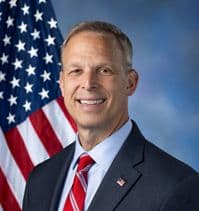
- Conservative Groups$2,079k
Full profile: /officials/P000605
Source: Congress.gov · FEC
Cosponsors (7)
Members who have signed on to support this bill since introduction. Source: Congress.gov.
Latest Action
The most recent step in the bill's legislative path. Committee Activity below shows referrals and reports; the full action-by-action history including floor proceedings lives at Congress.gov →
Committee Activity
Currently in
- House Committee on the JudiciaryReferred To · 2025-08-26
Previously
- Judiciary CommitteeReferred To · 2025-08-26
Plain-English Summary
Freedom From Union Violence Act of 2025 This bill broadens the scope of conduct that constitutes extortion under the federal criminal statute commonly known as the Hobbs Act. The Hobbs Act prohibits robbery or extortion affecting interstate commerce. Currently, an extortion offense includes obtaining property of another through the wrongful use of force, violence, or fear. Typically, Hobbs Act violations are investigated by the Federal Bureau of Investigation and prosecuted by the U.S. Attorney's Office. In 1973, in United States v. Enmons , the U.S. Supreme Court held that the use of violence by union members during a strike did not constitute extortion under the Hobbs Act because its purpose —to achieve legitimate union objectives—was not wrongful. This bill eliminates the requirement that the use of force, violence, or fear of force or violence to obtain property must be wrongful. The bill specifies that the use of fear not involving force or violence must still be wrongful. Finally, the bill exempts from the Hobbs Act prohibition conduct that (1) is incidental to peaceful picketing during a labor dispute, (2) consists solely of minor bodily injury or property damage, and (3) is not part of a pattern of violent conduct or of coordinated violent activity. A violation involving exempted conduct is subject to prosecution by state and local authorities.
Plain-English rewrite of the Congressional Research Service summary published on Congress.gov. Cached and reviewed.
Subjects
Related legislation
Bills by the same sponsor or covering overlapping subjects.
- HJRES219Proposing an amendment to the Constitution of the United States to require a Judge to be a natural born citizen of the United States.Referred to Committee · 2026-10-15
- HR1342Stopping Political Discrimination in Disaster Assistance ActPassed House · 2026-09-16
- HR10305Strengthening Oversight in Public Buildings ActReferred to Committee · 2026-09-15
- HJRES206Proposing an amendment to the Constitution of the United States to require that any Representative or Senator be a natural born citizen.Referred to Committee · 2026-07-23