HR5408Passed House
Faster Labor Contracts Act
Introduced
In Committee
Passed One Chamber
4
Passed Both5
Signed into Law119th
Congress
2025-09-16
Introduced
110
Cosponsors
HR
ⓘType
Sponsor
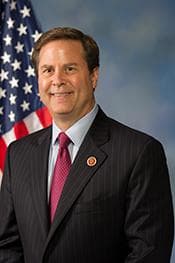
Donald Norcross
Democrat · NJ · Representative
Votes with party: 97.4% (578 recorded votes)
Top industries funding sponsor:
- Climate & Environment$11k
Full profile: /officials/N000188
Source: Congress.gov · FEC
Cosponsors (110)
Members who have signed on to support this bill since introduction. Source: Congress.gov.
- Andrew R. Garbarino (R-NY-2)Original· 2025-09-16
- Angie Craig (D-MN-2)Original· 2025-09-16
- Brian K. Fitzpatrick (R-PA-1)Original· 2025-09-16
- Christopher H. Smith (R-NJ-4)Original· 2025-09-16
- Christopher R. Deluzio (D-PA-17)Original· 2025-09-16
- Don Bacon (R-NE-2)Original· 2025-09-16
- Emily Randall (D-WA-6)Original· 2025-09-16
- Haley M. Stevens (D-MI-11)Original· 2025-09-16
- Jared F. Golden (D-ME-2)Original· 2025-09-16
- Jefferson Van Drew (D-NJ-2)Original· 2025-09-16
- Josh Riley (D-NY-19)Original· 2025-09-16
- Mary Gay Scanlon (D-PA-5)Original· 2025-09-16
- Michael A. Rulli (R-OH-6)Original· 2025-09-16
- Michael Lawler (R-NY-17)Original· 2025-09-16
- Morgan McGarvey (D-KY-3)Original· 2025-09-16
- Nick LaLota (R-NY-1)Original· 2025-09-16
- Nicole Malliotakis (R-NY-11)Original· 2025-09-16
- Nikki Budzinski (D-IL-13)Original· 2025-09-16
- Pete Stauber (R-MN-8)Original· 2025-09-16
- Rick Larsen (D-WA-2)Original· 2025-09-16
- Riley M. Moore (R-WV-2)Original· 2025-09-16
- Robert P. Bresnahan, Jr. (R-PA-8)Original· 2025-09-16
- Seth Magaziner (D-RI-2)Original· 2025-09-16
- Stephen F. Lynch (D-MA-8)Original· 2025-09-16
- Timothy M. Kennedy (D-NY-26)Original· 2025-09-16
- Brendan F. Boyle (D-PA-2)· 2025-10-28
- Max L. Miller (R-OH-7)· 2025-10-28
- Nicholas A. Langworthy (R-NY-23)· 2026-01-20
- Val T. Hoyle (D-OR-4)· 2026-01-20
- Derrick Van Orden (R-WI-3)· 2026-01-21
- Lucy McBath (D-GA-6)· 2026-01-21
- Josh Gottheimer (D-NJ-5)· 2026-02-09
- Mike Carey (R-OH-15)· 2026-02-09
- Hillary J. Scholten (D-MI-3)· 2026-03-16
- Jack Bergman (R-MI-1)· 2026-03-16
- Alexandria Ocasio-Cortez (D-NY-14)· 2026-04-20
- Brad Sherman (D-CA-32)· 2026-04-20
- Brittany Pettersen (D-CO-7)· 2026-04-20
- Chellie Pingree (D-ME-1)· 2026-04-20
- Debbie Dingell (D-MI-6)· 2026-04-20
- Debbie Wasserman Schultz (D-FL-25)· 2026-04-20
- Dina Titus (D-NV-1)· 2026-04-20
- Dwight Evans (D-PA-3)· 2026-04-20
- Eleanor Holmes Norton (D-DC)· 2026-04-20
- Frank J. Mrvan (D-IN-1)· 2026-04-20
- Greg Landsman (D-OH-1)· 2026-04-20
- James R. Walkinshaw (D-VA-11)· 2026-04-20
- Joe Neguse (D-CO-2)· 2026-04-20
- Jonathan L. Jackson (D-IL-1)· 2026-04-20
- Josh Harder (D-CA-9)· 2026-04-20
- Kweisi Mfume (D-MD-7)· 2026-04-20
- Maggie Goodlander (D-NH-2)· 2026-04-20
- Mark Pocan (D-WI-2)· 2026-04-20
- Maxine Waters (D-CA-43)· 2026-04-20
- Sarah Elfreth (D-MD-3)· 2026-04-20
- Sean Casten (D-IL-6)· 2026-04-20
- Sheila Cherfilus-McCormick (D-FL-20)· 2026-04-20
- Shontel M. Brown (D-OH-11)· 2026-04-20
- Thomas R. Suozzi (D-NY-3)· 2026-04-20
- Bonnie Watson Coleman (D-NJ-12)· 2026-04-21
- Daniel S. Goldman (D-NY-10)· 2026-04-21
- Ed Case (D-HI-1)· 2026-04-21
- Emanuel Cleaver (D-MO-5)· 2026-04-21
- John W. Mannion (D-NY-22)· 2026-04-21
- Laura Friedman (D-CA-30)· 2026-04-21
- Patrick Ryan (D-NY-18)· 2026-04-21
- Salud O. Carbajal (D-CA-24)· 2026-04-21
- Sanford D. Bishop, Jr. (D-GA-2)· 2026-04-21
- William R. Keating (D-MA-9)· 2026-04-21
- Eric Sorensen (D-IL-17)· 2026-04-22
- Frederica S. Wilson (D-FL-24)· 2026-04-22
- Gabe Amo (D-RI-1)· 2026-04-22
- Lois Frankel (D-FL-22)· 2026-04-22
- Rashida Tlaib (D-MI-12)· 2026-04-22
- Robert Garcia (D-CA-42)· 2026-04-22
- Sarah McBride (D-DE)· 2026-04-22
- Scott H. Peters (D-CA-50)· 2026-04-22
- Suzanne Bonamici (D-OR-1)· 2026-04-22
- April McClain Delaney (D-MD-6)· 2026-04-23
- Mark DeSaulnier (D-CA-10)· 2026-04-23
- Nellie Pou (D-NJ-9)· 2026-04-23
- Pete Aguilar (D-CA-33)· 2026-04-23
- Chris Pappas (D-NH-1)· 2026-04-27
- Donald G. Davis (D-NC-1)· 2026-04-27
- Henry C. "Hank" Johnson, Jr. (D-GA-4)· 2026-04-27
- Jesús G. "Chuy" García (D-IL-4)· 2026-04-27
- John Garamendi (D-CA-8)· 2026-04-27
- Judy Chu (D-CA-28)· 2026-04-27
- Julia Brownley (D-CA-26)· 2026-04-27
- Kathy Castor (D-FL-14)· 2026-04-27
- Kim Schrier (D-WA-8)· 2026-04-27
- Kristen McDonald Rivet (D-MI-8)· 2026-04-27
- Pramila Jayapal (D-WA-7)· 2026-04-27
- J. Luis Correa (D-CA-46)· 2026-04-29
- Mike Levin (D-CA-49)· 2026-04-29
- Nikema Williams (D-GA-5)· 2026-04-29
- Jennifer L. McClellan (D-VA-4)· 2026-05-04
- Raja Krishnamoorthi (D-IL-8)· 2026-05-04
- Melanie A. Stansbury (D-NM-1)· 2026-05-12
- Adelita S. Grijalva (D-AZ-7)· 2026-05-13
- Greg Casar (D-TX-35)· 2026-05-13
- Veronica Escobar (D-TX-16)· 2026-05-19
- Shri Thanedar (D-MI-13)· 2026-05-21
- Grace Meng (D-NY-6)· 2026-06-08
- Ilhan Omar (D-MN-5)· 2026-06-08
- James P. McGovern (D-MA-2)· 2026-06-08
- Seth Moulton (D-MA-6)· 2026-06-08
- Wesley Bell (D-MO-1)· 2026-06-08
- Gilbert Ray Cisneros, Jr. (D-CA-31)· 2026-06-09
- Rosa L. DeLauro (D-CT-3)· 2026-06-09
Latest Action
The most recent step in the bill's legislative path. Committee Activity below shows referrals and reports; the full action-by-action history including floor proceedings lives at Congress.gov →
Committee Activity
Currently in
- House Committee on Education and WorkforceReferred To · 2025-09-16
Previously
- Education and Workforce CommitteeReferred To · 2025-09-16
Plain-English Summary
Faster Labor Contracts Act This bill establishes mandatory deadlines for parties negotiating an initial collective bargaining agreement (CBA) and provides for mediation and arbitration to finalize CBAs. Under the bill, CBA negotiations must begin within 10 days after an employer receives a written request from a newly recognized or certified bargaining representative. The bill provides that parties must make every reasonable effort to conclude and sign a CBA. Further, the bill provides that, if the parties have not reached an agreement after 90 days, either party may request mediation by the Federal Mediation and Conciliation Service (FMCS). The bill directs FMCS to use its best efforts to secure an agreement. If mediation does not result in an agreement within 30 days (or an additional period agreed to by both parties), FMSC must refer the parties to an arbitration panel to render a decision settling the dispute. The panel must consider specified factors, including the employer's financial prospects and employees' cost of living. The resulting CBA is binding on the parties for two years. (Parties may agree to amend the terms during the two-year period.) The bill specifies that (1) an employer must maintain current wages, hours, terms, and conditions of employment during negotiations; and (2) an employer's duty to collectively bargain continues even if a representative has been decertified. The Government Accountability Office must report to Congress regarding the average number of days between the certification or recognition of a bargaining representative and the date the initial CBA was executed.
Plain-English rewrite of the Congressional Research Service summary published on Congress.gov. Cached and reviewed.
Subjects
Labor and Employment
Full Bill Text
Verbatim text published on Congress.gov via GovInfo. Use Cmd+F / Ctrl+F to search within this excerpt.
[Congressional Bills 119th Congress] [From the U.S. Government Publishing Office] [H.R. 5408 Introduced in House (IH)] <DOC> 119th CONGRESS 1st Session H. R. 5408 To accelerate workplace time-to-contract under the National Labor Relations Act. _______________________________________________________________________ IN THE HOUSE OF REPRESENTATIVES September 16, 2025 Mr. Norcross (for himself, Mr. Stauber, Mr. Deluzio, Mr. Fitzpatrick, Ms. Budzinski, Ms. Malliotakis, Mr. Kennedy of New York, Mr. Bacon, Mr. Riley of New York, Mr. Lawler, Ms. Craig, Mr. Rulli, Mr. Golden of Maine, Mr. LaLota, Ms. Randall, Mr. Van Drew, Mr. Larsen of Washington, Mr. Smith of New Jersey, Ms. Scanlon, Mr. Bresnahan, Mr. Magaziner, Mr. Moore of West Virginia, Mr. McGarvey, Mr. Garbarino, Ms. Stevens, and Mr. Lynch) introduced the following bill; which was referred to the Committee on Education and Workforce _______________________________________________________________________ A BILL To accelerate workplace time-to-contract under the National Labor Relations Act. Be it enacted by the Senate and House of Representatives of the United States of America in Congress assembled, SECTION 1. SHORT TITLE. This Act may be cited as the ``Faster Labor Contracts Act''. SEC. 2. FINDINGS. Congress finds the following: (1) Employees in the United States have a right to organize collectively in order to secure higher wages and other benefits, and regularly exercise that right by voting to be represented by a labor organization in their workplaces. (2) A successful vote in favor of representation by a labor organization does not immediately lead to an agreement between the parties. Often the negotiation process is difficult and protracted, taking a year or longer. (3) Research indicates that these contracting delays are increasing over time. A Bloomberg Law study from 2021 found that the average number of days between a vote in favor of representation by a labor organization and a contract entered into between the parties was 465 days. (4) Delays in the processing of collective bargaining contracts primarily benefit employers opposed to representation by the labor organization. The employers can use those delays to sap labor organization resolve and secure more favorable terms for the employer. (5) In order for employees in the United States to fully enjoy the benefits guaranteed to them by Federal labor law, those employees must be able to promptly secure a first contract following the legal recognition or certification of a labor organization, and Federal labor law ought to facilitate this expediency. SEC. 3. FACILITATING INITIAL COLLECTIVE BARGAINING AGREEMENTS. Section 8 of the National Labor Relations Act (29 U.S.C. 158) is amended-- (1) in subsection (d)-- (A) by redesignating paragraphs (1) through (4) as subparagraphs (A) through (D), respectively; (B) by striking ``For the purposes of this section'' and inserting ``(1) For the purposes of this section''; (C) by inserting ``(and to maintain current wages, hours, and terms and conditions of employment pending an agreement)'' after ``arising thereunder''; (D) by inserting ``: Provided, That an employer's duty to collectively bargain shall continue absent decertification of the representative following an election conducted pursuant to section 9'' after ``making of a concession''; (E) by inserting ``further'' before ``, That where there is in effect''; (F) by striking ``The duties imposed'' and inserting ``(2) The duties imposed''; (G) by striking ``by paragraphs (2), (3), and (4)'' and inserting ``by subparagraphs (B), (C), and (D) of paragraph (1)''; (H) by striking ``section 8(d)(1)'' and inserting ``paragraph (1)(A)''; (I) by striking ``section 8(d)(3)'' each place it appears and inserting ``paragraph (1)(C)''; (J) by striking ``section 8(d)(4)'' and inserting ``paragraph (1)(D)''; and (K) by adding at the end the following: ``(3) Whenever collective bargaining is for the purpose of establishing an initial collective bargaining agreement following certification…
Show the remaining 547 wordsHide the remaining 547 words
or recognition of an individual or labor organization as a representative as provided under section 9(a), the following shall apply: ``(A) Not later than 10 days after receiving a written request for collective bargaining from an individual or labor organization that has been newly recognized or certified as a representative as provided under section 9(a), or within such further period as the parties agree upon, the parties shall meet and begin bargaining collectively, and shall make every reasonable effort to conclude and sign a collective bargaining agreement. ``(B) If after the expiration of the 90-day period beginning on the date on which bargaining is commenced, or such additional period as the parties may agree upon, the parties have failed to reach an agreement, either party may notify the Federal Mediation and Conciliation Service that a dispute exists, and may request mediation. Whenever such a request is received, the Service shall promptly communicate with the parties and use its best efforts, by mediation and conciliation, to secure an agreement. ``(C) If after the expiration of the 30-day period beginning on the date on which the request for mediation is made under subparagraph (B), or such additional period as the parties may agree upon, the Service is not able to bring the parties to agreement by conciliation, the Service shall refer the dispute to a 3-person arbitration panel established in accordance with such regulations as may be prescribed by the Service, with one member selected by the individual or labor organization, one member selected by the employer, and one neutral member mutually agreed to by the parties. The individual or labor organization and the employer must each select the members of the 3-person arbitration panel within 14 days of the Service's referral; if the individual or labor organization or the employer fail to do so, the Service shall designate any members not selected by the individual or labor organization or by the employer. A majority of the 3-person arbitration panel shall render a decision settling the dispute and such decision shall be binding upon the parties for a period of 2 years, unless amended during such period by written consent of the parties. Such decision shall be based on-- ``(i) the employer's financial status and prospects; ``(ii) the size and type of the employer's operations and business; ``(iii) the employees' cost of living; ``(iv) the employees' ability to sustain themselves, their families, and their dependents on the wages and benefits they earn from the employer; and ``(v) the wages and benefits other employers in the same business provide their employees.''; and (2) in subsection (g), by striking ``clause (B) of the last sentence of section 8(d) of this Act'' and inserting ``subsection (d)(2)(B)''. SEC. 4. GAO REPORT EXAMINING AVERAGE WORKPLACE TIME-TO-CONTRACT. Not later than 1 year after the date of enactment of this Act, the Comptroller General of the United States shall submit to Congress a report examining the average number of days between-- (1) the date on which an individual or labor organization is certified or recognized as the representative of employees under section 9(a) of the National Labor Relations Act (29 U.S.C. 159(a)), following the date of enactment of this Act; and (2) the date on which the parties enter into an initial collective bargaining agreement. <all>
Related legislation
Bills by the same sponsor or covering overlapping subjects.
- HR10689Remedial Education Improvement ActReferred to Committee · 2026-10-01
- HR10452Credit for Prior Learning ActReferred to Committee · 2026-09-16
- HR10301Peter McGuire Congressional Gold Medal ActReferred to Committee · 2026-09-04
- HR9790Modernizing Opioid Treatment Access Act 2.0 of 2026Referred to Committee · 2026-07-20