Biological Intellectual Property Protection Act of 2025
Sponsor
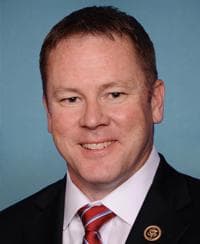
Full profile: /officials/D000626
Source: Congress.gov · FEC
Cosponsors (11)
Members who have signed on to support this bill since introduction. Source: Congress.gov.
- Chrissy Houlahan (D-PA-6)Original· 2025-12-11
- Michael T. McCaul (R-TX-10)Original· 2025-12-11
- Pat Harrigan (R-NC-10)Original· 2025-12-11
- Pete Sessions (R-TX-17)Original· 2025-12-11
- Stephanie I. Bice (R-OK-5)Original· 2025-12-11
- April McClain Delaney (D-MD-6)· 2025-12-16
- Brandon Gill (R-TX-26)· 2025-12-16
- Donald G. Davis (D-NC-1)· 2026-01-08
- Nicholas J. Begich III (R-AK)· 2026-03-03
- Young Kim (R-CA-40)· 2026-03-03
- Michael Lawler (R-NY-17)· 2026-04-20
Latest Action
The most recent step in the bill's legislative path. Committee Activity below shows referrals and reports; the full action-by-action history including floor proceedings lives at Congress.gov →
Ordered to be Reported in the Nature of a Substitute (Amended) by the Yeas and Nays: 30 - 14.
2026-04-22
Source: Congress.gov
Committee Activity
Currently in
- House Committee on Foreign AffairsMarkup By · 2026-04-22
Previously
- Foreign Affairs CommitteeMarkup By · 2026-04-22
- Foreign Affairs CommitteeReferred To · 2025-12-11
- House Committee on Foreign AffairsReferred To · 2025-12-11
Plain-English Summary
This bill would establish protections for biological materials and genetic information developed by American researchers and companies, likely preventing other countries from using or profiting from U.S. biological innovations without permission. The legislation aims to strengthen international agreements and enforcement mechanisms to ensure American scientists and biotech firms maintain control over their discoveries in areas like medicine, agriculture, and biotechnology. It affects researchers, pharmaceutical companies, agricultural businesses, and the U.S. government's ability to negotiate trade deals involving biological resources.
AI-assisted summary generated from the official bill metadata (title, subjects, actions) sourced from Congress.gov. Cached and reviewed. Always verify against the official text linked below.
Subjects
Full Bill Text
Verbatim text published on Congress.gov via GovInfo. Use Cmd+F / Ctrl+F to search within this excerpt.
[Congressional Bills 119th Congress] [From the U.S. Government Publishing Office] [H.R. 6624 Introduced in House (IH)] <DOC> 119th CONGRESS 1st Session H. R. 6624 To restrict the export to foreign entities of concern of United States intellectual property and sensitive information related to synthetic biology, and for other purposes. _______________________________________________________________________ IN THE HOUSE OF REPRESENTATIVES December 11, 2025 Mr. Davidson (for himself, Ms. Houlahan, Mrs. Bice, Mr. McCaul, Mr. Sessions, and Mr. Harrigan) introduced the following bill; which was referred to the Committee on Foreign Affairs _______________________________________________________________________ A BILL To restrict the export to foreign entities of concern of United States intellectual property and sensitive information related to synthetic biology, and for other purposes. Be it enacted by the Senate and House of Representatives of the United States of America in Congress assembled, SECTION 1. SHORT TITLE. This Act may be cited as the ``Biological Intellectual Property Protection Act of 2025''. SEC. 2. SENSE OF CONGRESS. It is the sense of Congress that-- (1) the People's Republic of China is conducting a systematic campaign to access and exploit sensitive United States data and intellectual property to modernize its military, intelligence, and other security apparatuses, enable human rights abuses, and develop dual-use strategic technologies; (2) access by the People's Republic of China to sensitive United States data and intellectual property poses grave and direct threats to United States national security; (3) the efforts of the People's Republic of China to access such data and intellectual property are supported by a military-civil fusion strategy, through which the People's Republic of China increases the size of its military-industrial complex by compelling civilian Chinese companies and research institutions to support its military and intelligence activities, which results in ostensibly private and civilian companies that access United States capital supporting the modernization of the People's Liberation Army; (4) the law of the People's Republic of China requires that all citizens of the People's Republic of China cooperate with national security priorities, enabling the modernization of the People's Liberation Army, including through-- (A) the National Security Law of 2015, which states that citizens of the People's Republic of China ``shall have duties and obligations to maintain national security''; (B) the National Intelligence Law of 2017, which states that ``all organizations and citizens shall support, assist, and cooperate with national intelligence work''; (C) the Data Security Law of 2021, which states that ``where a public security organ or national security organ needs to obtain data for the sake of national security or for investigating crimes in accordance with the law . . . the relevant organizations and individuals shall cooperate''; and (D) the Counterespionage Law, revised in 2023, which states that citizens of the People's Republic of China ``have the duty to maintain the security, honor and interests of the state, and shall not engage in any act that endangers the security, honor or interests of the state''; (5) the export of novel synthetic DNA and RNA sequences provides insight into the designs and research of biotechnology entities, leading to a high potential for intellectual property theft by foreign adversaries; and (6) the United States should therefore control the export of synthetic DNA and RNA sequences to foreign adversaries. SEC. 3. LICENSE REQUIREMENT TO PROTECT UNITED STATES INTELLECTUAL PROPERTY AND SENSITIVE INFORMATION RELATED TO SYNTHETIC BIOLOGY. Part I of the Export Control Reform Act of 2018 (50 U.S.C. 4811 et seq.) is amended by inserting after section 1758 the following: ``SEC. 1758A. LICENSE REQUIREMENT TO PROTECT UNITED STATES INTELLECTUAL PROPERTY AND SEN- SITIVE INFORMATION RELATED TO SYN- THETIC BIOLOGY. ``(a) License Requirement.--Not later than 1 year after…
Show the remaining 288 wordsHide the remaining 288 words
the date of the enactment of this section, the Secretary shall, except as provided for in subsection (b), require a license for the export, reexport, or in-country transfer to a foreign entity of concern of a digital sequence of synthetic DNA or RNA designed by humans or artificial intelligence systems. ``(b) Exception.--The requirement for a license under subsection (a) shall not apply with respect to information described in section 734.3(b) of the Export Administration Regulations. ``(c) Definitions.--In this section: ``(1) Digital sequence.--The term `digital sequence' means a binary file or other digital representation containing symbols representing the identity, order, and any chemical modification for each position in a DNA or RNA molecule. ``(2) Foreign country of concern.--The term `foreign country of concern' has the meaning given that term in section 10612(a) of the Research and Development, Competition, and Innovation Act (42 U.S.C. 19221(a)). ``(3) Foreign entity of concern.--The term `foreign entity of concern' means-- ``(A) a government entity of a foreign country of concern; ``(B) a foreign person subject to the jurisdiction of, or organized under the laws of, a foreign country of concern; or ``(C) a foreign person owned, directed, or controlled by an entity described in subparagraph (A) or (B). ``(4) Synthetic dna or rna.--The term `synthetic DNA or RNA' means-- ``(A) molecules that are constructed by joining nucleic acid molecules and can replicate in a living cell, such as recombinant nucleic acids; ``(B) nucleic acid molecules that are chemically or by other means synthesized, including such molecules that are chemically or otherwise modified but can base pair with naturally occurring nucleic acid molecules, such as synthetic nucleic acids; or ``(C) molecules that result from the replication of molecules described in subparagraph (A) or (B).''. <all>
Related legislation
Bills by the same sponsor or covering overlapping subjects.
- HR10491CHARGE ActReferred to Committee · 2026-09-17
- HR7866American Lending Fairness Act of 2026Referred to Committee · 2026-09-16
- HR10309HOMEFRONT Act of 2026Referred to Committee · 2026-09-08
- HR9900Privately Insured Credit Unions Conversion Modernization ActReferred to Committee · 2026-07-23