Stop Insider Trading Act
Sponsor
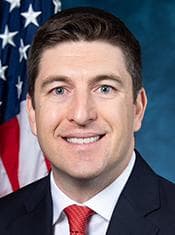
- Progressive Groups$250k
Full profile: /officials/S001213
Source: Congress.gov · FEC
Cosponsors (93)
Members who have signed on to support this bill since introduction. Source: Congress.gov.
- Aaron Bean (R-FL-4)Original· 2026-01-12
- Addison P. McDowell (R-NC-6)Original· 2026-01-12
- Andrew Ogles (R-TN-5)Original· 2026-01-12
- Andy Biggs (R-AZ-5)Original· 2026-01-12
- Andy Harris (R-MD-1)Original· 2026-01-12
- Ann Wagner (R-MO-2)Original· 2026-01-12
- Anna Paulina Luna (R-FL-13)Original· 2026-01-12
- Ashley Hinson (R-IA-2)Original· 2026-01-12
- Ben Cline (R-VA-6)Original· 2026-01-12
- Bill Huizenga (R-MI-4)Original· 2026-01-12
- Chip Roy (R-TX-21)Original· 2026-01-12
- Christopher H. Smith (R-NJ-4)Original· 2026-01-12
- Cory Mills (R-FL-7)Original· 2026-01-12
- Dale W. Strong (R-AL-5)Original· 2026-01-12
- Dan Crenshaw (R-TX-2)Original· 2026-01-12
- David J. Taylor (R-OH-2)Original· 2026-01-12
- Derek Schmidt (R-KS-2)Original· 2026-01-12
- Derrick Van Orden (R-WI-3)Original· 2026-01-12
- Don Bacon (R-NE-2)Original· 2026-01-12
- Dusty Johnson (R-SD)Original· 2026-01-12
- Earl L. "Buddy" Carter (R-GA-1)Original· 2026-01-12
- Erin Houchin (R-IN-9)Original· 2026-01-12
- Glenn Grothman (R-WI-6)Original· 2026-01-12
- Gregory F. Murphy (R-NC-3)Original· 2026-01-12
- H. Morgan Griffith (R-VA-9)Original· 2026-01-12
- Jack Bergman (R-MI-1)Original· 2026-01-12
- Jeff Hurd (R-CO-3)Original· 2026-01-12
- Jennifer A. Kiggans (R-VA-2)Original· 2026-01-12
- Jimmy Patronis (R-FL-1)Original· 2026-01-12
- Jodey C. Arrington (R-TX-19)Original· 2026-01-12
- John H. Rutherford (R-FL-5)Original· 2026-01-12
- John James (R-MI-10)Original· 2026-01-12
- John Joyce (R-PA-13)Original· 2026-01-12
- John R. Moolenaar (R-MI-2)Original· 2026-01-12
- Josh Riley (D-NY-19)Original· 2026-01-12
- Juan Ciscomani (R-AZ-6)Original· 2026-01-12
- Julie Fedorchak (R-ND)Original· 2026-01-12
- Kat Cammack (R-FL-3)Original· 2026-01-12
- Keith Self (R-TX-3)Original· 2026-01-12
- Kevin Kiley (R-CA-3)Original· 2026-01-12
- Laurel M. Lee (R-FL-15)Original· 2026-01-12
- Lloyd Smucker (R-PA-11)Original· 2026-01-12
- Mariannette Miller-Meeks (R-IA-1)Original· 2026-01-12
- Mark Alford (R-MO-4)Original· 2026-01-12
- Mark B. Messmer (R-IN-8)Original· 2026-01-12
- Mary E. Miller (R-IL-15)Original· 2026-01-12
- Max L. Miller (R-OH-7)Original· 2026-01-12
- Michael Baumgartner (R-WA-5)Original· 2026-01-12
- Michael Cloud (R-TX-27)Original· 2026-01-12
- Michael Lawler (R-NY-17)Original· 2026-01-12
- Mike Carey (R-OH-15)Original· 2026-01-12
- Mike Collins (R-GA-10)Original· 2026-01-12
- Mike Flood (R-NE-1)Original· 2026-01-12
- Mike Kennedy (R-UT-3)Original· 2026-01-12
- Nick LaLota (R-NY-1)Original· 2026-01-12
- Pat Harrigan (R-NC-10)Original· 2026-01-12
- Randy Feenstra (R-IA-4)Original· 2026-01-12
- Richard Hudson (R-NC-9)Original· 2026-01-12
- Robert P. Bresnahan, Jr. (R-PA-8)Original· 2026-01-12
- Rudy Yakym III (R-IN-2)Original· 2026-01-12
- Ryan Mackenzie (R-PA-7)Original· 2026-01-12
- Scott Fitzgerald (R-WI-5)Original· 2026-01-12
- Scott Franklin (R-FL-18)Original· 2026-01-12
- Scott Perry (R-PA-10)Original· 2026-01-12
- Stephanie I. Bice (R-OK-5)Original· 2026-01-12
- Thomas P. Tiffany (R-WI-7)Original· 2026-01-12
- Tom Barrett (R-MI-7)Original· 2026-01-12
- Tracey Mann (R-KS-1)Original· 2026-01-12
- Vern Buchanan (R-FL-16)Original· 2026-01-12
- William R. Timmons IV (R-SC-4)Original· 2026-01-12
- Young Kim (R-CA-40)Original· 2026-01-12
- Zachary Nunn (R-IA-3)Original· 2026-01-12
- Brian J. Mast (R-FL-21)· 2026-01-13
- Claudia Tenney (R-NY-24)· 2026-01-13
- Daniel Webster (R-FL-11)· 2026-01-13
- Darin LaHood (R-IL-16)· 2026-01-13
- Elijah Crane (R-AZ-2)· 2026-01-13
- Jake Ellzey (R-TX-6)· 2026-01-13
- Mike Rogers (R-AL-3)· 2026-01-13
- Nicholas A. Langworthy (R-NY-23)· 2026-01-13
- Nicholas J. Begich III (R-AK)· 2026-01-13
- Pat Fallon (R-TX-4)· 2026-01-13
- Paul A. Gosar (R-AZ-9)· 2026-01-13
- Troy Downing (R-MT-2)· 2026-01-13
- Jeff Crank (R-CO-5)· 2026-01-20
- Vince Fong (R-CA-20)· 2026-01-20
- Cliff Bentz (R-OR-2)· 2026-01-21
- Mike Haridopolos (R-FL-8)· 2026-01-21
- Richard McCormick (R-GA-7)· 2026-01-21
- Michael Guest (R-MS-3)· 2026-01-22
- Ed Case (D-HI-1)· 2026-01-27
- Gabe Evans (R-CO-8)· 2026-01-27
- Matt Van Epps (R-TN-7)· 2026-01-27
Latest Action
The most recent step in the bill's legislative path. Committee Activity below shows referrals and reports; the full action-by-action history including floor proceedings lives at Congress.gov →
Cloture on the motion to proceed to the measure not invoked in Senate by Yea-Nay Vote. 53 - 47. Record Vote Number: 253.
2026-09-30
Source: Congress.gov
Committee Activity
Previously
- House Committee on House AdministrationUnknown · 2026-07-22
- House Committee on House AdministrationReported By · 2026-02-03
- Committee on House AdministrationReported By · 2026-02-03
- House Committee on House AdministrationMarkup By · 2026-01-14
- Committee on House AdministrationMarkup By · 2026-01-14
Plain-English Summary
Stop Insider Trading Act This bill generally prohibits Members of Congress and their spouses and dependent children from purchasing stocks and requires public notice before these individuals may sell stocks. Specifically, Members of Congress and the spouses and dependent children of Members of Congress may not purchase covered investments. Between 7 and 14 days before a Member or a covered spouse or dependent sells a covered investment, the relevant Member must file public notice of the intent to sell with the Clerk of the House of Representatives or the Secretary of the Senate, as appropriate. The Clerk or Secretary must publish this notice online. If the individual decides not to sell the covered investment, the notice must be withdrawn. Under the bill, a covered investment is a security issued by a publicly traded company or a comparable economic interest. Some investments are exempt, including interest in a widely held investment fund and certain investments held in a trust. Violations of these provisions are subject to a fee and, in the case of a purchase, a requirement to sell the covered investment. The fee must equal (1) the greater of $2,000 or 10% of the transaction value, and (2) any net gain realized from the transaction during a specified period. The fee may not be paid using campaign donations or Members’ official allowances. Certain transactions by covered spouses and dependents are exempt, including transactions made on behalf of another person or made as part of compensation from the individual’s employer.
Plain-English rewrite of the Congressional Research Service summary published on Congress.gov. Cached and reviewed.
Subjects
Full Bill Text
Verbatim text published on Congress.gov via GovInfo. Use Cmd+F / Ctrl+F to search within this excerpt.
[Congressional Bills 119th Congress] [From the U.S. Government Publishing Office] [H.R. 7008 Reported in House (RH)] <DOC> Union Calendar No. 409 119th CONGRESS 2d Session H. R. 7008 [Report No. 119-479] To amend chapter 131 of title 5 to require certain restrictions on stocks for Members of Congress and their spouses and dependents, and for other purposes. _______________________________________________________________________ IN THE HOUSE OF REPRESENTATIVES January 12, 2026 Mr. Steil (for himself, Mr. Hudson, Mr. Griffith, Mr. Murphy, Mrs. Bice, Mr. Carey, Mrs. Miller of Illinois, Ms. Lee of Florida, Mr. Biggs of Arizona, Mr. Ogles, Mrs. Luna, Mr. Roy, Mr. Taylor, Mr. Van Orden, Mr. Bacon, Mr. Johnson of South Dakota, Mr. Hurd of Colorado, Mr. Joyce of Pennsylvania, Mr. Collins, Mr. Lawler, Mr. Baumgartner, Mr. Cloud, Mr. Feenstra, Mr. Scott Franklin of Florida, Mr. Mann, Mr. Buchanan, Mr. Timmons, Mrs. Kim, Mr. Nunn of Iowa, Mr. Cline, Mr. Crenshaw, Mr. Harris of Maryland, Mr. Arrington, Mr. Alford, Mr. Yakym, Mr. Kennedy of Utah, Mrs. Miller-Meeks, Mr. James, Mr. Mills, Mrs. Cammack, Mr. Barrett, Mr. Carter of Georgia, Mr. LaLota, Mr. Mackenzie, Mr. Schmidt, Ms. Fedorchak, Mrs. Kiggans of Virginia, Mrs. Hinson, Mr. Rutherford, Mr. Smith of New Jersey, Mr. Ciscomani, Mr. Kiley of California, Mr. Patronis, Mrs. Houchin, Mr. Riley of New York, Mr. Harrigan, Mr. Moolenaar, Mr. Perry, Mr. Bean of Florida, Mr. Flood, Mr. Self, Mr. Bresnahan, Mr. Huizenga, Mr. Bergman, Mr. Messmer, Mr. Tiffany, Mr. Grothman, Mr. Fitzgerald, Mr. Smucker, Mr. Strong, Mr. Miller of Ohio, Mr. McDowell, and Mrs. Wagner) introduced the following bill; which was referred to the Committee on House Administration February 3, 2026 Additional sponsors: Mr. Begich, Mr. Crane, Mr. LaHood, Mr. Rogers of Alabama, Ms. Tenney, Mr. Mast, Mr. Gosar, Mr. Ellzey, Mr. Fallon, Mr. Langworthy, Mr. Downing, Mr. Webster of Florida, Mr. Fong, Mr. Crank, Mr. Bentz, Mr. McCormick, Mr. Haridopolos, Mr. Guest, Mr. Case, Mr. Van Epps, and Mr. Evans of Colorado February 3, 2026 Reported with an amendment, committed to the Committee of the Whole House on the State of the Union, and ordered to be printed [Strike out all after the enacting clause and insert the part printed in italic] [For text of introduced bill, see copy of bill as introduced on January 12, 2026] _______________________________________________________________________ A BILL To amend chapter 131 of title 5 to require certain restrictions on stocks for Members of Congress and their spouses and dependents, and for other purposes. Be it enacted by the Senate and House of Representatives of the United States of America in Congress assembled, SECTION 1. SHORT TITLE. This Act may be cited as the ``Stop Insider Trading Act''. SEC. 2. RESTRICTIONS ON COVERED INVESTMENTS. (a) Table of Contents.--The table of contents for chapter 131 of title 5, United States Code, is amended by adding at the end the following: ``subchapter iv--restrictions on covered investments ``13151. Definitions. ``13152. Restrictions on covered investments. ``13153. Enforcement.''. (b) Restrictions.--Chapter 131 of title 5, United States Code, is amended by adding at the end a new subchapter: ``SUBCHAPTER IV--RESTRICTIONS ON COVERED INVESTMENTS ``Sec. 13151. Definitions ``In this subchapter: ``(1) Covered individual.--The term `covered individual' means any of the following: ``(A) A Member of Congress, as defined in section 13101. ``(B) A dependent child (as defined in section 13101) or a spouse of a Member of Congress. ``(2) Covered investment.-- ``(A) In general.--The term `covered investment' means a security issued by a publicly traded company or any comparable economic interest acquired through synthetic means, such as the use of a derivative, including an option, warrant, or other similar means. ``(B) Exclusion.--The term `covered investment'…
Show the remaining 1,046 wordsHide the remaining 1,046 words
does not include-- ``(i) an excepted investment fund (as described in section 13104(f)(8)); ``(ii) any other fund that would be an excepted investment fund but for the fact that the fund does not meet the diversification requirement solely because the fund is concentrated in-- ``(I) the United States; or ``(II) the State, territory, or District of residence of the covered individual who owns the fund; ``(iii) an interest in a small business concern as defined under section 3 of the Small Business Act (15 U.S.C. 632); or ``(iv) investments held in a trust if no covered individual has any authority over a trustee of the trust, including the authority to appoint, replace, or direct the actions of such a trustee, and the trustee is not the spouse, child, parent, or sibling of a Member of Congress. ``(3) Publicly traded company.--The term `publicly traded company' means an issuer that has a class of securities registered under section 12 of the Securities Exchange Act of 1934 (15 U.S.C. 78l). ``(4) Security.--The term `security' has the meaning given the term in section 3(a) of the Securities Exchange Act of 1934 (15 U.S.C. 78c(a)). ``(5) Supervising ethics office.--The term `supervising ethics office' has the meaning given the term in section 13101. ``Sec. 13152. Restrictions on covered investments ``(a) Conduct During Federal Service.--Except as described in subsection (c), no covered individual may purchase a covered investment. ``(b) Advanced Notice Requirement.-- ``(1) In general.--No covered individual shall sell a covered investment, unless a notice of intent to sell the covered investment is made by the Member of Congress and publicly disclosed at least 7 calendar days, and no more than 14 calendar days, prior to the sale in accordance with the requirements of this subsection. ``(2) Contents of notice.--The notice under paragraph (1) shall include the following: ``(A) The projected date of sale of a covered investment. ``(B) A description of such sale. ``(C) The number of shares in such sale. ``(3) Withdrawal.--The notice under paragraph (1) shall be withdrawn by the Member of Congress who filed it, prior to the close of the expiration of the notice, if the covered individual determines not to sell the covered asset. ``(4) Filing.--A Member of Congress shall file the notice under paragraph (1) for each intended sale by the Member, or the spouse or dependent child of the Member, with-- ``(A) the Clerk of the House of Representatives, in the case of a Representative in Congress, a Delegate to Congress, or the Resident Commissioner from Puerto Rico; or ``(B) the Secretary of the Senate, in the case of a Senator. ``(5) Publication.--The notice under paragraph (1) and the withdrawal under paragraph (3) shall, upon receipt, be made publicly available on a website controlled by the by the Clerk of the House of Representatives or the Secretary of the Senate, as applicable. ``(c) Exceptions.-- ``(1) Occupation.--The requirements of subsections (a) and (b) shall not apply to a spouse or dependent child of a Member of Congress with respect to a transaction in a covered investment which is-- ``(A) on behalf, or for the benefit, of any person other than a covered individual; or ``(B) made as a part of compensation from an employer of such individual or in furtherance of any fiduciary or occupational obligations of such individual. ``(2) Other.--The requirements of subsection (a) shall not apply to a covered individual with respect to a transaction in a covered investment made for the purpose of reinvesting dividends received from such covered investment. ``Sec. 13153. Enforcement ``(a) In General.--Any covered individual who violates the restrictions in section 13152 with respect to a covered investment, shall, at the direction of the supervising ethics office-- ``(1) incur a fee, as calculated in subsection (b), to be paid by the Member of Congress who-- ``(A) caused the violation; or ``(B) is the spouse or parent of a covered individual who caused the violation; and ``(2) in the case of a purchase of a covered investment, be required to sell a covered investment purchased in violation of section 13152(a). ``(b) Calculation of Fees.--The fee required under subsection (a) shall be equal to the sum of-- ``(1) $2,000 or ten percent of the value of the transaction in the covered investment which violates section 13152, whichever is greater; and ``(2) the net gain realized, if any, from the covered investment during the period beginning on the most recent date on which the individual became a covered individual and ending on the date of disposition of the covered investment, as determined by the supervising ethics office. ``(c) Payment Restrictions.--A Member of Congress may not pay any of the fees under this section by using amounts from the following sources: ``(1) The Members' Representational Allowance. ``(2) The Senators' Official Personnel and Office Expense Account. ``(3) Any contribution (as defined in section 301(8) of the Federal Election Campaign Act of 1971 (52 U.S.C. 30101(8))) accepted as a candidate, and any other donation received as support for activities of the individual as a holder of Federal office. ``(d) Miscellaneous Receipts.--Any amounts collected in fees authorized by this section shall be deposited in the general fund of the Treasury as miscellaneous receipts in accordance with section 3302(b) of title 31. ``(e) Referral.--Upon the assessment of a fee under this section, the supervising ethics office has the authority to refer a Member of Congress to the Department of Justice in the same manner and to the same extent as a violation under section 13106 if such Member of Congress resigns or retires before paying such assessed fee. ``(f) Interpretative Guidance.--Each supervising ethics office may issue interpretative guidance on this subchapter and in issuing such guidance, may consider mitigating or aggravating circumstances.''. (c) Effective Date.--The amendments made by this Act shall take effect on the date that is 180 days after the date of enactment of this Act. Union Calendar No. 409 119th CONGRESS 2d Session H. R. 7008 [Report No. 119-479] _______________________________________________________________________ A BILL To amend chapter 131 of title 5 to require certain restrictions on stocks for Members of Congress and their spouses and dependents, and for other purposes. _______________________________________________________________________ February 3, 2026 Reported with an amendment, committed to the Committee of the Whole House on the State of the Union, and ordered to be printed
Related legislation
Bills by the same sponsor or covering overlapping subjects.
- HR9330Earned Wage Access Consumer Protection ActReferred to Committee · 2026-09-01
- HR9368Voter ID ActReferred to Committee · 2026-07-15
- HR8720Campaign Finance Transparency ActReferred to Committee · 2026-07-13
- HR8286Protecting Americans’ Retirement Savings From Politics ActReported by Committee · 2026-06-24