Stop Chinese Fentanyl Act of 2025
Sponsor
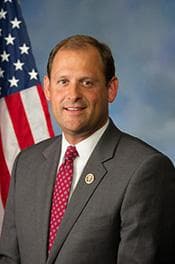
Full profile: /officials/B001282
Source: Congress.gov · FEC
Cosponsors (9)
Members who have signed on to support this bill since introduction. Source: Congress.gov.
9 cosponsors on record at Congress.gov. The named list is syncing into Govwatch and will appear here shortly — view on Congress.gov in the meantime.
Latest Action
The most recent step in the bill's legislative path. Committee Activity below shows referrals and reports; the full action-by-action history including floor proceedings lives at Congress.gov →
Received in the Senate and Read twice and referred to the Committee on Banking, Housing, and Urban Affairs.
2025-09-03
Source: Congress.gov
Committee Activity
Currently in
- Senate Committee on Banking, Housing, and Urban AffairsReferred To · 2025-09-03
- House Committee on Foreign AffairsMarkup By · 2025-04-09
- House Committee on Financial ServicesReported By · 2025-03-21
- House Committee on Oversight and Government ReformReferred To · 2025-01-28
- House Committee on the JudiciaryReferred To · 2025-01-28
Previously
- House Committee on Financial ServicesMarkup By · 2025-03-05
- House Committee on Financial ServicesReferred To · 2025-01-28
- House Committee on Foreign AffairsReferred To · 2025-01-28
- House Committee on Oversight and Government ReformBills of Interest - Exchange of Letters
- House Committee on the JudiciaryBills of Interest - Exchange of Letters
Plain-English Summary
Stop Chinese Fentanyl Act of 2025 This bill subjects certain Chinese entities and government officials to potential sanctions related to opioid trafficking and requires the President to conduct certain preliminary analyses before regulating economic transactions in the event of a national emergency related to international drug trafficking. Specifically, for the purposes of the Fentanyl Sanctions Act, the bill changes the definition of foreign opioid trafficker to specify that the term includes (1) Chinese entities involved in the production or sale of synthetic opioids or related pharmaceutical ingredients that fail to take steps to detect or prevent opioid trafficking; and (2) certain senior Chinese government officials that aid and abet opioid trafficking, including through intentional inaction. Under current law, the President must impose certain sanctions on individuals and entities identified as foreign opioid traffickers. Further, the bill extends through 2029 an existing requirement that the President report to Congress annually on identified foreign opioid traffickers and any sanctions imposed on them. (This requirement expired in December 2024.) The bill also requires the President to take additional steps in issuing regulations under the International Emergency Economic Powers Act (IEEPA) pursuant to a declared national emergency related to international drug trafficking. (IEEPA authorizes the President to regulate a variety of economic transactions following a declaration of national emergency.) Under the bill, the President must evaluate the costs and benefits of issuing economic regulations for the purpose of resolving the drug trafficking emergency and publish a discussion of such costs and benefits.
Plain-English rewrite of the Congressional Research Service summary published on Congress.gov. Cached and reviewed.
Subjects
Related legislation
Bills by the same sponsor or covering overlapping subjects.
- HR1653Civil Investigative Demand Reform Act of 2025Referred to Committee · 2026-09-16
- HR10184Consumer Financial Protection Accountability and Reform Act of 2026Referred to Committee · 2026-09-16
- HR10070Border Patrol Overtime Parity ActReferred to Committee · 2026-08-10
- HR9830Lawful Hemp Protection ActReferred to Committee · 2026-07-22