HR7653Reported by Committee
Biodefense Diplomacy Enhancement Act
Introduced
In Committee
3
Passed One Chamber4
Passed Both5
Signed into Law119th
Congress
2026-02-23
Introduced
6
Cosponsors
HR
ⓘType
Sponsor
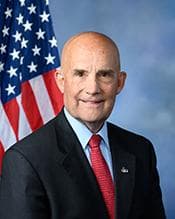
Keith Self
Republican · TX · Representative
Votes with party: 82.7% (659 recorded votes)
Full profile: /officials/S001224
Source: Congress.gov · FEC
Cosponsors (6)
Members who have signed on to support this bill since introduction. Source: Congress.gov.
Latest Action
The most recent step in the bill's legislative path. Committee Activity below shows referrals and reports; the full action-by-action history including floor proceedings lives at Congress.gov →
Committee Activity
Currently in
- House Committee on Foreign AffairsMarkup By · 2026-03-26
Previously
- Foreign Affairs CommitteeMarkup By · 2026-03-26
- Foreign Affairs CommitteeReferred To · 2026-02-23
- House Committee on Foreign AffairsReferred To · 2026-02-23
Plain-English Summary
This bill would strengthen international cooperation and diplomacy efforts related to biological threats and disease prevention by enhancing how the U.S. government coordinates with other countries on biodefense issues. It likely aims to improve information sharing, joint research initiatives, and coordinated responses to biological risks between American officials and their international counterparts. The measure would affect diplomats, public health agencies, and international partners working together on disease surveillance and pandemic preparedness.
AI-assisted summary generated from the official bill metadata (title, subjects, actions) sourced from Congress.gov. Cached and reviewed. Always verify against the official text linked below.
Subjects
International Affairs
Full Bill Text
Verbatim text published on Congress.gov via GovInfo. Use Cmd+F / Ctrl+F to search within this excerpt.
[Congressional Bills 119th Congress] [From the U.S. Government Publishing Office] [H.R. 7653 Introduced in House (IH)] <DOC> 119th CONGRESS 2d Session H. R. 7653 To enhance diplomatic engagement on international biotechnology and biosecurity matters. _______________________________________________________________________ IN THE HOUSE OF REPRESENTATIVES February 23, 2026 Mr. Self (for himself and Mr. Keating) introduced the following bill; which was referred to the Committee on Foreign Affairs _______________________________________________________________________ A BILL To enhance diplomatic engagement on international biotechnology and biosecurity matters. Be it enacted by the Senate and House of Representatives of the United States of America in Congress assembled, SECTION 1. SHORT TITLE. This Act may be cited as the ``Biodefense Diplomacy Enhancement Act''. SEC. 2. ENHANCEMENT OF DIPLOMATIC ENGAGEMENT ON INTERNATIONAL BIODEFENSE, BIOSECURITY, AND BIOTECHNOLOGY MATTERS. (a) In General.--The Secretary of State shall advance United States foreign policy goals to improve cooperation in the field of international biodefense, biosecurity, and biotechnology matters with United States allies and partners, including by carrying out the activities described in this section. (b) Policy Development.--The Secretary of State, acting through the Under Secretary for Arms Control and International Security if the Secretary so delegates, in coordination with the Under Secretary for Political Affairs and the Permanent Representative of the United States to the North Atlantic Treaty Organization (NATO), shall pursue enhanced biodefense cooperation within NATO, including by-- (1) advocating for the prioritization of policy development within NATO relating to biodefense, including in the areas of biotechnology, biosurveillance, and countermeasures in the field of biological threats; (2) identifying and evaluating opportunities to strengthen NATO planning, policies, and activities relating to biodefense and biotechnology; (3) pursuing potential revisions or amendments to the NATO Chemical, Biological, Radiological, and Nuclear Defence Policy to further enhance biodefense efforts in NATO; (4) coordinating with NATO member states to prioritize and implement measures described in the NATO Chemical, Biological, Radiological, and Nuclear Defence Policy; (5) strengthening NATO interoperability and allied forces capabilities in resilience, detection, attribution, emergency response, and recovery in the event of a weaponized biological attack; (6) evaluating opportunities for expanded NATO capabilities to research, develop, and deploy biotechnology for international security purposes; and (7) promoting adherence by NATO member states to the highest standards of safety and security in biological research. (c) Cooperation With United States Allies and Partners.--The Secretary of State, acting through the Under Secretary for Arms Control and International Security if the Secretary so delegates, in coordination with the Under Secretary for Political Affairs, shall pursue international biotechnology, biosecurity, and biodefense cooperation with United States allies and partners, including-- (1) exploring potential areas of cooperation with countries that are major non-NATO allies in biotechnology, biosecurity, and biodefense matters; (2) coordinating with allied and partner countries, including NATO countries, on formulation of export control policies in the field of biotechnology, including items that may be identified as dual-use items that would pose a substantial risk to national security if used for military end- uses, such as items that could enable the development of bioweapons; (3) promoting adherence by United States allies and partners to the highest standards of safety and security in biological research; and (4) collaborating on efforts to enforce the Biological Weapons Convention. (d) Strategies.-- (1) NATO biodefense strategy.--The Secretary of State, acting through the Under Secretary for Arms Control and International Security if the Secretary so delegates, in coordination with the Under Secretary for Political Affairs, shall develop a strategy, to be known as the ``NATO Biodefense Strategy'', which shall include-- (A) an assessment of current cooperation between the United States and NATO member states in biotechnology, biosurveillance, biological threat countermeasures, and other biodefense capabilities; (B)…
Show the remaining 666 wordsHide the remaining 666 words
an identification of strategic planning and deployment gaps in NATO relating to biotechnology and biodefense; (C) recommendations to address gaps identified under subparagraph (B), including through coordination with NATO member states, capability development, and coordination mechanisms; and (D) an assessment of current Department of State cooperation with other United States Government agencies in biodefense, biotechnology, biosecurity, biosurveillance, and biological threat countermeasures. (2) International biotechnology, biosecurity, and biodefense cooperation strategy.--The Secretary of State, acting through the Under Secretary for Arms Control and International Security if the Secretary so delegates, in coordination with the Under Secretary for Political Affairs, shall develop a strategy, to be known as the ``International Biotechnology, Biosecurity, and Biodefense Cooperation Strategy'', which shall include-- (A) proposals for commitments or agreements under which the United States and United States allies and partners, including countries that are major non-NATO allies, may expand cooperation on international security matters relating to biotechnology, biosecurity, and biodefense; (B) an assessment of the feasibility and effectiveness of coordinating export control efforts, in addition to existing export control regimes such as the Wassenaar Arrangement and the Australia Group, related to biotechnology items that may pose national security risks if used for military end uses; and (C) an overview of nonproliferation, anti- terrorism, demining, and related (NADR) programs and funds for the purposes of enhancing capabilities and capacities to address international biosecurity threats and recommendations for the use of Department of State programs and funds, including NADR programs and funds, to expand cooperation outlined in subparagraph (A) and increase the effectiveness of export control efforts identified in subparagraph (B). (3) Limitation.--The strategies developed under paragraphs (1) and (2) shall be limited to addressing threats posed by biological agents and toxins as such terms are defined in section 178 of title 18, United States Code. (e) Report.-- (1) In general.--Not later than 270 days after the date of the enactment of this Act, the Secretary of State, acting through the Under Secretary for Arms Control and International Security if the Secretary so delegates, shall submit to the appropriate congressional committees a report that contains the strategies required by subsection (d). (2) Form.--The report required by this subsection shall be submitted in unclassified form but may include a classified annex if submitted separately from the unclassified portion. (f) Congressional Briefing.--Not later than 90 days after the date of the enactment of this Act, the Under Secretary for Arms Control and International Security shall provide a briefing to the appropriate congressional committees in response to significant developments relating to-- (1) the contents of the report required by subsection (e); and (2) other material developments in biotechnology and biosecurity globally that may affect United States national security interests. (g) Definitions.--In this section-- (1) the term ``appropriate congressional committees'' means-- (A) the Committee on Foreign Affairs of the House of the Representatives; and (B) the Committee on Foreign Relations of the Senate; (2) the term ``biodefense'' means actions to counter biological threats, reduce risks, and prepare for, respond to, and recover from biological incidents; (3) the term ``biological threat'' means entities involved with, or a situation involving, a biological hazard that can potentially cause a biological incident; (4) the term ``biosecurity'' means policies, practices, and controls that reduce the risk of loss, theft, misuse, diversion of, or intentional unauthorized release of biological materials; (5) the term ``biosurveillance'' means the process of gathering, integrating, interpreting, and communicating essential information and indications related to all-hazard threats or disease activity affecting human, animal, plant, and environmental health to achieve early detection and provide early warning and contribute to overall situational awareness of the health aspects of a biological incident to support and enhance decision-making at all levels; (6) the term ``biotechnology'' means the use of biological processes, organisms, or systems for manufacturing, research, or medical purposes, including genetic engineering, synthetic biology, and bioinformatics; and (7) the term ``countries that are major non-NATO allies'' means countries designated pursuant to section 517 of the Foreign Assistance Act of 1961 (22 U.S.C. 2321k). <all>
Related legislation
Bills by the same sponsor or covering overlapping subjects.
- HR6698Board of Veterans Appeals Annual Report Transparency Act of 2025Referred to Committee · 2026-10-06
- HR10766To direct the Secretary of Defense to update the Critical Asset List of the Department of Defense to incorporate assets critical to the development, deployment, and operation of the Golden Dome missile defense system.Referred to Committee · 2026-10-06
- HCONRES116Denouncing Sharia law in the United States.Referred to Committee · 2026-09-03
- HR9879Super Pay-As-You-Go Act of 2026Referred to Committee · 2026-07-22