American Consumer Tariff Rebate Act of 2026
Sponsor
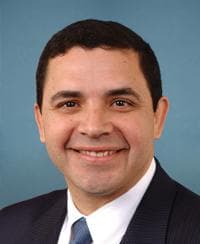
Full profile: /officials/C001063
Source: Congress.gov · FEC
Cosponsors (0)
Members who have signed on to support this bill since introduction. Source: Congress.gov.
No cosponsors on record. Bills can pass without cosponsors — this often means the sponsor introduced the bill alone, either because it's a messaging bill, a chairman's mark, or simply early in the legislative cycle.
Latest Action
The most recent step in the bill's legislative path. Committee Activity below shows referrals and reports; the full action-by-action history including floor proceedings lives at Congress.gov →
Plain-English Summary
This bill would create a system to refund tariffs (taxes on imported goods) directly to American consumers, potentially lowering prices on products like clothing, electronics, and household items that are subject to import duties. The rebate program would aim to offset the cost increases that tariffs typically cause for shoppers by returning some of the tariff revenue collected by the government. The proposal affects everyday consumers who buy imported goods and could influence how tariffs impact household budgets.
AI-assisted summary generated from the official bill metadata (title, subjects, actions) sourced from Congress.gov. Cached and reviewed. Always verify against the official text linked below.
Subjects
Full Bill Text
Verbatim text published on Congress.gov via GovInfo. Use Cmd+F / Ctrl+F to search within this excerpt.
[Congressional Bills 119th Congress] [From the U.S. Government Publishing Office] [H.R. 7865 Introduced in House (IH)] <DOC> 119th CONGRESS 2d Session H. R. 7865 To provide direct refunds to taxpayers for increased consumer costs attributable to tariffs imposed without congressional authorization. _______________________________________________________________________ IN THE HOUSE OF REPRESENTATIVES March 9, 2026 Mr. Cuellar introduced the following bill; which was referred to the Committee on Ways and Means _______________________________________________________________________ A BILL To provide direct refunds to taxpayers for increased consumer costs attributable to tariffs imposed without congressional authorization. Be it enacted by the Senate and House of Representatives of the United States of America in Congress assembled, SECTION 1. SHORT TITLE. This Act may be cited as the ``American Consumer Tariff Rebate Act of 2026''. SEC. 2. FINDINGS. Congress finds the following: (1) Article I, Section 8 of the Constitution vests exclusively in Congress the authority to lay and collect duties and tariffs. (2) Duties imposed pursuant to Presidential action under the International Emergency Economic Powers Act (50 U.S.C. 1701 et seq.) without express congressional authorization resulted in increased consumer prices nationwide. (3) The Congressional Budget Office and the Joint Economic Committee have estimated that total consumer costs attributable to such tariffs are approximately $231,350,000,000. (4) Congress has a responsibility to provide direct restitution to taxpayers for these unlawful cost increases, and to prioritize working families by excluding very high-income taxpayers and using the resulting savings to increase refunds for taxpayers raising children. SEC. 3. DEFINITIONS. In this Act: (1) Covered tariffs.--The term ``covered tariffs'' means duties imposed pursuant to Presidential action under the International Emergency Economic Powers Act (50 U.S.C. 1701 et seq.) that were subsequently determined to lack congressional authorization. (2) Eligible return.--The term ``eligible return'' means a Federal individual income tax return filed for the most recent taxable year for which sufficient information is available, including returns filed as-- (A) single; (B) married filing jointly; (C) married filing separately; (D) head of household; or (E) qualifying surviving spouse. (3) Qualified child.--The term ``qualified child'' has the meaning given in section 24(c) of the Internal Revenue Code of 1986. (4) Secretary.--The term ``Secretary'' means the Secretary of the Treasury or the Secretary's delegate. SEC. 4. ESTABLISHMENT OF TAXPAYER REBATE. (a) In General.--The Secretary shall provide a one-time direct payment to each Eligible Return in accordance with this section. (b) Income Limitation.--No payment shall be made under this Act with respect to any return reporting adjusted gross income exceeding $400,000 for the most recent taxable year for which sufficient information is available. (c) Aggregate Limitation.--The total amount of payments made under this Act shall not exceed $231,350,000,000. (d) Determination of Base Amount.-- (1) The Secretary shall determine a Base Amount such that, if payments were made under subsection (e) with respect to all Eligible Returns (without regard to subsection (b)), the total amount of such payments would equal $231,350,000,000. (2) In calculating the Base Amount, the Secretary shall calculate such amount by dividing $231,350,000,000 by the sum of-- (A) the number of Eligible Returns filed as single; (B) the number of Eligible Returns filed as married filing separately; (C) 1.5 multiplied by the number of Eligible Returns filed as head of household; and (D) 2 multiplied by the sum of-- (i) the number of Eligible Returns filed as married filing jointly; and (ii) the number of Eligible Returns filed as qualifying surviving spouse. (e) Payment Amounts by Filing Status.--Subject to subsection (b), the payment for an Eligible Return shall be-- (1) in the case of a return filed as single, an amount equal to 100 percent of the Base Amount; (2)…
Show the remaining 489 wordsHide the remaining 489 words
in the case of a return filed as married filing separately, an amount equal to 100 percent of the Base Amount; (3) in the case of a return filed as head of household, an amount equal to 150 percent of the Base Amount; (4) in the case of a return filed as married filing jointly, an amount equal to 200 percent of the Base Amount; or (5) in the case of a return filed as qualifying surviving spouse, an amount equal to 200 percent of the Base Amount. SEC. 5. CHILD BONUS FUNDED BY HIGH-INCOME EXCLUSION. (a) In General.--In addition to any amount paid under section 4, the Secretary shall pay a Child Bonus with respect to any Eligible Return that-- (1) is not excluded under section 4(b); and (2) claims one or more Qualified Children. (b) Fixed Amount.--The Child Bonus shall be equal to $125 for each Qualified Child claimed on such return. (c) Funding and Cap.-- (1) Use of savings.--Amounts paid under this section shall be paid solely from amounts not paid due to the income limitation under section 4(b). (2) Limitation.--Total payments under this section, together with total payments under section 4, shall not exceed $231,350,000,000. (d) Proration Authority.--If the Secretary determines that the amount available under subsection (c)(1) is insufficient to pay the full Child Bonus amounts specified in subsection (b), the Secretary shall reduce each Child Bonus payment on a pro rata basis so that the aggregate limitation under section 4(c) is not exceeded. (e) Coordination.--The Secretary shall, to the maximum extent practicable, disburse the Child Bonus as part of the same payment as the section 4 rebate. SEC. 6. METHOD OF DISTRIBUTION. (a) Automatic Distribution.--Payments shall be issued automatically using information available to the Internal Revenue Service. (b) Means of Payment.--Payments may be made by-- (1) direct deposit; (2) paper check; or (3) prepaid debit card. (c) Non-filers.--The Secretary shall establish a simplified filing procedure for individuals who did not file a return for the most recent taxable year but would otherwise have been eligible to file. SEC. 7. ADMINISTRATION. (a) The Secretary may prescribe such guidance, regulations, and procedures as are necessary to carry out this Act. (b) The Secretary may round payment amounts to the nearest whole dollar or other administratively practical increment and shall implement such rounding in a manner that does not cause total payments to exceed $231,350,000,000. SEC. 8. REPORT TO CONGRESS. Not later than 90 days after enactment, and every 60 days thereafter until all payments are distributed, the Secretary shall submit to Congress a report detailing-- (1) the number of payments issued by filing status under section 4; (2) the number of returns receiving a Child Bonus and the aggregate number of Qualified Children claimed for purposes of section 5; (3) the total amount disbursed under section 4 and under section 5; and (4) the remaining unobligated balance, if any, under the $231,350,000,000 aggregate limitation. <all>
Related legislation
Bills by the same sponsor or covering overlapping subjects.
- HR10139Ratepayer Bill of Rights Act of 2026Referred to Committee · 2026-08-24
- HRES1413Recognizing the 271st anniversary of Laredo, Texas.Referred to Committee · 2026-07-02
- HR1297LPOE Modernization Trust Fund ActReferred to Committee · 2025-02-13