HR7890Passed House
Science of Reading Act of 2026
Introduced
In Committee
Passed One Chamber
4
Passed Both5
Signed into Law119th
Congress
2026-03-12
Introduced
3
Cosponsors
HR
ⓘType
Sponsor
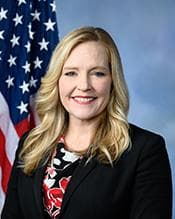
Erin Houchin
Republican · IN · Representative
Votes with party: 97.9% (660 recorded votes)
Full profile: /officials/H001093
Source: Congress.gov · FEC
Cosponsors (3)
Members who have signed on to support this bill since introduction. Source: Congress.gov.
Latest Action
The most recent step in the bill's legislative path. Committee Activity below shows referrals and reports; the full action-by-action history including floor proceedings lives at Congress.gov →
Received in the Senate and Read twice and referred to the Committee on Health, Education, Labor, and Pensions.
2026-09-17
Source: Congress.gov
Committee Activity
Currently in
- Senate Committee on Health, Education, Labor, and PensionsReferred To · 2026-09-17
- House Committee on Education and WorkforceReported By · 2026-06-29
Previously
- House Committee on Education and WorkforceMarkup By · 2026-03-17
- Education and Workforce CommitteeMarkup By · 2026-03-17
- Education and Workforce CommitteeReferred To · 2026-03-12
- House Committee on Education and WorkforceReferred To · 2026-03-12
Plain-English Summary
Science of Reading Act of 2026 This bill revises the Comprehensive Literacy State Development (CLSD) grant program to prioritize literacy instruction that is aligned to the science of reading. Under the bill, science of reading is defined as an interdisciplinary body of evidence-based research about reading and issues related to reading and writing that (1) identifies instruction in phonemic awareness, phonics, vocabulary, fluency, comprehension, and writing as essential components to skilled reading; (2) demonstrates the importance of background knowledge, oral language, the connection between reading and writing, and strong writing instruction; (3) explains why some students have difficulty with reading and writing; and (4) does not use a three-cueing model. Three-cueing model means an instructional approach or model that (1) uses meaning drawn from context, pictures, or syntax as the primary basis for teaching word recognition; or (2) teaches visual memory as the primary basis for word recognition. Current law authorizes competitive CLSD grants to state educational agencies (SEAs) and, through them, competitive subgrants to local educational agencies for the development and implementation of a comprehensive literacy instruction plan, professional development, and other activities. Eligible early childhood education programs may also receive subgrants for early literacy services. The bill (1) specifies that comprehensive literacy instruction for CLSD grants does not include the use of a three-cueing model, and (2) requires the Department of Education and SEAs to prioritize awarding CLSD grants and subgrants for evidence-based activities that are aligned to the science of reading.
Plain-English rewrite of the Congressional Research Service summary published on Congress.gov. Cached and reviewed.
Subjects
Education
Full Bill Text
Verbatim text published on Congress.gov via GovInfo. Use Cmd+F / Ctrl+F to search within this excerpt.
[Congressional Bills 119th Congress] [From the U.S. Government Publishing Office] [H.R. 7890 Introduced in House (IH)] <DOC> 119th CONGRESS 2d Session H. R. 7890 To amend the Elementary and Secondary Education Act of 1965 to exclude certain instructional approaches from comprehensive literacy instruction, to prioritize certain funds to promote the use of evidence-based literacy instruction and supports aligned to the science of reading, and for other purposes. _______________________________________________________________________ IN THE HOUSE OF REPRESENTATIVES March 12, 2026 Mrs. Houchin (for herself, Mr. Mannion, and Mr. Kiley of California) introduced the following bill; which was referred to the Committee on Education and Workforce _______________________________________________________________________ A BILL To amend the Elementary and Secondary Education Act of 1965 to exclude certain instructional approaches from comprehensive literacy instruction, to prioritize certain funds to promote the use of evidence-based literacy instruction and supports aligned to the science of reading, and for other purposes. Be it enacted by the Senate and House of Representatives of the United States of America in Congress assembled, SECTION 1. SHORT TITLE. This Act may be cited as the ``Science of Reading Act of 2026''. SEC. 2. PROMOTING READING INSTRUCTION ALIGNED TO SCIENCE OF READING. (a) Comprehensive Literacy Instruction.--Section 2221(b) of the Elementary and Secondary Education Act of 1965 (20 U.S.C. 6641(b)) is amended-- (1) in paragraph (1)-- (A) in subparagraph (K), by striking ``; and'' and inserting a semicolon; (B) in subparagraph (L), by striking the period and inserting ``; and''; and (C) by adding at the end the following: ``(M) does not include the use of a three-cueing model.''; and (2) by adding at the end the following: ``(4) Science of reading.--The term `science of reading' means an interdisciplinary body of evidence-based research about reading and issues related to reading and writing that-- ``(A) identifies instruction in phonemic awareness, phonics, vocabulary, fluency, comprehension, and writing as essential components to skilled reading; ``(B) demonstrates the importance of background knowledge, oral language, the connection between reading and writing, and strong writing instruction; ``(C) explains why some students have difficulty with reading and writing; and ``(D) does not use a three-cueing model. ``(5) Three-cueing model.--The term `three-cueing model' means an instructional approach or model that-- ``(A) uses meaning drawn from context, pictures, or syntax as the primary basis for teaching word recognition (commonly referred to as `meaning, structure and syntax, and visual cues' or `MSV'); or ``(B) teaches visual memory as the primary basis for word recognition.''. (b) State Applications for Comprehensive Literacy State Development Grants.--Section 2222(d)(2) of the Elementary and Secondary Education Act of 1965 (20 U.S.C. 6642(d)(2)) is amended by inserting at the end-- ``(F) A description of the extent to which the State comprehensive literacy instruction plan is aligned to the science of reading.''. (c) Comprehensive Literacy State Development Grant Priority.-- Section 2222(e) of the Elementary and Secondary Education Act of 1965 (20 U.S.C. 6642(e)) is amended by striking the period at the end and inserting ``, that are aligned to the science of reading.''. (d) Comprehensive Literacy State Development Subgrant Priority.-- (1) Birth through kindergarten entry.--Section 2223(c) of the Elementary and Secondary Education Act of 1965 (20 U.S.C. 6643(c)) is amended-- (A) by striking ``grants'' and inserting ``subgrants''; (B) by striking ``grant'' and inserting ``subgrant''; and (C) by striking the period at the end and inserting ``, that are aligned to the science of reading.''. (2) Kindergarten through grade 12.--Section 2224(b) of the Elementary and Secondary Education Act of 1965 (20 U.S.C. 6644(b)) is amended-- (A) by striking ``grants'' and inserting ``subgrants''; and (B) by striking the period at the end and inserting ``that are aligned to the science…
Show the remaining 148 wordsHide the remaining 148 words
of reading.''. SEC. 3. GENERAL PROVISIONS. (a) Applicability.--This Act and the amendments made by this Act shall apply with respect to funds awarded under the Elementary and Secondary Education Act of 1965 (20 U.S.C. 6301 note et seq.) on or after the date of the enactment of this Act. (b) Rules of Construction.--Nothing in this Act or the amendments made by this Act shall be construed to-- (1) limit or alter the rights, protections, and individualized instructional requirements under the Individuals with Disabilities Education Act (20 U.S.C. 1400 et seq.), section 504 of the Rehabilitation Act of 1973 (29 U.S.C. 794), or the Americans with Disabilities Act (42 U.S.C. 12101 et seq.); or (2) authorize any officer or employee of the Federal Government to mandate, direct, or control a State, local educational agency, or school's specific instructional content, academic standards and assessments, curricula, or program of instruction. <all>
Related legislation
Bills by the same sponsor or covering overlapping subjects.
- HR9191National Fossil Act of 2026Passed House · 2026-09-17
- HR4950Data BRIDGE ActReported by Committee · 2026-09-16
- HR1033716 & Up Social Media ActReferred to Committee · 2026-09-10
- HR10207GUARDIAN ActReferred to Committee · 2026-09-01