No Aid for Ghost Students Act of 2026
Sponsor
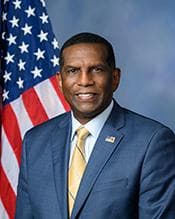
Full profile: /officials/O000086
Source: Congress.gov · FEC
Cosponsors (4)
Members who have signed on to support this bill since introduction. Source: Congress.gov.
Latest Action
The most recent step in the bill's legislative path. Committee Activity below shows referrals and reports; the full action-by-action history including floor proceedings lives at Congress.gov →
Received in the Senate and Read twice and referred to the Committee on Health, Education, Labor, and Pensions.
2026-06-11
Source: Congress.gov
Committee Activity
Currently in
- Senate Committee on Health, Education, Labor, and PensionsReferred To · 2026-06-11
- House Committee on Education and WorkforceReported By · 2026-05-26
Previously
- Education and Workforce CommitteeMarkup By · 2026-03-17
- House Committee on Education and WorkforceMarkup By · 2026-03-17
- Education and Workforce CommitteeReferred To · 2026-03-12
- House Committee on Education and WorkforceReferred To · 2026-03-12
Plain-English Summary
No Aid for Ghost Students Act of 2026 This bill requires the Department of Education (ED) to establish an identity fraud detection system for the Free Application for Federal Student Aid (FAFSA). Beginning on October 1, 2026, ED must use an identity fraud detection system to review each submitted application to determine whether the applicant presents a reasonable suspicion of identity fraud. If ED makes such a determination, it must notify the applicant and each institution of higher education (IHE) designated on the application that the applicant is subject to additional identity verification. An IHE may not disburse federal financial aid to an applicant that presents a reasonable suspicion of fraud unless the IHE verifies the applicant's identity in person or by live video. If the applicant's identity is confirmed, the IHE must notify ED that the applicant's identity has been verified. ED must establish guidelines for the identity verification procedures conducted by IHEs. (On April 26, 2026, ED began implementing a real-time identity fraud detection process within the FAFSA form that places applicants into one of four risk categories. High-risk applicants must confirm their identity by presenting documentation during the online application process, including via a live camera process. Applicants who are rejected via this automated process must then have their identity verified in person by IHEs.)
Plain-English rewrite of the Congressional Research Service summary published on Congress.gov. Cached and reviewed.
Subjects
Full Bill Text
Verbatim text published on Congress.gov via GovInfo. Use Cmd+F / Ctrl+F to search within this excerpt.
[Congressional Bills 119th Congress] [From the U.S. Government Publishing Office] [H.R. 7892 Reported in House (RH)] <DOC> Union Calendar No. 583 119th CONGRESS 2d Session H. R. 7892 [Report No. 119-669] To amend the Higher Education Act of 1965 to require to the Secretary of Education to use an identity fraud detection system to review each FAFSA to determine whether the FAFSA presents a reasonable suspicion of identity fraud. _______________________________________________________________________ IN THE HOUSE OF REPRESENTATIVES March 12, 2026 Mr. Owens introduced the following bill; which was referred to the Committee on Education and Workforce May 26, 2026 Additional sponsors: Mr. Kiley of California, Mr. Grothman, Ms. Foxx, and Mr. Obernolte May 26, 2026 Reported with an amendment, committed to the Committee of the Whole House on the State of the Union, and ordered to be printed [Strike out all after the enacting clause and insert the part printed in italic] [For text of introduced bill, see copy of bill as introduced on March 12, 2026] _______________________________________________________________________ A BILL To amend the Higher Education Act of 1965 to require to the Secretary of Education to use an identity fraud detection system to review each FAFSA to determine whether the FAFSA presents a reasonable suspicion of identity fraud. Be it enacted by the Senate and House of Representatives of the United States of America in Congress assembled, SECTION 1. SHORT TITLE. This Act may be cited as the ``No Aid for Ghost Students Act of 2026''. SEC. 2. IDENTITY FRAUD DETECTION SYSTEM. (a) Identity Fraud Detection System.--Section 483 of the Higher Education Act of 1965 (20 U.S.C. 1090) is amended by adding at the end the following: ``(e) Identity Fraud Detection System.-- ``(1) In general.--In addition to or in conjunction with other verification processes carried out under this title, the Secretary shall use an identity fraud detection system to review each application submitted under this section on or after October 1, 2026, to determine whether the application presents a reasonable suspicion of identity fraud. If the Secretary determines that such an application presents a reasonable suspicion of identity fraud, the Secretary shall carry out notifications in accordance with paragraph (2). ``(2) Notification of reasonable suspicion of identity fraud.--If the Secretary determines that an application submitted under this section presents a reasonable suspicion of identity fraud, the Secretary shall-- ``(A) provide the applicant with notice-- ``(i) of such determination and the basis for such determination; ``(ii) that the information described in subparagraph (B) will be transmitted to each institution of higher education designated by the applicant in the application; and ``(iii) that the applicant is subject to additional identity verification requirements in accordance with section 487(a)(15); and ``(B) transmit to each institution designated by the applicant in the application, a notice-- ``(i) that such application presents a reasonable suspicion of identity fraud; and ``(ii) that the applicant is subject to identity verification requirements to be carried out by the institution in accordance with section 487(a)(15)(B), before the institution may disburse Federal financial aid under this title to such applicant. ``(3) Congressional notices and report.-- ``(A) Notices.--The Secretary shall submit to the authorizing committees-- ``(i) not later than November 1, 2026, a written description of the identity fraud detection system required under this subsection; and ``(ii) not later than 30 days after implementing any substantial change to such system, a written description and rationale for such change. ``(B) Annual evaluation and report.--Not later than October 1, 2027, and annually thereafter, the Secretary shall conduct an evaluation of the effectiveness of the identity fraud detection system carried out under this subsection, and submit to the…
Show the remaining 287 wordsHide the remaining 287 words
authorizing committees a report on the use and effectiveness of such system.''. (b) Additional Verification Requirements.-- (1) Amendments.--Section 487(a)(15) of the Higher Education Act of 1965 (20 U.S.C. 1094(a)(15)) is amended-- (A) by striking ``(15) The institution acknowledges'' and inserting ``(15)(A) The institution acknowledges''; and (B) by adding at the end the following new subparagraph: ``(B) Beginning on October 1, 2026, the institution will not disburse Federal financial aid under this title to an applicant whose application under section 483 presents a reasonable suspicion of identity fraud under section 483(e), unless the institution, in accordance with procedures established by the Secretary-- ``(i) determines that a reasonable suspicion of identity fraud is not present by confirming the identity of such applicant using in-person verification or live, synchronous audiovisual verification; ``(ii) notifies the Secretary that the identity of the applicant has been verified; and ``(iii) maintains a record of such identity verification.''. (2) Guidelines on institutional verification procedures.-- Not later than October 1, 2026, the Secretary of Education shall establish guidelines with respect to identity verification procedures to be carried out by institutions of higher education under subparagraph (B) of section 487(a)(15) of the Higher Education Act of 1965 (20 U.S.C. 1094(a)(15)), as amended by paragraph (1). Union Calendar No. 583 119th CONGRESS 2d Session H. R. 7892 [Report No. 119-669] _______________________________________________________________________ A BILL To amend the Higher Education Act of 1965 to require to the Secretary of Education to use an identity fraud detection system to review each FAFSA to determine whether the FAFSA presents a reasonable suspicion of identity fraud. _______________________________________________________________________ May 26, 2026 Reported with an amendment, committed to the Committee of the Whole House on the State of the Union, and ordered to be printed
Related legislation
Bills by the same sponsor or covering overlapping subjects.
- HR9926PATH ActReferred to Committee · 2026-07-23
- HR8347RURAL Healthcare ActReferred to Committee · 2026-07-21
- HR8183MATCH Act of 2026Referred to Committee · 2026-07-21
- HR9604Less Bureaucracy, Better Tribal Education ActReferred to Committee · 2026-07-15