HR7896Referred to Committee
NOAA Global Ocean Monitoring and Observing Research Act
Introduced
In Committee
3
Passed One Chamber4
Passed Both5
Signed into Law119th
Congress
2026-03-12
Introduced
2
Cosponsors
HR
ⓘType
Sponsor
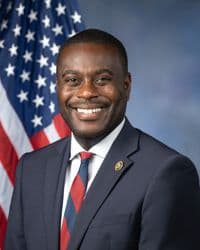
Gabe Amo
Democrat · RI · Representative
Votes with party: 98.2% (672 recorded votes)
Full profile: /officials/A000380
Source: Congress.gov · FEC
Cosponsors (2)
Members who have signed on to support this bill since introduction. Source: Congress.gov.
Latest Action
The most recent step in the bill's legislative path. Committee Activity below shows referrals and reports; the full action-by-action history including floor proceedings lives at Congress.gov →
Committee Activity
Currently in
- House Committee on Science, Space, and TechnologyReferred To · 2026-03-12
Previously
- Science, Space, and Technology CommitteeReferred To · 2026-03-12
Plain-English Summary
This bill would expand the National Oceanic and Atmospheric Administration's ability to monitor and study the world's oceans through improved research programs and observation systems. The funding and programs would help scientists better understand ocean conditions, track changes in marine ecosystems, and improve predictions about weather and climate patterns that affect coastal communities and fishing industries. The bill aims to strengthen the scientific data available to policymakers and the public about ocean health and environmental changes.
AI-assisted summary generated from the official bill metadata (title, subjects, actions) sourced from Congress.gov. Cached and reviewed. Always verify against the official text linked below.
Subjects
Public Lands and Natural Resources
Full Bill Text
Verbatim text published on Congress.gov via GovInfo. Use Cmd+F / Ctrl+F to search within this excerpt.
[Congressional Bills 119th Congress] [From the U.S. Government Publishing Office] [H.R. 7896 Introduced in House (IH)] <DOC> 119th CONGRESS 2d Session H. R. 7896 To establish within the National Oceanic and Atmospheric Administration a research program comprising global ocean monitoring and observing, and for other purposes. _______________________________________________________________________ IN THE HOUSE OF REPRESENTATIVES March 12, 2026 Mr. Amo (for himself and Mr. Scott Franklin of Florida) introduced the following bill; which was referred to the Committee on Science, Space, and Technology _______________________________________________________________________ A BILL To establish within the National Oceanic and Atmospheric Administration a research program comprising global ocean monitoring and observing, and for other purposes. Be it enacted by the Senate and House of Representatives of the United States of America in Congress assembled, SECTION 1. SHORT TITLE. This Act may be cited as the ``NOAA Global Ocean Monitoring and Observing Research Act''. SEC. 2. NOAA GLOBAL OCEAN MONITORING AND OBSERVING RESEARCH PROGRAM. (a) In General.--The Secretary of Commerce, acting through the Administrator of the National Oceanic and Atmospheric Administration (referred to in this section as the ``Administrator''), shall establish within the National Oceanic and Atmospheric Administration a research program comprising global ocean monitoring and observing (in this section referred to as the ``program''). (b) Purpose.--The program shall provide high quality global ocean environmental data and information to improve scientific understanding and knowledge to advance capabilities and services for climate, weather, and ocean needs that support the National Oceanic and Atmospheric Administration's mission to monitor and observe the global environment in order to protect lives and property from extreme weather and other natural phenomena by carrying out the following: (1) Developing and improving sustained global in-situ ocean monitoring and observing systems capable of systematically collecting ocean environmental data to support ocean research, weather research, and climate research, including by leading the development of the global One-Argo system. (2) Supporting basic and applied research, including the utilization of public and private partnerships to test and evaluate innovative and improved ocean observation technologies to address emerging research needs and support the scientific understanding of ocean health and ocean economy, and the weather and environment. (3) Improving the findability, accessibility, interoperability, quality, usability, and reusability of environmental and observational data and research products to carry out the following: (A) Collecting critical baseline ocean measurements. (B) Strengthening public understanding of marine and ocean research. (C) Meeting the national needs for the research community. (4) Undertaking interdisciplinary earth-system research, and coordinated interagency activities to improve understanding of the physical, chemical, and marine ecological features of the ocean, including the following: (A) Ocean heat content and temperature. (B) Arctic ocean changes, including sea ice and marine ecosystem monitoring and prediction. (C) Ocean carbon and biogeochemistry. (D) Any other research the Administrator determines appropriate. (5) In collaboration with the U.S. Integrated Ocean Observing System, the National Data Buoy Center, and the National Oceanographic Partnership Program, ensuring coordination of ocean observing research and relevant activities with other appropriate Federal departments and agencies, State and local governments, regional partners, academic institutions, nongovernmental organizations, private sector entities, and international ocean science and observing bodies, including the Global Ocean Observing System. (6) Accelerating development and enhancement of ocean observing technologies for forecasting improvements of hurricane intensity, atmospheric rivers, and other extreme weather events. (7) Building research capacity and increasing the use of autonomous observing systems to fill gaps in the coverage of observations in critical areas of the ocean. (8) Integrating artificial intelligence and cloud technologies to optimize data use, as practical. (9) Developing best practices for interactions with the ocean-coastal monitoring and observing science community, including strategies to foster competition…
Show the remaining 224 wordsHide the remaining 224 words
and avoid sole sources for critical components and data. (c) Framework and Review.-- (1) Framework.--Not later than one year after the date of the enactment of this Act, the Administrator shall develop a framework for prioritized monitoring and observational activities for research and metrics to measure progress in data quantity, quality, and management. In developing such framework, the Administrator shall identify and consult with users of the program's environmental data. (2) Review.--Not later than one year after the date of the enactment of this Act, the Administrator shall implement a process for an annual review of activities carried out by the program. Such reviews shall include assessments of the quality and efficiency of the systems and data developed under the program. (d) Financial Assistance.-- (1) In general.--The program may provide to academic institutions, cooperative institutions, private sector entities, and other entities the Administrator determines appropriate financial assistance in the form of contracts, grants, or cooperative agreements for research projects to carry out the purposes described in subsection (b). (2) Requirements.--Financial assistance under paragraph (1) shall be awarded on a competitive, merit-based process. (e) Definition.--In this section, the term ``artificial intelligence''-- (1) has the meaning given such term in section 5002 of the National Artificial Intelligence Initiative Act of 2020 (15 U.S.C. 9401); and (2) includes machine learning, neural networks, and natural language processing. <all>
Related legislation
Bills by the same sponsor or covering overlapping subjects.
- HR10514Disaster Relief Fairness Act of 2026Referred to Committee · 2026-09-21
- HRES1358Honoring the victims and survivors of the December 13, 2025, mass shooting at Brown University in Providence, Rhode Island.Referred to Committee · 2026-06-11
- HCONRES103Directing the President, pursuant to section 5(c) of the War Powers Resolution, to remove United States Armed Forces from hostilities with Iran.Referred to Committee · 2026-05-20
- HRES1218Recognizing the importance of the special relationship between the United States and the United Kingdom and welcoming the visit of King Charles III to the United States.Referred to Committee · 2026-04-28