Protecting America’s Working Dogs Act of 2026
Sponsor
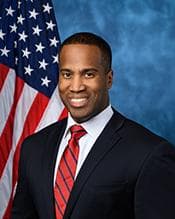
Full profile: /officials/J000307
Source: Congress.gov · FEC
Cosponsors (0)
Members who have signed on to support this bill since introduction. Source: Congress.gov.
No cosponsors on record. Bills can pass without cosponsors — this often means the sponsor introduced the bill alone, either because it's a messaging bill, a chairman's mark, or simply early in the legislative cycle.
Latest Action
The most recent step in the bill's legislative path. Committee Activity below shows referrals and reports; the full action-by-action history including floor proceedings lives at Congress.gov →
Referred to the Committee on the Judiciary, and in addition to the Committees on Armed Services, and Veterans' Affairs, for a period to be subsequently determined by the Speaker, in each case for consideration of such provisions as fall within the jurisdiction of the committee concerned.
2026-03-12
Source: Congress.gov
Committee Activity
Currently in
- House Committee on Armed ServicesReferred To · 2026-03-12
- House Committee on Veterans' AffairsReferred To · 2026-03-12
- House Committee on the JudiciaryReferred To · 2026-03-12
Previously
- Veterans' Affairs CommitteeReferred To · 2026-03-12
- Armed Services CommitteeReferred To · 2026-03-12
- Judiciary CommitteeReferred To · 2026-03-12
Plain-English Summary
The bill would establish protections and standards for military and law enforcement working dogs, likely ensuring they receive proper care, medical treatment, and retirement benefits after their service ends. It affects the Department of Defense, law enforcement agencies, and the dogs themselves—many of which are trained for combat, bomb detection, or other critical security missions. The legislation has been sent to multiple committees to review different aspects, including military policy, legal authority, and veterans' benefits.
AI-assisted summary generated from the official bill metadata (title, subjects, actions) sourced from Congress.gov. Cached and reviewed. Always verify against the official text linked below.
Subjects
Full Bill Text
Verbatim text published on Congress.gov via GovInfo. Use Cmd+F / Ctrl+F to search within this excerpt.
[Congressional Bills 119th Congress] [From the U.S. Government Publishing Office] [H.R. 7904 Introduced in House (IH)] <DOC> 119th CONGRESS 2d Session H. R. 7904 To require the Attorney General to establish a grant program to assist with the medical expenses of qualified working dogs, and for other purposes. _______________________________________________________________________ IN THE HOUSE OF REPRESENTATIVES March 12, 2026 Mr. James introduced the following bill; which was referred to the Committee on the Judiciary, and in addition to the Committees on Armed Services, and Veterans' Affairs, for a period to be subsequently determined by the Speaker, in each case for consideration of such provisions as fall within the jurisdiction of the committee concerned _______________________________________________________________________ A BILL To require the Attorney General to establish a grant program to assist with the medical expenses of qualified working dogs, and for other purposes. Be it enacted by the Senate and House of Representatives of the United States of America in Congress assembled, SECTION 1. SHORT TITLE. This Act may be cited as the ``Protecting America's Working Dogs Act of 2026''. SEC. 2. FINDINGS. Congress finds the following: (1) The Department of Defense utilizes approximately 1,600 military working dogs to protect our nation and keep United States military personnel out of harm's way. (2) Military working dogs have played an integral role in the success of numerous operations and missions, including the raids which resulted in the deaths of Osama bin Laden, the founder of al-Qaeda, and Abu Bakr al-Baghdadi, the leader of ISIS. (3) Working dogs play a critical role in assisting our Armed Forces and Federal and local law enforcement in protecting Americans and defending freedom at home and abroad. (4) Within the Federal Government, working dogs assist the U.S. Capitol Police, the Bureau of Alcohol, Tobacco, Firearms and Explosives, the Transportation Security Administration, the Department of Defense, U.S. Customs and Border Protection, and the Federal Bureau of Investigation, amongst other Federal departments and agencies. (5) Almost all working dogs work in tandem with our Armed Forces and law enforcement officers until they are no longer medically able, at which point they are medically separated. (6) The future of retired working dogs with respect to ownership and provision of medical services is often unclear after the working dog is retired. (7) The medical treatment required by many former working dogs is significant enough that it creates a hardship for the individuals, often former partners, who take in these canine heroes and become responsible for their medical costs. SEC. 3. GRANT PROGRAM TO FUND COVERED MEDICAL EXPENSES FOR QUALIFIED WORKING DOGS. (a) Establishment.--Not later than 1 fiscal year after the date of enactment of this Act, and each fiscal year thereafter for 4 fiscal years, the Attorney General shall carry out a program under which the Attorney General may award grants, each in amounts not to exceed $575,000, to eligible nonprofit organizations to assist with the covered medical expenses of qualified working dogs. (b) Eligibility.--A nonprofit organization is eligible to receive a grant under this section if the organization-- (1) primarily exists to care for qualified working dogs; (2) provides medically related financial assistance to owners of qualified working dogs; (3) allocates not less than 70 percent of its spending towards program expenses directly related to assisting with the covered medical expenses of qualified working dogs; and (4) separately states the veterinary expenses of such organization on the Internal Revenue Service Form 990 filed by such organization with the Internal Revenue Service. (c) Application.--To receive a grant under this section, a nonprofit organization shall submit to the Attorney General an application at such time, in…
Show the remaining 252 wordsHide the remaining 252 words
such manner, and containing such information as the Attorney General may require, including information that demonstrates that the nonprofit organization meets the eligibility requirements under subsection (b). (d) Use of Funds.--A recipient of a grant under this section shall use such grant to pay for covered medical expenses of qualified working dogs. (e) Grant Amount Reduction.--A grant amount awarded to an eligible nonprofit organization for a fiscal year pursuant to this section shall be reduced by an amount equal to the total amount of unexpended grant funds awarded under this section in previous fiscal years. (f) Report.--The Attorney General shall submit to Congress a report that details-- (1) the number of qualified working dogs assisted pursuant to a grant awarded under this section; and (2) the average medical expenses for each qualified working dog assisted pursuant to a grant awarded under this section. (g) Definitions.--In this Act-- (1) the term ``covered medical expenses'' means any expenses related to medical treatment and care of qualified working dogs, including veterinarian office visits, medical procedures, diagnostic tests, and medications or medically necessary supplements; (2) the term ``qualified working dog'' means-- (A) a retired dog that worked for the Federal Government, including the Armed Forces, to carry out military, security, or law enforcement activity; and (B) a service dog that works for an individual who is a veteran or a retired Federal law enforcement officer; and (3) the term ``veteran'' has the meaning given the term in section 101 of title 38, United States Code. <all>
Related legislation
Bills by the same sponsor or covering overlapping subjects.
- HR10759Tariff Relief for American Development and Employment Act of 2026Referred to Committee · 2026-10-06
- HR10560Skilled JOBS ActReferred to Committee · 2026-09-24
- HR9783CANADA FIRE ActReferred to Committee · 2026-07-20
- HRES1347Recognizing the roles and contributions of automotive workers in the United States, with particular recognition of their impact in Michigan, and expressing support for the designation of September 2026 as "American Automotive Worker Recognition Month".Referred to Committee · 2026-06-08