Halt Immigration from Countries with Inadequate Verification Capabilities Act
Sponsor
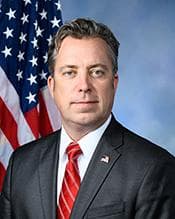
Full profile: /officials/O000175
Source: Congress.gov · FEC
Cosponsors (4)
Members who have signed on to support this bill since introduction. Source: Congress.gov.
Latest Action
The most recent step in the bill's legislative path. Committee Activity below shows referrals and reports; the full action-by-action history including floor proceedings lives at Congress.gov →
Committee Activity
Currently in
- House Committee on the JudiciaryReferred To · 2026-03-17
Previously
- Judiciary CommitteeReferred To · 2026-03-17
Plain-English Summary
This bill would allow the government to temporarily stop accepting immigrants and visitors from countries that don't have adequate systems to verify people's identities and backgrounds. The goal is to prevent people from entering the U.S. from nations where the government can't reliably confirm who someone is or whether they pose a security risk. The measure would affect travelers and immigrants from affected countries until those nations improve their identification and information-sharing capabilities.
AI-assisted summary generated from the official bill metadata (title, subjects, actions) sourced from Congress.gov. Cached and reviewed. Always verify against the official text linked below.
Subjects
Full Bill Text
Verbatim text published on Congress.gov via GovInfo. Use Cmd+F / Ctrl+F to search within this excerpt.
[Congressional Bills 119th Congress] [From the U.S. Government Publishing Office] [H.R. 7964 Introduced in House (IH)] <DOC> 119th CONGRESS 2d Session H. R. 7964 To amend the Immigration and Nationality Act to prohibit the admission of aliens from certain countries where the United States cannot reliably verify the identities or backgrounds of individuals seeking entry, building upon the framework established by Presidential Proclamation 9645 and upheld by the Supreme Court in Trump v. Hawaii, 585 U.S. (2018), and for other purposes. _______________________________________________________________________ IN THE HOUSE OF REPRESENTATIVES March 17, 2026 Mr. Ogles (for himself, Mr. Fine, Mr. Donalds, and Mrs. Harshbarger) introduced the following bill; which was referred to the Committee on the Judiciary _______________________________________________________________________ A BILL To amend the Immigration and Nationality Act to prohibit the admission of aliens from certain countries where the United States cannot reliably verify the identities or backgrounds of individuals seeking entry, building upon the framework established by Presidential Proclamation 9645 and upheld by the Supreme Court in Trump v. Hawaii, 585 U.S. (2018), and for other purposes. Be it enacted by the Senate and House of Representatives of the United States of America in Congress assembled, SECTION 1. SHORT TITLE. This Act may be cited as the ``Halt Immigration from Countries with Inadequate Verification Capabilities Act''. SEC. 2. FINDINGS. Congress finds the following: (1) The Supreme Court, in Trump v. Hawaii, 585 U.S. (2018), upheld the President's authority to restrict entry from countries posing national security risks due to inadequate information-sharing and verification capabilities, affirming that such measures are within the executive's broad discretion under section 212(f) of the Immigration and Nationality Act and do not violate the Establishment Clause when facially neutral and justified by legitimate national security concerns. (2) Presidential Proclamation 9645 (issued September 24, 2017) identified countries with deficient identity-management practices, inadequate information-sharing on public-safety and terrorism threats, or other risk factors, including Iran, Libya, North Korea, Somalia, Syria, Venezuela, and Yemen, as warranting entry restrictions. (3) Expanding such restrictions to additional countries meeting similar criteria, such as those with ongoing instability, state-sponsored terrorism, or failure to cooperate in verification processes, is necessary to protect U.S. national security, consistent with the precedents set in Trump v. Hawaii and prior executive actions. (4) This Act builds upon the upheld framework to include countries like Afghanistan, Sudan, Eritrea, and the Central African Republic, where reliable verification of individuals' identities and backgrounds is not feasible due to governance failures, conflict, or adversarial policies. SEC. 3. DEFINITIONS. In this Act: (1) The term ``designated country'' means-- (A) Somalia; (B) any country identified in Presidential Proclamation 9645, as upheld in Trump v. Hawaii, including Iran, Libya, North Korea, Syria, Venezuela, and Yemen; and (C) any other country designated by the Secretary of State, in consultation with the Secretary of Homeland Security and the Director of National Intelligence, as a country where the government or prevailing conditions do not allow for reliable verification of the identities, backgrounds, or intentions of individuals seeking admission to the United States, based on factors such as inadequate information sharing, lack of diplomatic cooperation, state failure, or heightened national security risks, including but not limited to Afghanistan, Sudan, Eritrea, and the Central African Republic. (2) The term ``alien'' has the meaning given such term in section 101(a)(3) of the Immigration and Nationality Act (8 U.S.C. 1101(a)(3)). (3) The term ``admission'' has the meaning given such term in section 101(a)(13) of the Immigration and Nationality Act (8 U.S.C. 1101(a)(13)). SEC. 4. PROHIBITION ON ADMISSION OF ALIENS FROM DESIGNATED COUNTRIES. (a) In General.--Notwithstanding any other provision of law, the Secretary of Homeland Security,…
Show the remaining 545 wordsHide the remaining 545 words
in consultation with the Secretary of State and the Director of National Intelligence, shall prohibit the admission of any alien who is a national of, or who has resided in, a designated country during the 5-year period preceding the date of application for admission. (b) Exceptions.--The prohibition under subsection (a) shall not apply to-- (1) an alien who is a lawful permanent resident of the United States; (2) an alien admitted as a refugee or granted asylum prior to the date of enactment of this Act; (3) an alien serving in the United States Armed Forces or any immediate family member of that alien; (4) an alien traveling on a diplomatic visa issued by that alien's country of origin; or (5) an alien whose admission is deemed by the Secretary of Homeland Security to be in the national interest, on a case-by- case basis, including students and certain nonimmigrant categories subject to enhanced screening as referenced in Presidential Proclamation 9645. (c) Waiver Authority.--The Secretary of Homeland Security may waive the application of subsection (a) for an alien if the Secretary determines that such waiver is necessary for humanitarian reasons or to ensure compliance with international obligations, consistent with the waiver processes upheld in Trump v. Hawaii. SEC. 5. DESIGNATION AND REVIEW PROCESS. (a) Initial Designations.--Not later than 60 days after the date of enactment of this Act, the Secretary of State shall publish in the Federal Register a list of designated countries under section 3(1)(C), including the rationale for each designation, with reference to the verification standards outlined in Presidential Proclamation 9645 and the Supreme Court's decision in Trump v. Hawaii. (b) Annual Review.--The Secretary of State shall review the list of designated countries annually and may add or remove countries based on updated assessments of verification capabilities and national security risks, similar to the reviews conducted under prior executive orders. Any changes shall be published in the Federal Register with a 30-day notice period. (c) Congressional Oversight.--The Secretary of State shall submit to the appropriate congressional committees an annual report detailing the designations, including classified annexes as necessary. SEC. 6. ENHANCED VETTING PROCEDURES. (a) Development.--The Secretary of Homeland Security, in coordination with the Secretary of State, shall develop and implement enhanced vetting procedures for aliens from designated countries who may qualify for exceptions or waivers under section 4, drawing from the procedures established in Presidential Proclamation 9645. (b) Implementation Timeline.--Such procedures shall be implemented not later than 180 days after the date of enactment of this Act. SEC. 7. ENFORCEMENT AND PENALTIES. (a) Enforcement.--The provisions of this Act shall be enforced in accordance with the Immigration and Nationality Act (8 U.S.C. 1101 et seq.). (b) Penalties.--Any alien who attempts to enter the United States in violation of this Act shall be subject to removal proceedings and barred from reentry for a period of 10 years. SEC. 8. SEVERABILITY. If any provision of this Act, or the application of such provision to any person or circumstance, is held invalid, the remainder of this Act, and the application of such provision to other persons or circumstances, shall not be affected thereby. SEC. 9. EFFECTIVE DATE. This Act shall take effect on the date that is 90 days after the date of enactment of this Act. <all>
Related legislation
Bills by the same sponsor or covering overlapping subjects.
- HR6808To designate the facility of the United States Postal Service located at 417 West 7th Street in Columbia, Tennessee, as the "Pharmacist’s Mate First Class John Harlan Willis Post Office Building".Passed House · 2026-09-14
- HRES1472Impeaching Allison Dale Burroughs, a judge of the United States District Court for the District of Massachusetts, for high crimes and misdemeanors.Referred to Committee · 2026-08-03
- HR9968Opening Programs to Organic Farms ActReferred to Committee · 2026-07-27
- HR9868Preventing Forced Abortions Act of 2026Referred to Committee · 2026-07-22