Interagency Coordination in Export Controls Act of 2026
Sponsor
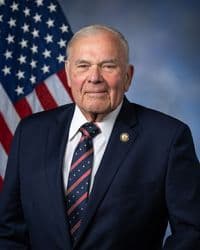
Full profile: /officials/B001307
Source: Congress.gov · FEC
Cosponsors (2)
Members who have signed on to support this bill since introduction. Source: Congress.gov.
Latest Action
The most recent step in the bill's legislative path. Committee Activity below shows referrals and reports; the full action-by-action history including floor proceedings lives at Congress.gov →
Ordered to be Reported in the Nature of a Substitute by the Yeas and Nays: 25 - 19.
2026-04-22
Source: Congress.gov
Committee Activity
Currently in
- House Committee on Foreign AffairsMarkup By · 2026-04-22
Previously
- Foreign Affairs CommitteeMarkup By · 2026-04-22
- Foreign Affairs CommitteeReferred To · 2026-03-24
- House Committee on Foreign AffairsReferred To · 2026-03-24
Plain-English Summary
Interagency Coordination in Export Controls Act of 2026 This bill authorizes specified departments to propose regulations on U.S. export controls. It also directs the Department of State to evaluate China's military-civil fusion strategy (a national strategy to eliminate barriers between China's civilian commercial sector and its military and defense industrial sectors). Specifically, the bill authorizes the State Department and the Departments of Defense and Energy to propose new rules or amendments to existing rules under the Export Administration Regulations. These departments may submit proposals directly to the Export Administration Review Board (EARB), which reviews applications for export licenses. The EARB must vote to accept or reject the proposal within 30 days of the proposal's submission, but the bill allows a 30-day extension. The Department of Commerce's Bureau of Industry and Securities (BIS) must initiate the rulemaking process for each proposal accepted by a simple majority vote of the EARB. BIS must also coordinate (instead of consult) with these departments on activities related to U.S. export controls. The bill also requires the State Department, within 30 days of the bill's enactment, to complete a review of the implications of China's military-civil fusion strategy on U.S. export control policy and national security. The State Department must consider proposing to the EARB (or any successor entity) any change to U.S. export control policy identified pursuant to the review. The EARB must vote on the adoption of each proposal. The State Department must report to Congress on the activities required by the bill.
Plain-English rewrite of the Congressional Research Service summary published on Congress.gov. Cached and reviewed.
Subjects
Full Bill Text
Verbatim text published on Congress.gov via GovInfo. Use Cmd+F / Ctrl+F to search within this excerpt.
[Congressional Bills 119th Congress] [From the U.S. Government Publishing Office] [H.R. 8036 Introduced in House (IH)] <DOC> 119th CONGRESS 2d Session H. R. 8036 To amend the Export Control Reform Act of 2018 to permit the Secretary of State, Defense, or Energy to submit proposed rules to the Export Administration Review Board, to require the Secretary of State to evaluate the military civil fusion strategy of the People's Republic of China, and for other purposes. _______________________________________________________________________ IN THE HOUSE OF REPRESENTATIVES March 24, 2026 Mr. Baird introduced the following bill; which was referred to the Committee on Foreign Affairs _______________________________________________________________________ A BILL To amend the Export Control Reform Act of 2018 to permit the Secretary of State, Defense, or Energy to submit proposed rules to the Export Administration Review Board, to require the Secretary of State to evaluate the military civil fusion strategy of the People's Republic of China, and for other purposes. Be it enacted by the Senate and House of Representatives of the United States of America in Congress assembled, SECTION 1. SHORT TITLE. This Act may be cited as the ``Interagency Coordination in Export Controls Act of 2026''. SEC. 2. INTERAGENCY RULEMAKING PROPOSALS. Section 1754 of the Export Control Reform Act of 2018 (50 U.S.C. 4813) is amended-- (1) in subsection (a), by striking ``consultation'' and inserting ``coordination''; and (2) by adding at the end, the following new subsection: ``(g) Interagency Rulemaking Proposals.-- ``(1) Submission of proposals.--The Secretary of State, Defense, or Energy may submit to the Export Administration Review Board (or its successor) (hereinafter the `Board') a proposal for a new rule, or an amendment to an existing rule, under the Export Administration Regulations. ``(2) Approval of proposals.-- ``(A) In general.--Except as provided under subparagraph (B), not later than days 30 days after a proposal is submitted under paragraph (1), the Board shall vote to accept or reject the proposal. The Secretary shall initiate the rulemaking process for each proposal accepted by a simple majority vote of the Board. ``(B) Exception.--A Board member may extend the deadline described in subparagraph (A) by an additional 30 days if-- ``(i) a Board member requires additional information regarding the proposal with respect to which such extension is sought; and ``(ii) the Board member that issued such proposal agrees to such extension.''. SEC. 3. STATE DEPARTMENT EVALUATION OF CHINA'S MILITARY-CIVIL FUSION STRATEGY. (a) In General.--Not later than 30 days after the date of the enactment of this Act, the Secretary shall, in consultation with each agency that is represented by a member of the Operating Committee for Export Policy, complete a review of the implications of the military- civil fusion strategy of the People's Republic of China (in this Act referred to as the ``PRC'') for the export control policy of the United States and for the national security of the United States, including a review of the following topics: (1) The exploitation of United States and allied technology and talent by the PRC to modernize the PRC's military. (2) Whether any entity in the PRC can be considered, in the context of United States national security and export control policy, a purely civilian entity. (3) The reliability of end-use checks and end-use conditions for exports, reexports, and in-country transfers to entities that are located or headquartered in, or the ultimate parent company of which is headquartered in, the PRC. (4) The relationship between the PRC's strategic technology sectors (such as artificial intelligence, semiconductor, quantum, robotics, biotechnology) and the PRC's military. (5) Whether the addition of any entity to the Military End- User List would address to any extent the…
Show the remaining 479 wordsHide the remaining 479 words
national security risks posed by the military-civil fusion strategy of the PRC. (6) Due diligence required by exporters to prevent the PRC's military from accessing United States technology. (7) Whether any change to United States export control policy would address to any extent the national security risks posed by the military-civil fusion strategy of the PRC. (8) Any other topic the Secretary determines is relevant for this review. (b) Proposed Changes to Policy.-- (1) In general.--Not later than 90 days after the date of the enactment of this Act, the Secretary shall consider proposing to the Export Administration Review Board (or any successor entity) any change to United States export control policy identified pursuant to the review required by subsection (a), which may include-- (A) additions to the Military End-User List; (B) changes to export control restrictions on certain military end uses; (C) new rules or amendments to the Export Administration Regulations; (D) a final rule pursuant to the proposed rule published in the Federal Register entitled ``End-Use and End-User Based Export Controls, Including U.S. Persons Activities Controls: Military and Intelligence End Uses and End Users'' (89 Fed. Reg. 60985 (July 29, 2024)); and (E) any other policy the Secretary determines would address the national security risks posed by the military-civil fusion strategy of the PRC. (2) Interagency vote.--The Board shall vote on the adoption of each change proposed pursuant to paragraph (1) in the manner described in subsection (g)(2) of section 1754 of the Export Control Reform Act of 2018 (50 U.S.C. 4813), as added by section 2. (c) Report to Congress.--Not later than 150 days after the date of the enactment of this Act, the Secretary shall submit to the appropriate congressional committees a report that includes the following: (1) The review required by subsection (a). (2) Any proposed rule required by subsection (b). (3) Any change in United States policy approved by the Export Administration Review Board. (4) Any recommended change to United States law that would help address the national security risks posed by the military- civil fusion strategy of the PRC. SEC. 4. DEFINITIONS. In this Act: (1) Appropriate congressional committees.--The term ``appropriate congressional committees'' means-- (A) the Committee on Foreign Affairs of the House of Representatives; and (B) the Committee on Banking, Housing, and Urban Affairs of the Senate. (2) Military end-user list.--The term ``Military End-User List'' means the list maintained by the Bureau of Industry and Security of the Department of Commerce and set forth in Supplement No. 7 to part 744 of title 15, Code of Federal Regulations, or successor regulations. (3) Operating committee for export policy.--The term ``Operating Committee for Export Policy'' means the Operating Committee for Export Policy referred to in section 1763(c) of the John S. McCain National Defense Authorization Act for Fiscal Year 2019 (50 U.S.C. 4822(c)). (4) Secretary.--The term ``Secretary'' means the Secretary of State. <all>
Related legislation
Bills by the same sponsor or covering overlapping subjects.
- HR10795Sudan IMPACT ActReferred to Committee · 2026-10-13
- HR9663State Standing Committee ActReferred to Committee · 2026-07-14
- HR7010To amend the Agriculture, Rural Development, Food and Drug Administration, and Related Agency Appropriations Act, 2026, to delay the implementation of amendments made by such Act to the hemp production provisions of the Agricultural Marketing Act of 1946.Referred to Committee · 2026-05-20
- HR7024Hemp Planting Predictability ActReferred to Committee · 2026-05-20