Privacy Protection Updates Act
Sponsor
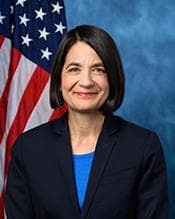
Full profile: /officials/B001318
Source: Congress.gov · FEC
Cosponsors (0)
Members who have signed on to support this bill since introduction. Source: Congress.gov.
No cosponsors on record. Bills can pass without cosponsors — this often means the sponsor introduced the bill alone, either because it's a messaging bill, a chairman's mark, or simply early in the legislative cycle.
Latest Action
The most recent step in the bill's legislative path. Committee Activity below shows referrals and reports; the full action-by-action history including floor proceedings lives at Congress.gov →
Committee Activity
Currently in
- House Committee on the JudiciaryReferred To · 2026-03-26
Previously
- Judiciary CommitteeReferred To · 2026-03-26
Plain-English Summary
This bill would update privacy protections related to law enforcement activities, likely addressing how police and federal agencies collect, use, and share personal information during investigations. The changes would probably affect both the privacy rights of individuals being investigated and the procedures law enforcement must follow when accessing private data. The specific details of what protections are being added or modified would depend on the bill's full text, but the general goal appears to be modernizing privacy rules for the digital age.
AI-assisted summary generated from the official bill metadata (title, subjects, actions) sourced from Congress.gov. Cached and reviewed. Always verify against the official text linked below.
Subjects
Full Bill Text
Verbatim text published on Congress.gov via GovInfo. Use Cmd+F / Ctrl+F to search within this excerpt.
[Congressional Bills 119th Congress] [From the U.S. Government Publishing Office] [H.R. 8093 Introduced in House (IH)] <DOC> 119th CONGRESS 2d Session H. R. 8093 To amend the Privacy Protection Act of 1980 to update and strengthen protections for newsgathering records, and for other purposes. _______________________________________________________________________ IN THE HOUSE OF REPRESENTATIVES March 26, 2026 Ms. Balint introduced the following bill; which was referred to the Committee on the Judiciary _______________________________________________________________________ A BILL To amend the Privacy Protection Act of 1980 to update and strengthen protections for newsgathering records, and for other purposes. Be it enacted by the Senate and House of Representatives of the United States of America in Congress assembled, SECTION 1. SHORT TITLE. This Act may be cited as the ``Privacy Protection Updates Act''. SEC. 2. EXCLUSIONARY RULE FOR VIOLATIONS. Section 106 of the Privacy Protection Act of 1980 (42 U.S.C. 2000aa-6) is amended by striking subsection (e) and inserting the following: ``(e)(1) Except in a civil action described in subsection (a), materials described in subsections (a) and (b) of section 101 searched for or seized in violation of this Act, and evidence derived therefrom, may not be used, received in evidence, or otherwise disseminated in any investigation, trial, hearing, or other proceeding in or before any court, grand jury, department, office, agency, regulatory body, legislative committee, or other authority of the United States, a State, or political subdivision thereof. ``(2)(A) Any aggrieved person in any trial, hearing, or proceeding in or before any court, department, office, agency, regulatory body, or other authority of the United States, a State, or a political subdivision thereof, may move to suppress materials described in subsections (a) and (b) of section 101 searched for or seized pursuant to this Act, or evidence derived therefrom, on the grounds that-- ``(i) the materials were unlawfully searched for or seized; ``(ii) the warrant or order permitting the search or seizure of the materials is insufficient on its face under the requirements of this Act; or ``(iii) the search or seizure was not made in conformity with the warrant or order. ``(B) If the motion is granted, the materials, and evidence derived therefrom, shall be treated as having been obtained in violation of this Act.''. SEC. 3. OTHER REMEDIES PERMITTED. Section 106 of the Privacy Protection Act of 1980 (42 U.S.C. 2000aa-6) is amended-- (1) by striking subsection (d); and (2) by redesignating subsections (e) through (h) as subsections (d) through (g), respectively. SEC. 4. REQUIRED DISCLOSURES IN WARRANT APPLICATION. Section 101 of the Privacy Protection Act of 1980 (42 U.S.C. 2000aa) is amended by adding at the end of the following: ``(d)(1) In this subsection, the term `covered materials' means materials described in subsection (a) or (b). ``(2) Except as provided in paragraph (3), a government officer or employee may only search for or seize covered materials, pursuant to an exception described in subsection (a) or (b), if-- ``(A) the officer or employee obtains a warrant issued using the procedures described in the Federal Rules of Criminal Procedure (or, in the case of a State court, issued using State warrant procedures) by a court of competent jurisdiction; ``(B) in the application for a warrant described in paragraph (1), the officer or employee discloses-- ``(i) the factual basis justifying the applicability of an exception described in subsection (a) or (b), including all information that-- ``(I) might reasonably call into question the accuracy of the information or the reasonableness of any assessment in the application, including how the materials qualify as covered materials if no exception is satisfied; or ``(II) otherwise raises doubts that an exception applies; and…
Show the remaining 578 wordsHide the remaining 578 words
``(ii) all persons who are the targets of the investigation or prosecution of the criminal offense; ``(C) the court finds that-- ``(i) an exception permits the search for or seizure of the covered materials; and ``(ii) if the officer or employee argues that an exception described in subsection (a)(1) or (b)(1) applies, that a prosecution for the alleged offense under the facts is consistent with the First Amendment to the Constitution of the United States; and ``(D) the court includes such limitations as the court deems necessary to protect against-- ``(i) the search for or seizure of covered materials that are not justified by an exception; and ``(ii) the harms that might follow from a search or seizure described in clause (i). ``(3) A government officer or employee may search for or seize covered materials pursuant to the exceptions described in subsections (a)(2) and (b)(2), without following the procedures described in paragraph (2), if the officer or employee-- ``(A) takes reasonable measures to limit any search or seizure to only those covered materials that are necessary to address the harms giving rise to the exception; and ``(B) not later than 48 hours after such search or seizure, submits to a court of competent jurisdiction an application that discloses-- ``(i) the covered materials searched for or seized; ``(ii) the measures described in subparagraph (A); and ``(iii) the information described in paragraph (2)(B). ``(4)(A) Upon receipt of an application under paragraph (3)(B), the court shall review the application and issue an order determining whether the search or seizure was justified by an exception described in paragraph (3). ``(B) If the court issues an order described in subparagraph (A) that the search for or seizure of covered materials was not justified by an exception described in paragraph (3)-- ``(i) the covered materials shall be treated as if they were searched for or seized, as applicable, in violation of this Act; and ``(ii) the court shall order the government officer or employee to-- ``(I) immediately return all covered materials seized; and ``(II) destroy any copies of the covered materials seized. ``(C) If the court issues an order described in subparagraph (A) that the search for or seizure of covered materials was justified by an exception described in paragraph (3), the court may order the government officer or employee to take any measures that the court determines are reasonable to appropriately balance the continued need for the covered materials of the government officer or employee against the harms flowing from the continued access to covered materials by the government officer or employee, including by ordering the return of any portions of the covered materials, the destruction of any copies of any portions of the covered materials, or by limiting the use or dissemination of any portion of the covered materials.''. SEC. 5. CLARIFYING POSSESSION OF MATERIALS ON THE CLOUD. Section 101 of the Privacy Protection Act of 1980 (42 U.S.C. 2000aa), as amended by section 4 of this Act, is amended by adding at the end of the following: ``(e) For purposes of subsections (a) and (b), if the materials described in such subsections are stored, held, or maintained on an electronic communication service (as defined in section 2510 of title 18, United States Code) or remote computing service (as defined in section 2711 of title 18, United States Code) by or on behalf of a customer or subscriber, the customer or subscriber shall be the person deemed to possess such materials.''. <all>
Related legislation
Bills by the same sponsor or covering overlapping subjects.
- HRES1606Expressing support for the designation of the week of October 24, 2026, to October 31, 2026, as "Bat Week".Referred to Committee · 2026-10-05
- HR102459–8–8 and 9–1–1 Integration ActReferred to Committee · 2026-09-03
- HR9948Addictive Design Act of 2026Referred to Committee · 2026-07-27
- HJRES203Directing the Federal Trade Commission to investigate and report on anticompetitive practices and violations of the antitrust laws in the fire truck manufacturing industry.Referred to Committee · 2026-07-21