To amend title XVIII of the Social Security Act to establish a full risk ACO program.
Sponsor
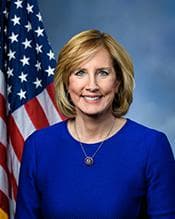
Full profile: /officials/T000478
Source: Congress.gov · FEC
Cosponsors (2)
Members who have signed on to support this bill since introduction. Source: Congress.gov.
Latest Action
The most recent step in the bill's legislative path. Committee Activity below shows referrals and reports; the full action-by-action history including floor proceedings lives at Congress.gov →
Referred to the Committee on Ways and Means, and in addition to the Committee on Energy and Commerce, for a period to be subsequently determined by the Speaker, in each case for consideration of such provisions as fall within the jurisdiction of the committee concerned.
2026-03-26
Source: Congress.gov
Committee Activity
Currently in
- House Committee on Energy and CommerceReferred To · 2026-03-26
- House Committee on Ways and MeansReferred To · 2026-03-26
Previously
- Ways and Means CommitteeReferred To · 2026-03-26
- Energy and Commerce CommitteeReferred To · 2026-03-26
Plain-English Summary
This bill would create a new Medicare program allowing groups of doctors and hospitals to take on financial risk by agreeing to care for patients at a set cost, with the potential to earn bonuses if they spend less than expected while maintaining quality care. Currently, most Medicare providers are paid for each service they deliver, but this "full risk" model would encourage them to coordinate care and reduce unnecessary spending since they keep savings or absorb losses. The change would affect Medicare patients, healthcare providers, and potentially insurance companies involved in managing these accountable care organizations.
AI-assisted summary generated from the official bill metadata (title, subjects, actions) sourced from Congress.gov. Cached and reviewed. Always verify against the official text linked below.
Subjects
Full Bill Text
Verbatim text published on Congress.gov via GovInfo. Use Cmd+F / Ctrl+F to search within this excerpt.
[Congressional Bills 119th Congress] [From the U.S. Government Publishing Office] [H.R. 8129 Introduced in House (IH)] <DOC> 119th CONGRESS 2d Session H. R. 8129 To amend title XVIII of the Social Security Act to establish a full risk ACO program. _______________________________________________________________________ IN THE HOUSE OF REPRESENTATIVES March 26, 2026 Ms. Tenney (for herself and Mr. Schneider) introduced the following bill; which was referred to the Committee on Ways and Means, and in addition to the Committee on Energy and Commerce, for a period to be subsequently determined by the Speaker, in each case for consideration of such provisions as fall within the jurisdiction of the committee concerned _______________________________________________________________________ A BILL To amend title XVIII of the Social Security Act to establish a full risk ACO program. Be it enacted by the Senate and House of Representatives of the United States of America in Congress assembled, SECTION 1. FULL RISK ACO PROGRAM. Title XVIII of the Social Security Act (42 U.S.C. 1395 et seq.) is amended by adding at the end the following new section: ``full risk accountable care organization program ``Sec. 1899B. ``(a) Findings.--Congress finds as follows: ``(1) Successful pilots over the last decade have demonstrated that full risk accountable care organizations (ACOs), including full risk ACOs that focus on a complex care population are successful at improving health outcomes while lowering costs in traditional Medicare. ``(2) Traditional Medicare lacks a permanent program that allows providers flexibility to engage in full risk models outside of time-limited pilot projects. ``(3) A wide range of organizations serving a range of traditional Medicare beneficiaries, including rural and underserved areas, would benefit from permanent options for full risk accountable care. ``(4) Full risk models can transform care by allowing more flexible and diverse payment options beyond fee-for-service reimbursement, impact cash flow, and tailor experiences for clinicians and beneficiaries. ``(5) ACO options must encourage better care coordination for complex care beneficiaries, those with six or more chronic conditions. ``(b) Establishment.--By June 30, 2026, the Secretary shall establish a full risk ACO program (in this section referred to as the `program') that adopts proven provider incentives to deliver high- quality care to better meet the needs of Traditional Medicare beneficiaries (as defined in subsection (l)). Under such program-- ``(1) groups of health care professionals shall work together to manage and coordinate care for Medicare fee-for- service beneficiaries through a `standard' or `complex care' full risk ACO. ``(2) providers and suppliers participating in this program shall be paid in a manner that incentivizes furnishing items and services in such practice to provide high-quality care tailored to meet the needs of Medicare fee-for-service beneficiaries while reducing the cost of care. ``(c) Full Risk ACO Program With Standard and Complex Care Track Options.-- ``(1) In general.--An ACO participating in this program is a group of providers and suppliers focused on individualizing care to meet the specific needs of Traditional Medicare beneficiaries by emphasizing advanced primary care, care coordination, and the delivery of care in alternate settings for beneficiaries needing medical and nonmedical assistance in managing their health. ``(2) Requirements.--In order to participate in the program under this program, an ACO: ``(A) Must be formed by the following ACO participants or combinations of ACO participants, consistent with the Medicare Shared Savings Program: ``(i) ACO professionals in group practice arrangements. ``(ii) Networks of individual practices of ACO professionals. ``(iii) Partnerships or joint venture arrangements between hospitals and ACO professionals. ``(iv) Hospitals employing ACO professionals. ``(v) CAHs that bill under Method II (as described in section 413.70(b)(3) of this chapter). ``(vi) RHCs. ``(vii) FQHCs. ``(viii) Teaching hospitals that have elected under section…
Show the remaining 1,331 wordsHide the remaining 1,331 words
415.160 of this subchapter to receive payment on a reasonable cost basis for the direct medical and surgical services of their physicians. ``(B) Shall be structured to allow the organization to receive and distribute payments for services and performance incentives to participant and preferred providers and suppliers. ``(C) Shall include a sufficient number and type of providers for the Medicare fee-for-service beneficiaries aligned or assigned to the ACO, as determined by the Secretary. ``(D) Shall serve a required minimum number of aligned and/or attributed beneficiaries. ``(i) A Standard Full Risk ACO shall have at least 2,500 aligned and/or assigned beneficiaries. ``(ii) A complex care full risk ACO shall have at least 250 aligned and/or assigned beneficiaries in the first year; at least 500 aligned or assigned beneficiaries in the second year; and at least 1,000 aligned and/or assigned beneficiaries in the third year and in every participation year after that. ``(E) May establish `preferred provider' relationships, and may pay such providers a portion or all of the provider's fee-for-service claims in lieu of fee-for-service reimbursement from CMS. ``(F) Shall have a financial guarantee mechanism in place commensurate with the financial arrangement selected in this program. ``(G) Shall enter into an agreement with the Secretary to participate in the program for a five-year period. The agreement may be renewed for additional performance periods. ``(H) Shall permit participation in the program at the TIN-NPI level. ``(3) Clinical services.--An ACO participating in this program shall provide individualized care to meet the specific needs of Medicare fee-for-service beneficiaries attributed or aligned to the ACO. This may include the following: ``(A) Coordinated care across the care continuum, including transitions. ``(B) Social support services. ``(C) Behavioral health services. ``(D) Nonvisit-based care (including email, text, phone, video, or other technology). ``(E) Extended care access options and technology platforms enabling patient stratification, outcomes tracking, and practice-based population management. ``(F) In-home care. ``(G) Palliative care. ``(H) Other items and services as determined appropriate by the Secretary. ``(4) Quality and reporting requirements.--The Secretary shall develop quality performance standards for full risk ACOs. ``(A) Standard full risk acos.--The Secretary shall deploy a limited set of quality measures that prioritize patient experience and health outcomes while reducing clinician burden. ``(B) Additional requirement for quality performance for complex care full risk acos.--The Secretary shall deploy the quality measures in (c)(4)(A) and include a Days at Home measure. ``(C) Overlap with medicare access and chip reauthorization act.--All full risk ACO program participants shall be exempt from the Merit-Based Incentive Payment System (MIPS). ``(5) Beneficiary communications.--The Secretary shall promulgate requirements for ACO marketing to Medicare fee-for- service beneficiaries that educates and informs beneficiaries about their care options. ``(d) Payment Arrangements for ACOs, Participant and Preferred Providers.-- ``(1) In general.--A full risk ACO is eligible to receive the following payments under the program under this section: ``(A) Primary care capitation.--A per-beneficiary, per-month capitated payment for primary care services provided by Participant Providers and preferred providers who have opted into the capitated arrangement with the full risk ACO reflective of the predicted Medicare Part B costs representing professional services for which the ACO is directly responsible. In a given year, such payment may be up to 7 percent of the total health care spending for the beneficiary under this title for the year. The program shall include a repayment mechanism for the primary care capitation to ensure that this does not result in additional Medicare spending. ``(B) Total care capitation.--A per-beneficiary, per-month capitated payment for all Medicare Part A and Part B services provided to aligned beneficiaries by all Participant Providers and by preferred providers who have opted into the capitated arrangement. The TCC payment amount will reflect the estimated total cost of care for the full risk ACO's aligned population for services provided by the providers participating in the capitation mechanism. Providers that elect to participate in Total Care Capitation will agree to a 100 percent reduction of their fee-for-service claims. ``(C) Option for claims reduction and population- based payment.--Full Risk ACOs can enter into arrangements whereby CMS would reduce claims payments for aligned beneficiaries for Participant and Preferred Providers and CMS would make a monthly payment to the ACO equivalent to the estimated value of the FFS claims reductions for those services. ``(2) Financial arrangements.-- ``(A) In general.--This program shall offer full financial risk for participant ACOs. ``(B) Financial arrangements.--The Secretary shall make multiple financial arrangements available to ACOs, reflecting varying experience with and ability to assume risk for Medicare fee-for-service beneficiaries. The Secretary shall make one or more financial arrangements available to ACOs under both of the following solutions: ``(i) Full risk arrangement.--ACOs participating in full risk arrangements shall share in 100 percent of savings and losses, subject to a discount and risk corridors. ``(ii) Discount.--The Secretary shall determine and apply a discount to the full risk ACO's benchmark. ``(C) Benchmark for standard full risk acos.--The benchmark for Standard Full Risk ACOs shall be developed by-- ``(i) calculating the ACOs historical baseline spending for its aligned beneficiary population; ``(ii) trending the historical baseline expenditures forward based on an adjusted version of the U.S. Per Capita Cost growth trend; ``(iii) blending the historical baseline expenditures with regional expenditures using an adjusted Medicare Advantage rate book; ``(iv) risk adjust the blended expenditures; and ``(v) apply the discount. ``(D) Benchmark for complex care full risk acos.-- The benchmarking methodology for Complex Care Full Risk ACOs shall be developed separately, taking into account the appropriate weighting of the regional component (at least half) and remove the ceiling on the regional blend. ``(E) Risk corridors.--The Secretary shall develop risk corridors appropriate to this program. ``(e) Risk Adjustment.-- ``(1) Prospective risk adjustment.--Subject to paragraph (2), the Secretary shall use prospective risk adjustment for a standard full risk ACO. Risk adjustment methodologies should be identical to Medicare Advantage to the extent practical. ``(2) Concurrent risk adjustment for complex care full risk aco.--The Secretary shall use concurrent risk adjustment to adjust the benchmark for a complex care full risk ACO. ``(f) Beneficiary Assignment.-- ``(1) In general.--Full Risk ACO program participants shall use the Medicare Shared Savings Program alignment and assignment methodologies, including a choice of prospective assignment or prospective assignment with retrospective reconciliation. ``(2) Signed voluntary alignment.--In addition to the methodology in subsection (f)(1), Standard and Complex Care Full Risk ACOs shall be permitted to use signed voluntary alignment. Such alignment shall take effect on a monthly basis. ``(3) Opt-out.--Medicare beneficiaries shall have the ability to opt out of participating in the full risk ACO program. ``(g) Waivers.--The Secretary may waive such provisions of this title and title XI as the Secretary determines necessary in order to implement the demonstration program. ``(h) Data.--The Secretary shall provide to program participants under this section regular reports with up-to-date provider claims data and payment information with respect to Medicare fee-for-service beneficiaries attributed or aligned in the ACO and shall provide other data to ACOs as necessary. ``(i) Treatment Under the Medicare Access and CHIP Reauthorization Act.--An ACO participating in this program shall be considered an `advanced alternative payment model'. ``(j) Definitions.--In this section: ``(1) Concurrent risk adjustment.--The term `concurrent risk adjustment' means a risk adjustment model that uses current year diagnoses, demographics, and other factors to predict cost in that same year. ``(2) Medicare fee-for-service beneficiary.--The term `Medicare fee-for-service beneficiary' means an individual who is enrolled in the original Medicare fee-for-service program under parts A and B and is not enrolled in a Medicare Advantage plan under part C, an eligible organization under section 1876, or a PACE program under section 1894. ``(3) Physician.--The term `physician' means a physician as defined in section 1861(r)(1). ``(4) Standard full risk aco.--The term `standard full risk ACO' means an ACO composed of Medicare fee-for-service beneficiaries, less than two-thirds of which have six or more chronic co-morbidities. ``(5) Complex care full risk aco.--The term `complex care full risk ACO' means an ACO composed of Medicare fee-for- services beneficiaries, at least two-thirds of which have six or more chronic co-morbidities.''. <all>
Related legislation
Bills by the same sponsor or covering overlapping subjects.
- HR10832To amend the Iran Threat Reduction and Syria Human Rights Act of 2012 to make certain improvements relating to the coordination of efforts to promote internet freedom and access to information in Iran, and for other purposes.Referred to Committee · 2026-10-15
- HR9496End Tax Penalties on American Hostages ActPassed House · 2026-10-14
- HR10806Medicare Home Health Payment Integrity and Protection Act of 2026Referred to Committee · 2026-10-13
- HRES1622Expressing support for the preservation, protection, and maintenance of statues and monuments honoring Christopher Columbus as an enduring testament to the Nation's history, heritage, and identity.Referred to Committee · 2026-10-09