HR8259Referred to Committee
Federal Water Projects Consultation Improvement Act of 2026
Introduced
In Committee
3
Passed One Chamber4
Passed Both5
Signed into Law119th
Congress
2026-04-14
Introduced
1
Cosponsors
HR
ⓘType
Sponsor
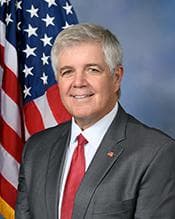
Cliff Bentz
Republican · OR · Representative
Votes with party: 98.2% (672 recorded votes)
Full profile: /officials/B000668
Source: Congress.gov · FEC
Cosponsors (1)
Members who have signed on to support this bill since introduction. Source: Congress.gov.
Latest Action
The most recent step in the bill's legislative path. Committee Activity below shows referrals and reports; the full action-by-action history including floor proceedings lives at Congress.gov →
Committee Activity
Currently in
- House Committee on Natural ResourcesReferred To · 2026-04-14
Previously
- Natural Resources CommitteeReferred To · 2026-04-14
Plain-English Summary
This bill would require federal agencies that manage water projects to improve how they consult with states, local governments, and tribes before making major decisions about dams, reservoirs, and water distribution. The changes aim to give communities more say in how water resources are managed and ensure their concerns are heard earlier in the planning process. The bill affects water agencies, state officials, and communities that depend on federal water projects for drinking water, irrigation, or flood control.
AI-assisted summary generated from the official bill metadata (title, subjects, actions) sourced from Congress.gov. Cached and reviewed. Always verify against the official text linked below.
Subjects
Water Resources Development
Full Bill Text
Verbatim text published on Congress.gov via GovInfo. Use Cmd+F / Ctrl+F to search within this excerpt.
[Congressional Bills 119th Congress] [From the U.S. Government Publishing Office] [H.R. 8259 Introduced in House (IH)] <DOC> 119th CONGRESS 2d Session H. R. 8259 To ensure meaningful consultation and cooperation between Federal and local entities in the operation of Federal water projects in the Reclamation States, and for other purposes. _______________________________________________________________________ IN THE HOUSE OF REPRESENTATIVES April 14, 2026 Mr. Bentz (for himself and Mr. Fulcher) introduced the following bill; which was referred to the Committee on Natural Resources _______________________________________________________________________ A BILL To ensure meaningful consultation and cooperation between Federal and local entities in the operation of Federal water projects in the Reclamation States, and for other purposes. Be it enacted by the Senate and House of Representatives of the United States of America in Congress assembled, SECTION 1. SHORT TITLE. This Act may be cited as the ``Federal Water Projects Consultation Improvement Act of 2026''. SEC. 2. CONSULTATION WITH AFFECTED CONTRACTORS OF FEDERAL WATER PROJECTS. (a) Resolution of Water Resource Issues.--In furtherance of the policy established by section 2(c)(2) of the Endangered Species Act of 1973 (16 U.S.C. 1531(c)(2)), in a consultation or reconsultation under section 7 of that Act (16 U.S.C. 1536) with respect to the operation of a Federal water project, the head of each action agency, the Secretary, or the head of an action agency and the Secretary working in coordination, as applicable, shall ensure that each covered entity that so requests shall-- (1) have routine and continuing opportunities-- (A) to discuss and submit information to the action agency for consideration during the development of any biological assessment; and (B) engage with the action agency with respect to the preparation of the biological assessment; (2) if the head of an action agency suggests or considers an agency action that would not result in full delivery of water pursuant to a contract for contractors of the Federal water project, be informed and engaged as to-- (A) the legal authority invoked by the action agency to support that such agency action would be within the scope of the authority of the action agency; (B) how each component of the agency action would contribute to avoiding jeopardizing the continued existence of any threatened species or endangered species and destroying or adversely modifying critical habitat and the scientific data or information that supports each component of the agency action under consideration; and (C) why any other agency actions that would have fewer adverse water supply and economic impacts are inadequate to avoid jeopardizing the continued existence of any threatened species or endangered species and destroying or adversely modifying critical habitat; (3) be informed by the head of the action agency of the schedule for preparation of a biological assessment; (4) be informed by the Secretary of the schedule for preparation of the biological opinion at such time as the biological assessment is submitted to the Services by the action agency; (5) receive a copy of draft biological opinion and have the opportunity to review each such draft biological opinion and provide comment to the Secretary through engagement with the action agency, which comments shall be afforded due consideration during the consultation; (6) have the opportunity to confer and engage with the head of the action agency and applicant, if any, with respect to reasonable and prudent alternatives prior to the identification of any reasonable and prudent alternative for consideration; (7) if the Secretary suggests a reasonable and prudent alternative, be informed and engaged with respect to-- (A) how each component of the reasonable and prudent alternative will contribute to avoiding jeopardizing the continued existence of any threatened species or endangered…
Show the remaining 606 wordsHide the remaining 606 words
species and destroying or adversely modifying critical habitat and the scientific data or information that supports each component of the reasonable and prudent alternative; and (B) why any other proposed reasonable and prudent alternatives that would have fewer adverse water supply and economic impacts are inadequate to avoid jeopardizing the continued existence of any threatened species or endangered species and destroying or adversely modifying critical habitat; and (8) if the Secretary proposes a reasonable and prudent measure to avoid or minimize take of threatened species or endangered species, or terms and conditions to implement such reasonable and prudent measure, be informed and engaged with respect to-- (A) how the reasonable and prudent measure or terms and conditions relate to avoiding or minimizing such take; and (B) whether the reasonable and prudent measure or terms and conditions conform to any applicable limitations. SEC. 3. DEFINITIONS. In this Act: (1) Action agency.--The term ``action agency'' means the Federal agency responsible for authorizing, funding, or carrying out an action subject to consultation under section 7 of the Endangered Species Act of 1973 (16 U.S.C. 1536). (2) Agency action.--The term ``agency action'' has the meaning given the term in section 7(a)(2) of the Endangered Species Act of 1973 (16 U.S.C. 1536(a)(2)). (3) Biological assessment.--The term ``biological assessment'' means a biological assessment conducted under section 7(c) of the Endangered Species Act of 1973 (16 U.S.C. 1536(c)). (4) Biological opinion.--The term ``biological opinion'' means a written statement provided by the Secretary under section 7(b)(3) of the Endangered Species Act of 1973 (16 U.S.C. 1536(b)(3)). (5) Contractor.--The term ``contractor'' means any public agency, quasi-municipal corporation, irrigation district, water users association, or similar entity that has entered into a water service, repayment, or other contract with the United States related to storage, diversion, or delivery of water from a Federal water project. (6) Covered entity.--The term ``covered entity'' means a public or quasi-municipal agency or water users association that has a contract with the Bureau of Reclamation for municipal or agricultural water supply from a Federal water project. (7) Critical habitat.--The term ``critical habitat'' has the meaning given the term in section 3 of the Endangered Species Act of 1973 (16 U.S.C. 1532). (8) Endangered species.--The term ``endangered species'' has the meaning given the term in section 3 of the Endangered Species Act of 1973 (16 U.S.C. 1532). (9) Engage.--The term ``engage'' means to conduct direct written and in-person communications recognizing the unique interest of the contractor and promoting maximum candor and cooperation. (10) Federal water project.--The term ``Federal water project'' means any project or facility-- (A) in a Reclamation State described in subparagraphs (B) through (R) of section 128(a)(7) of the EXPLORE Act (16 U.S.C. 8426(a)(7)); and (B) operated or managed by a Federal agency for the authorized purpose of municipal or agricultural water supply. (11) Reasonable and prudent alternative.--The term ``reasonable and prudent alternative'' means a reasonable and prudent alternative suggested by the Secretary under section 7(b)(3) of the Endangered Species Act of 1973 (16 U.S.C. 1536(b)(3)). (12) Reasonable and prudent measure.--The term ``reasonable and prudent measure'' means a reasonable and prudent measure specified by the Secretary under section 7(b)(4) of the Endangered Species Act of 1973 (16 U.S.C. 1536(b)(4)). (13) Secretary.--The term ``Secretary'' has the meaning given the term in section 3 of the Endangered Species Act of 1973 (16 U.S.C. 1532). (14) Take.--The term ``take'' has the meaning given the term in section 3 of the Endangered Species Act of 1973 (16 U.S.C. 1532). (15) Threatened species.--The term ``threatened species'' has the meaning given the term in section 3 of the Endangered Species Act of 1973 (16 U.S.C. 1532). <all>
Related legislation
Bills by the same sponsor or covering overlapping subjects.
- HR10647IMD CARE ActReferred to Committee · 2026-10-01
- HR10616Public Access to HHS Health Data Act of 2026Referred to Committee · 2026-09-28
- HR9827Wildfire Reduction Market Expansion Act of 2026Referred to Committee · 2026-07-22
- HR655Dalles Watershed Development ActPassed House · 2026-07-15