Protecting Sibling Relationships in Foster Care Act
Sponsor
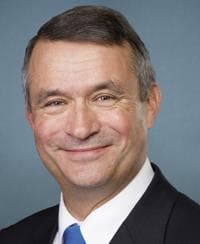
Full profile: /officials/B001298
Source: Congress.gov · FEC
Cosponsors (3)
Members who have signed on to support this bill since introduction. Source: Congress.gov.
Latest Action
The most recent step in the bill's legislative path. Committee Activity below shows referrals and reports; the full action-by-action history including floor proceedings lives at Congress.gov →
Committee Activity
Currently in
- House Committee on Education and WorkforceReferred To · 2026-04-29
Previously
- Education and Workforce CommitteeReferred To · 2026-04-29
Plain-English Summary
The legislation would provide funding and support to help states and organizations create foster care programs that specialize in keeping large groups of siblings together, siblings of very different ages, and siblings with serious behavioral or medical needs. Currently, it's difficult for foster families to take in multiple children at once, especially when they have significant challenges, which often forces siblings to be separated into different homes. This bill aims to make it easier for foster agencies to recruit and support families willing to care for these harder-to-place sibling groups.
AI-assisted summary generated from the official bill metadata (title, subjects, actions) sourced from Congress.gov. Cached and reviewed. Always verify against the official text linked below.
Subjects
Full Bill Text
Verbatim text published on Congress.gov via GovInfo. Use Cmd+F / Ctrl+F to search within this excerpt.
[Congressional Bills 119th Congress] [From the U.S. Government Publishing Office] [H.R. 8566 Introduced in House (IH)] <DOC> 119th CONGRESS 2d Session H. R. 8566 To encourage the development of specialized foster care programs designed specifically for large sibling groups, sibling groups with a wide age range, and sibling groups with complex needs. _______________________________________________________________________ IN THE HOUSE OF REPRESENTATIVES April 29, 2026 Mr. Bacon (for himself, Mr. Nunn of Iowa, and Ms. Moore of Wisconsin) introduced the following bill; which was referred to the Committee on Education and Workforce _______________________________________________________________________ A BILL To encourage the development of specialized foster care programs designed specifically for large sibling groups, sibling groups with a wide age range, and sibling groups with complex needs. Be it enacted by the Senate and House of Representatives of the United States of America in Congress assembled, SECTION 1. SHORT TITLE. This Act may be cited as the ``Protecting Sibling Relationships in Foster Care Act''. SEC. 2. COMPETITIVE GRANT PILOT PROGRAM TO ENCOURAGE THE DEVELOPMENT OF SPECIALIZED FOSTER CARE PROGRAMS DESIGNED SPECIFICALLY FOR LARGE SIBLING GROUPS, SIBLING GROUPS WITH A WIDE AGE RANGE, AND SIBLING GROUPS WITH COMPLEX NEEDS. (a) In General.--The Secretary of Health and Human Services (in this section referred to as the ``Secretary'') shall establish a competitive grant pilot program under which, during the 5-year period that begins with the date of the enactment of this section, the Secretary shall make not more than 5 grants to eligible entities who have applied therefor to encourage the development of specialized foster care programs designed specifically for groups of 3 or more siblings, sibling groups with a wide age range, and sibling groups with, or that include a youth with, complex needs. For purposes of the preceding sentence, a youth has complex needs if the youth exhibits challenging or risky behaviors that could cause themself or others serious harm, has mental health needs of such severity that the participation of the youth in daily life may be impaired either with or without services being rendered to help, has a disability (as defined under the Americans with Disabilities Act), or has an illness that requires continuous monitoring or is life-threatening, and complex needs include issues that may arise from siblings in foster care with a different parent, which could impact the ability of the siblings to be placed together, or from a youth with a history of trauma. (b) Eligible Entity.--In this section, the term ``eligible entity'' means a State child welfare agency, a State, tribal, or local agency, a faith- or community-based organization, or a nonprofit organization that has expertise and demonstrated experience, as well as State supervision, in administering a foster care program. (c) Applications.--An eligible entity that desires to receive a grant under this section shall submit to the Secretary an application that includes-- (1) a description of how funds received under the grant will be used to place together sibling groups described in subsection (a); (2) a description of the specialized foster care program involved, and how the program is designed for the placement of sibling groups described in subsection (a); (3) data describing the challenges of placing, and number of, sibling groups described in subsection (a) that are awaiting placements; and (4) such other information as the Secretary may reasonably require. (d) Use of Funds.--A recipient of a grant under this section may use the grant funds only to develop specialized foster care programs which are-- (1) designed to identify available placements for, and place together, sibling groups described in subsection (a); and (2) evidence-based, and proven to substantially increase joint sibling placements. (e)…
Show the remaining 117 wordsHide the remaining 117 words
Reporting Requirement.--As a condition of receiving a grant under this section, the grant recipient shall submit to the Secretary a written report on the number of children in the specialized foster care program involved, the size of the sibling groups served by the program, the methods used to place children with their siblings under the program, and the outcomes of the placements. (f) Regulations.--The Secretary may prescribe such regulations as may be necessary to carry out this section. (g) Limitations on Authorization of Appropriations.--To carry out this section, there are authorized to be appropriated to the Secretary not more than $10,000,000, which is authorized to remain available during the 5-year period referred to in subsection (a). <all>
Related legislation
Bills by the same sponsor or covering overlapping subjects.
- HR10797Aerial Transport and High Consequence Infectious Diseases ActReferred to Committee · 2026-10-13
- HR10796United States-Israel Defense Technology Cooperation ActReferred to Committee · 2026-10-13
- HRES1591Expressing support for the designation of October 15, 2026, as "Liver Cancer Awareness Day".Referred to Committee · 2026-10-01
- HR10481National Guard Heritage Welfare Society ActReferred to Committee · 2026-09-17