HR8587Referred to Committee
Safeguarding Honest Speech Act of 2026
Introduced
In Committee
3
Passed One Chamber4
Passed Both5
Signed into Law119th
Congress
2026-04-29
Introduced
5
Cosponsors
HR
ⓘType
Sponsor
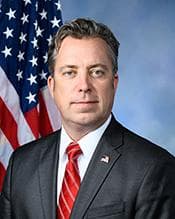
Andrew Ogles
Republican · TN · Representative
Votes with party: 91.2% (615 recorded votes)
Full profile: /officials/O000175
Source: Congress.gov · FEC
Cosponsors (5)
Members who have signed on to support this bill since introduction. Source: Congress.gov.
Latest Action
The most recent step in the bill's legislative path. Committee Activity below shows referrals and reports; the full action-by-action history including floor proceedings lives at Congress.gov →
Committee Activity
Currently in
- House Committee on Oversight and Government ReformReferred To · 2026-04-29
Previously
- Oversight and Government Reform CommitteeReferred To · 2026-04-29
Plain-English Summary
This bill would prevent federal agencies from using taxpayer money to enforce policies that require employees to use someone's preferred pronouns or chosen name instead of their legal name. The measure would apply to federal workplaces and agencies that receive federal funding. It affects federal employees and the agencies that employ them.
AI-assisted summary generated from the official bill metadata (title, subjects, actions) sourced from Congress.gov. Cached and reviewed. Always verify against the official text linked below.
Subjects
Government Operations and Politics
Full Bill Text
Verbatim text published on Congress.gov via GovInfo. Use Cmd+F / Ctrl+F to search within this excerpt.
[Congressional Bills 119th Congress] [From the U.S. Government Publishing Office] [H.R. 8587 Introduced in House (IH)] <DOC> 119th CONGRESS 2d Session H. R. 8587 To prohibit the use of funds to implement, administer, or enforce measures requiring certain employees to refer to an individual by the preferred pronouns of such individual or a name other than the legal name of such individual, and for other purposes. _______________________________________________________________________ IN THE HOUSE OF REPRESENTATIVES April 29, 2026 Mr. Ogles (for himself, Ms. Boebert, Mr. Clyde, Mr. Crane, Mr. Gosar, and Mr. Weber of Texas) introduced the following bill; which was referred to the Committee on Oversight and Government Reform _______________________________________________________________________ A BILL To prohibit the use of funds to implement, administer, or enforce measures requiring certain employees to refer to an individual by the preferred pronouns of such individual or a name other than the legal name of such individual, and for other purposes. Be it enacted by the Senate and House of Representatives of the United States of America in Congress assembled, SECTION 1. SHORT TITLE. This Act may be cited as the ``Safeguarding Honest Speech Act of 2026''. SEC. 2. NO FEDERAL FUNDS FOR COMPELLED LANGUAGE. (a) In General.--Notwithstanding any other provision of law, no funds may be used for the purpose of implementing, administering, or enforcing any rule, policy, guidance, recommendation, or memoranda requiring an employee or contractor of any Federal agency or Department to use-- (1) another person's preferred pronouns if they are incompatible with such a person's sex; or (2) a name other than a person's legal name when referring to such a person. (b) Enforcement.-- (1) In general.--All Federal agencies and Departments shall ensure that, not later than 30 days following a written notice from any employee or contractor regarding an alleged violation of subsection (a), a formal response to the notice is issued to the employee or contractor. (2) Private right of action.--In the case that the formal response in subsection (a) does not represent a satisfactory outcome for a Federal employee or contractor, any employee or contractor aggrieved by a violation of subsection (a) may commence a civil action against the Federal agency or Department responsible for the alleged violation. (3) Relief.--In any action under this subsection, the court may award appropriate relief, including-- (A) temporary, preliminary, or permanent injunctive relief; (B) compensatory damages; (C) punitive or exemplary damages, which may not exceed $100,000; and (D) reasonable fees for attorneys. (4) Statute of limitations.--An action under this subsection shall be brought not later than one year after the date on which the alleged violation of subsection (a) occurred. (c) Definitions.--In this section: (1) Female.--The term ``female'' refers to an individual who has, had, will have, or would have, but for a developmental or genetic anomaly or historical accident, the reproductive system that at some point produces, transports, and utilizes eggs for fertilization. (2) Male.--The term ``male'' refers to an individual who has, had, will have, or would have, but for a developmental or genetic anomaly or historical accident, the reproductive system that at some point produces, transports, and utilizes sperm for fertilization. (3) Sex.--The term ``sex'' refers to biological sex, either male or female. (4) Person.--The term ``person'' refers to a natural person. <all>
Related legislation
Bills by the same sponsor or covering overlapping subjects.
- HR6808To designate the facility of the United States Postal Service located at 417 West 7th Street in Columbia, Tennessee, as the "Pharmacist’s Mate First Class John Harlan Willis Post Office Building".Passed House · 2026-09-14
- HRES1472Impeaching Allison Dale Burroughs, a judge of the United States District Court for the District of Massachusetts, for high crimes and misdemeanors.Referred to Committee · 2026-08-03
- HR9968Opening Programs to Organic Farms ActReferred to Committee · 2026-07-27
- HR9868Preventing Forced Abortions Act of 2026Referred to Committee · 2026-07-22