Logan's Law
Sponsor
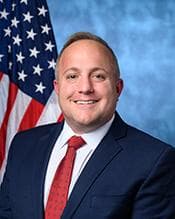
Full profile: /officials/F000478
Source: Congress.gov · FEC
Cosponsors (11)
Members who have signed on to support this bill since introduction. Source: Congress.gov.
Latest Action
The most recent step in the bill's legislative path. Committee Activity below shows referrals and reports; the full action-by-action history including floor proceedings lives at Congress.gov →
Committee Activity
Currently in
- House Committee on the JudiciaryReferred To · 2026-04-30
Previously
- Judiciary CommitteeReferred To · 2026-04-30
Plain-English Summary
The proposal would create a public online database listing people convicted of violent crimes so that anyone could search for this information. This would affect convicted individuals by making their criminal records easily accessible to the general public, and would potentially impact employers, landlords, and community members who might use the database when making decisions about hiring, housing, or safety. The measure is currently under review by the House Judiciary Committee.
AI-assisted summary generated from the official bill metadata (title, subjects, actions) sourced from Congress.gov. Cached and reviewed. Always verify against the official text linked below.
Subjects
Full Bill Text
Verbatim text published on Congress.gov via GovInfo. Use Cmd+F / Ctrl+F to search within this excerpt.
[Congressional Bills 119th Congress] [From the U.S. Government Publishing Office] [H.R. 8611 Introduced in House (IH)] <DOC> 119th CONGRESS 2d Session H. R. 8611 To establish a publicly accessible database of individuals with convictions for violent crimes, and for other purposes. _______________________________________________________________________ IN THE HOUSE OF REPRESENTATIVES April 30, 2026 Mr. Fry (for himself, Mr. Harrigan, Mr. Harris of North Carolina, Mr. Norman, and Mr. Moore of North Carolina) introduced the following bill; which was referred to the Committee on the Judiciary _______________________________________________________________________ A BILL To establish a publicly accessible database of individuals with convictions for violent crimes, and for other purposes. Be it enacted by the Senate and House of Representatives of the United States of America in Congress assembled, SECTION 1. SHORT TITLE; TABLE OF CONTENTS. (a) Short Title.--This Act may be cited as ``Logan's Law''. (b) Table of Contents.--The table of contents for this Act is as follows: Sec. 1. Short title; table of contents. TITLE I--VIOLENT CRIMINAL OFFENDER DATABASE Sec. 101. Definitions. Sec. 102. Database. Sec. 103. State participation in database. TITLE II--FEDERAL EFFORTS TO INCREASE DATA SHARING AMONG STATES Sec. 201. Report and recommendations on information sharing. TITLE I--VIOLENT CRIMINAL OFFENDER DATABASE SEC. 101. DEFINITIONS. In this title: (1) Byrne jag grant program.--The term ``Byrne JAG grant program'' means the grant program established under subpart 1 of part E of title I of the Omnibus Crime Control and Safe Streets Act of 1968 (34 U.S.C. 10151 et seq.). (2) Database.--The term ``Database'' means the database established under section 102(a). (3) Qualifying conviction.--The term ``qualifying conviction''-- (A) means any conviction for an offense that-- (i) is punishable by imprisonment for a term exceeding 180 days, regardless of the sentence actually imposed; and (ii)(I) has as an element the use, attempted use, or threatened use of physical force against the person or property of another; or (II) by its nature, involves a substantial risk that physical force against the person or property of another may be used in the course of committing the offense; and (B) does not include any conviction-- (i) that has been expunged, vacated, set aside, or otherwise rendered legally inoperative under Federal or State law; or (ii) if the person who committed the offense of conviction has been pardoned for the offense pursuant to a full and unconditional pardon. (4) State.--The term ``State'' means a State of the United States, the District of Columbia, any commonwealth, territory, or possession of the United States, and a tribal organization. (5) Tribal organization.--The term ``tribal organization'' has the meaning given the term in section 4 of the Indian Self- Determination and Education Assistance Act (25 U.S.C. 5304). SEC. 102. DATABASE. (a) Establishment.--Not later than 180 days after the date of enactment of this Act, the Attorney General shall establish a publicly accessible database of all individuals with qualifying convictions, to be known as the ``Violent Criminal Offender Database''. (b) Requirements.--The Attorney General shall ensure that-- (1) the Database includes both Federal and State records of qualifying convictions; (2) to the extent practicable, the Database utilizes records collected by the Federal Bureau of Investigation; (3) the Database is available free of charge to the public; (4) the Database is searchable by-- (A) name; (B) address; (C) date of birth; (D) sex; (E) race; (F) nationality; (G) citizenship status; (H) type of conviction; (I) current and historical probation status related to a qualifying conviction, including information on any probation revocation or violation; (J) jurisdiction of each qualifying conviction; (K) the maximum fine and term of imprisonment authorized, and the actual fine and term of imprisonment imposed, for each…
Show the remaining 574 wordsHide the remaining 574 words
qualifying conviction; (L) whether each qualifying conviction was the result of a plea agreement or a trial; (M) the sentencing judge for each qualifying conviction; (N) the prosecuting office for each qualifying conviction; and (O) any other searchable category the Attorney General determines appropriate to ensure the safety of the public; and (5) the public is informed of the availability of the Database. (c) Updates.-- (1) In general.--Not less frequently than quarterly, the Attorney General shall update the Database. (2) Removal of persons with legally inoperative convictions.--Upon determining that a conviction for which a person has been listed in the Database no longer constitutes a qualifying conviction by reason of section 101(3)(B), the Attorney General shall remove the person from the Database with respect to that conviction. SEC. 103. STATE PARTICIPATION IN DATABASE. (a) Submission of Data.--Not later than 180 days after the date of enactment of this Act, and on an ongoing basis thereafter, each State that receives amounts under the Byrne JAG grant program shall submit to the Attorney General all data regarding qualifying convictions entered by a court of the State or a political subdivision of the State necessary for the Attorney General to comply with section 102. (b) Byrne JAG Grant Penalty for Noncompliance.--The Attorney General-- (1) shall not distribute amounts under the Bryne JAG grant program to a State that is not in compliance with subsection (a); and (2) in the case of amounts under the Byrne JAG grant program that the Attorney General would have distributed to a State but for the prohibition under paragraph (1) of this subsection, may, at the discretion of the Attorney General, and without regard to the requirements and limitations under section 505 of title I of the Omnibus Crime Control and Safe Streets Act of 1968 (34 U.S.C. 10156), distribute those amounts directly to units of local government in the State, which shall be in addition to the grants required to be made directly to units of local government under subsection (d) of such section 505. TITLE II--FEDERAL EFFORTS TO INCREASE DATA SHARING AMONG STATES SEC. 201. REPORT AND RECOMMENDATIONS ON INFORMATION SHARING. Not later than 180 days after the date of enactment of this Act, the Attorney General shall submit to the Committee on the Judiciary of the Senate and the Committee on the Judiciary of the House of Representatives a report that includes the following: (1) A description of the current process and procedure for sharing criminal records, including fingerprint, warrant, and criminal history data-- (A) between the States; and (B) between the States and the Federal Government. (2) The identification of any procedural or process burdens that can or could result in criminal records not being shared between prosecutorial offices or departments, to the extent that such burdens result in harm to the public. (3) Recommendations for both the Department of Justice and Congress to ensure that criminal records are shared between relevant prosecutorial offices and law enforcement agencies of States and between such offices and agencies of States and the Federal Government such that the public is protected from criminal offenders. (4) Any other matters, issues, laws, compacts, or regulations that the Attorney General identifies as detrimental to the goal of ensuring that-- (A) the records of criminal offenders are shared with prosecutors nationwide; and (B) repeat criminal offenders are not given inappropriately light sentences due to their records not being shared as described in subparagraph (A). <all>
Related legislation
Bills by the same sponsor or covering overlapping subjects.
- HR10668EASE ActReferred to Committee · 2026-10-01
- HR3100To amend the National Child Protection Act of 1993 to ensure that businesses and organizations that work with vulnerable populations are able to request background checks for their contractors who work with those populations, as well as for individuals that the businesses or organizations license or certify to provide care for those populations.Referred to Committee · 2026-07-15
- HR9612American Enrichment Deployment ActReferred to Committee · 2026-07-14
- HR8849Promoting Police Leadership ActReferred to Committee · 2026-05-15