HR8681Referred to Committee
SHIELD Act
Introduced
In Committee
3
Passed One Chamber4
Passed Both5
Signed into Law119th
Congress
2026-05-07
Introduced
0
Cosponsors
HR
ⓘType
Sponsor
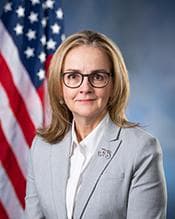
Madeleine Dean
Democrat · PA · Representative
Votes with party: 99.2% (663 recorded votes)
Top industries funding sponsor:
- Climate & Environment$1k
Full profile: /officials/D000631
Source: Congress.gov · FEC
Cosponsors (0)
Members who have signed on to support this bill since introduction. Source: Congress.gov.
No cosponsors on record. Bills can pass without cosponsors — this often means the sponsor introduced the bill alone, either because it's a messaging bill, a chairman's mark, or simply early in the legislative cycle.
Latest Action
The most recent step in the bill's legislative path. Committee Activity below shows referrals and reports; the full action-by-action history including floor proceedings lives at Congress.gov →
Referred to the Committee on Foreign Affairs, and in addition to the Committee on the Judiciary, for a period to be subsequently determined by the Speaker, in each case for consideration of such provisions as fall within the jurisdiction of the committee concerned.
2026-05-07
Source: Congress.gov
Committee Activity
Currently in
- House Committee on the JudiciaryReferred To · 2026-05-07
- House Committee on Foreign AffairsReferred To · 2026-05-07
Previously
- Foreign Affairs CommitteeReferred To · 2026-05-07
- Judiciary CommitteeReferred To · 2026-05-07
Plain-English Summary
The proposal would punish foreign companies and individuals that use forced labor or child labor to mine cobalt, a mineral used in batteries and electronics, by blocking them from doing business with the United States and freezing any assets they have in America. This would affect mining operations and companies that buy cobalt from suppliers using exploitative labor practices, potentially making electronics and battery manufacturers more careful about where they source their materials. The measure aims to discourage human rights abuses in cobalt mining, particularly in countries where such practices are common.
AI-assisted summary generated from the official bill metadata (title, subjects, actions) sourced from Congress.gov. Cached and reviewed. Always verify against the official text linked below.
Subjects
International Affairs
Full Bill Text
Verbatim text published on Congress.gov via GovInfo. Use Cmd+F / Ctrl+F to search within this excerpt.
[Congressional Bills 119th Congress] [From the U.S. Government Publishing Office] [H.R. 8681 Introduced in House (IH)] <DOC> 119th CONGRESS 2d Session H. R. 8681 To impose sanctions with respect to any foreign person employing forced labor or child labor in the cobalt mining sector of a foreign country. _______________________________________________________________________ IN THE HOUSE OF REPRESENTATIVES May 7, 2026 Ms. Dean of Pennsylvania introduced the following bill; which was referred to the Committee on Foreign Affairs, and in addition to the Committee on the Judiciary, for a period to be subsequently determined by the Speaker, in each case for consideration of such provisions as fall within the jurisdiction of the committee concerned _______________________________________________________________________ A BILL To impose sanctions with respect to any foreign person employing forced labor or child labor in the cobalt mining sector of a foreign country. Be it enacted by the Senate and House of Representatives of the United States of America in Congress assembled, SECTION 1. SHORT TITLE. This Act may be cited as the ``Sanctioning Harmful Illicit Exploitation of Labor and Dependents Act'' or ``SHIELD Act''. SEC. 2. SENSE OF CONGRESS. It is the sense of Congress that-- (1) forced labor and illegal exploitation of child labor in some of the most dangerous work in the world is a grievous human rights abuse; (2) reports by journalists, the Department of Labor, and nongovernmental organizations overwhelmingly indicate that there is widespread forced labor and child labor in the cobalt mining sectors of foreign countries; and (3) the United States should impose economic costs on foreign entities that utilize forced labor and child labor in the cobalt mining sectors of foreign countries. SEC. 3. SANCTIONS. (a) Authorization.--The President shall impose the sanctions described in subsection (b) with respect to any foreign person employing forced labor or child labor in the cobalt mining sector of a foreign country. (b) Sanctions Described.--The sanctions described in this subsection are the following: (1) Asset blocking.--Notwithstanding the requirements of section 202 of the International Emergency Economic Powers Act (50 U.S.C. 1701), the President may exercise of all powers granted to the President by that Act to the extent necessary to block and prohibit all transactions in all property and interests in property of the foreign person if such property and interests in property are in the United States, come within the United States, or are or come within the possession or control of a United States person. (2) Aliens inadmissible for visas, admission, or parole.-- (A) Visas, admission, or parole.--In the case of an alien subject to sanctions pursuant to subsection (a), the alien is-- (i) inadmissible to the United States; (ii) ineligible to receive a visa or other documentation to enter the United States; and (iii) otherwise ineligible to be admitted or paroled into the United States or to receive any other benefit under the Immigration and Nationality Act (8 U.S.C. 1101 et seq.). (B) Current visas revoked.-- (i) In general.--The visa or other entry documentation of an alien described in subparagraph (A) shall be revoked, regardless of when such visa or other entry documentation was issued. (ii) Immediate effect.--A revocation under clause (i) shall-- (I) take effect in accordance with section 221(i) of the Immigration and Nationality Act (8 U.S.C. 1201(i)); and (II) cancel any other valid visa or entry documentation that is in the alien's possession. (c) Exceptions.-- (1) Exception to comply with international obligations.-- Sanctions under subsection (b)(2) shall not apply with respect to the admission of an alien if admitting or paroling the alien into the United States is necessary to permit the United States to comply with the…
Show the remaining 395 wordsHide the remaining 395 words
Agreement regarding the Headquarters of the United Nations, signed at Lake Success June 26, 1947, and entered into force November 21, 1947, between the United Nations and the United States, or other applicable international obligations. (2) Exception relating to the provision of humanitarian assistance.--Sanctions under this section may not be imposed with respect to transactions or the facilitation of transactions for-- (A) the sale of agricultural commodities, food, medicine, or medical devices; (B) the provision of humanitarian assistance; (C) financial transactions relating to humanitarian assistance; or (D) transporting goods or services that are necessary to carry out operations relating to humanitarian assistance. (d) Implementation; Penalties.-- (1) Implementation.--The President may exercise all authorities provided to the President under sections 203 and 205 of the International Emergency Economic Powers Act (50 U.S.C. 1702 and 1704) to carry out this section. (2) Penalties.--The penalties provided for in subsections (b) and (c) of section 206 of the International Emergency Economic Powers Act (50 U.S.C. 1705) shall apply to a person that violates, attempts to violate, conspires to violate, or causes a violation of regulations promulgated to carry out this section to the same extent that such penalties apply to a person who commits an unlawful act described in section 206(a) of that Act. (e) Waiver.--The President may waive the application of sanctions imposed with respect to a foreign person under this section if the President certifies to the appropriate congressional committees not later than 15 days before such waiver is to take effect that the waiver is important to the national security interests of the United States. (f) Sunset.--The authority to impose sanctions under this section shall terminate on the date that is seven years after the date of the enactment of this Act. (g) Definitions.--In this section-- (1) the term ``appropriate congressional committees'' means the Committee on Foreign Affairs of the House of Representatives and the Committee on Foreign Relations of the Senate; (2) the term ``foreign person'' means an individual or entity that is not a United States person; and (3) the term ``United States person'' means-- (A) a United States citizen; (B) a permanent resident alien of the United States; (C) an entity organized under the laws of the United States or of any jurisdiction within the United States, including a foreign branch of such an entity; or (D) a person in the United States. <all>
Related legislation
Bills by the same sponsor or covering overlapping subjects.
- HR10733To establish a Science Advisory Board at the Department of Justice, and for other purposes.Referred to Committee · 2026-10-05
- HR10659Removing Access Barriers to Running for Elected Office for People with Disabilities ActReferred to Committee · 2026-10-01
- HR10661Beyond the Box for Higher Education Act of 2026Referred to Committee · 2026-10-01
- HR10660AID Local Government Leadership ActReferred to Committee · 2026-10-01