HR8768Referred to Committee
CHARGE Act
Introduced
In Committee
3
Passed One Chamber4
Passed Both5
Signed into Law119th
Congress
2026-05-12
Introduced
0
Cosponsors
HR
ⓘType
Sponsor
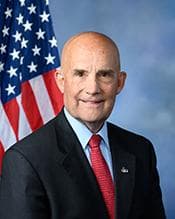
Keith Self
Republican · TX · Representative
Votes with party: 82.7% (659 recorded votes)
Full profile: /officials/S001224
Source: Congress.gov · FEC
Cosponsors (0)
Members who have signed on to support this bill since introduction. Source: Congress.gov.
No cosponsors on record. Bills can pass without cosponsors — this often means the sponsor introduced the bill alone, either because it's a messaging bill, a chairman's mark, or simply early in the legislative cycle.
Latest Action
The most recent step in the bill's legislative path. Committee Activity below shows referrals and reports; the full action-by-action history including floor proceedings lives at Congress.gov →
Committee Activity
Currently in
- House Committee on Energy and CommerceReferred To · 2026-05-12
Plain-English Summary
The bill would prevent electric vehicles and related equipment made by foreign companies considered a threat to U.S. national security from being sold in America, similar to existing restrictions on other noncomplying vehicles. This would primarily affect car manufacturers and consumers looking to buy electric vehicles, potentially limiting options and raising prices for buyers while protecting domestic EV makers from foreign competition. The measure targets countries like China that the government views as security concerns.
AI-assisted summary generated from the official bill metadata (title, subjects, actions) sourced from Congress.gov. Cached and reviewed. Always verify against the official text linked below.
Subjects
Transportation and Public Works
Full Bill Text
Verbatim text published on Congress.gov via GovInfo. Use Cmd+F / Ctrl+F to search within this excerpt.
[Congressional Bills 119th Congress] [From the U.S. Government Publishing Office] [H.R. 8768 Introduced in House (IH)] <DOC> 119th CONGRESS 2d Session H. R. 8768 To amend title 49, United States Code, to include certain electric vehicles or related equipment manufactured by, and services provided by, a foreign entity of concern to the noncomplying motor vehicles list, and for other purposes. _______________________________________________________________________ IN THE HOUSE OF REPRESENTATIVES May 12, 2026 Mr. Self introduced the following bill; which was referred to the Committee on Energy and Commerce _______________________________________________________________________ A BILL To amend title 49, United States Code, to include certain electric vehicles or related equipment manufactured by, and services provided by, a foreign entity of concern to the noncomplying motor vehicles list, and for other purposes. Be it enacted by the Senate and House of Representatives of the United States of America in Congress assembled, SECTION 1. SHORT TITLE. This Act may be cited as the ``Cybersecurity and Hardware Assurance for Resilient Grid Electrification Act'' or the ``CHARGE Act''. SEC. 2. FINDINGS. Congress finds the following: (1) China accounts for two thirds of the global electric vehicle market. (2) Electric vehicles from China are not currently within the United States automotive market, but that is expected to increase to 8 percent of the market by 2030. (3) By 2030, 20 percent of new vehicle sales are expected to need a connection to the electrical grid. (4) Vehicle manufacturers routinely update and maintain vehicle software remotely without oversight. (5) According to the Department of Energy, local power outages cost the United States $121,000,000,000 annually and result in a 1.3 percent reduction in GDP. (6) On April 28, 2025, the electrical grid that services large portions of Spain and Portugal failed to maintain frequency and voltage resulting in a 16-hour nationwide blackout, the largest power failure in Europe in over 20 years. (7) Failure of any of the electrical grids of the United States for 3 days could reduce the GDP of the United States by up to 2.6 percent. (8) The Vehicle to Grid (VTG) Initiative connects electrical vehicle batteries to the grid as a renewable source of power during peak loads and then replaces that power during times of low demand. (9) A vehicle connected to the electrical grid, through the VTG program, retains unique control of the availability of the battery of such vehicle with respect to energy provision supply. (10) Fast switching of battery availability while connected to the electrical grid may hamper the ability of the electrical grid to maintain the standard 60 Hz frequency and 120V/240V household service voltage resulting in deviations which may damage devices that are plugged in, both residential and commercial. (11) A coordinated attack by an array of participating vehicles from adversarial manufacturers would make the grid vulnerable to possible manipulation and disruptions. (12) A failure of the electric grid of the United States would damage electric vehicles connected to the electric grid and hamper safety efforts to protect our national security, patrol the streets of cities in the United States, and maintain law and order, while also putting life-saving health services at risk. SEC. 3. INCLUSION OF CERTAIN VEHICLES AND EQUIPMENT MANUFACTURED BY CHINA ON THE NONCOMPLYING MOTOR VEHICLES LIST. (a) Definitions.--Section 30102(a) of title 49, United States Code, is amended-- (1) by redesignating paragraphs (5) through (13) as paragraphs (7) through (15), respectively; (2) by inserting after paragraph (4) the following new paragraphs: ``(5) `electric vehicle' has the meaning given the term in section 32904(a)(2). ``(6) `foreign entity of concern' has the meaning given the term in section 9901 of title XCIX…
Show the remaining 214 wordsHide the remaining 214 words
of division H of the William M. (Mac) Thornberry National Defense Authorization Act for Fiscal Year 2021 (Public Law 116-283).''; and (3) by adding at the end the following new paragraph: ``(16) `vehicle charge power control component' means an onboard electrical and electronic system that regulates, converts, and manages the flow of energy between the energy port of a vehicle and the traction battery of a vehicle, including an onboard charger, a power-electronic converter, a battery-management control, and an associated high-voltage protection device.''. (b) Prohibitions on Manufacturing, Selling, and Importing Noncomplying Motor Vehicles and Equipment.--Section 30112(a) of title 49, United States Code, is amended by adding at the end the following new paragraph: ``(4) Except as provided in this section, section 30114, subsections (i) and (j) of section 30120, and subchapter III of this chapter, a person may not sell, offer for sale, introduce or deliver for introduction in interstate commerce, or import into the United States any motor vehicle or motor vehicle equipment if the vehicle or equipment-- ``(A) is an electric vehicle or equipment of an electric vehicle manufactured in whole or in part by a foreign entity of concern; or ``(B) uses a vehicle charge power control component manufactured in whole or in part by a foreign entity of concern.''. <all>
Related legislation
Bills by the same sponsor or covering overlapping subjects.
- HR6698Board of Veterans Appeals Annual Report Transparency Act of 2025Referred to Committee · 2026-10-06
- HR10766To direct the Secretary of Defense to update the Critical Asset List of the Department of Defense to incorporate assets critical to the development, deployment, and operation of the Golden Dome missile defense system.Referred to Committee · 2026-10-06
- HCONRES116Denouncing Sharia law in the United States.Referred to Committee · 2026-09-03
- HR9879Super Pay-As-You-Go Act of 2026Referred to Committee · 2026-07-22