Democracy Without Intimidation Act
Sponsor
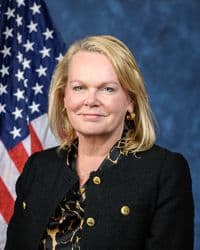
Full profile: /officials/M001232
Source: Congress.gov · FEC
Cosponsors (1)
Members who have signed on to support this bill since introduction. Source: Congress.gov.
Latest Action
The most recent step in the bill's legislative path. Committee Activity below shows referrals and reports; the full action-by-action history including floor proceedings lives at Congress.gov →
Committee Activity
Currently in
- House Committee on the JudiciaryReferred To · 2026-05-14
Plain-English Summary
The proposal would ban military personnel from being stationed at polling places during elections, except in very limited circumstances. This affects how elections are conducted and protects voters' ability to cast ballots without military presence, which supporters argue prevents intimidation while critics may have concerns about election security.
AI-assisted summary generated from the official bill metadata (title, subjects, actions) sourced from Congress.gov. Cached and reviewed. Always verify against the official text linked below.
Subjects
Full Bill Text
Verbatim text published on Congress.gov via GovInfo. Use Cmd+F / Ctrl+F to search within this excerpt.
[Congressional Bills 119th Congress] [From the U.S. Government Publishing Office] [H.R. 8825 Introduced in House (IH)] <DOC> 119th CONGRESS 2d Session H. R. 8825 To prohibit troops at the polls, and for other purposes. _______________________________________________________________________ IN THE HOUSE OF REPRESENTATIVES May 14, 2026 Mrs. McClain Delaney (for herself and Ms. Pettersen) introduced the following bill; which was referred to the Committee on the Judiciary _______________________________________________________________________ A BILL To prohibit troops at the polls, and for other purposes. Be it enacted by the Senate and House of Representatives of the United States of America in Congress assembled, SECTION 1. SHORT TITLE. This Act may be cited as the ``Democracy Without Intimidation Act''. SEC. 2. PROHIBITING TROOPS AT POLLS. (a) Removal of Exception.--Section 592 of title 18, United States Code, is amended by striking ``, unless such force be necessary to repel armed enemies of the United States,''. (b) Prosecution.--Section 1982 of the Revised Statues (42 U.S.C. 1987) is amended to read as follows: ``SEC. 1982. PROSECUTION OF VIOLATION OF CERTAIN LAWS. ``The United States attorneys, marshals, and deputy marshals, the United States magistrate judges appointed by the district and territorial courts, with power to arrest, imprison, or bail offenders, and every other officer who is especially empowered by the President, are authorized and required, at the expense of the United States, to institute prosecutions against all persons violating any of the provisions of section 1990 of this title, and sections 241, 242, 372, 592, 593, 752, 1071, 1581, 1583 and 1588 of title 18, United States Code, and to cause such persons to be arrested, and imprisoned or bailed, for trial before the court of the United States or the territorial court having cognizance of the offense.''. (c) Increasing Number of Magistrates.--Section 1983 of the Revised Statutes (42 U.S.C. 1989) is amended to read as follows: ``SEC. 1983. UNITED STATES MAGISTRATE JUDGES; APPOINTMENT OF PERSONS TO EXECUTE WARRANTS. ``The district courts of the United States and the district courts of the Territories, from time to time, shall increase the number of United States magistrate judges, so as to afford a speedy and convenient means for the arrest and examination of persons charged with the crimes referred to in section 1987 of this title, and such magistrate judges are authorized and required to exercise all the powers and duties conferred on them herein with regard to such offenses in like manner as they are authorized by law to exercise with regard to other offenses against the laws of the United States. Said magistrate judges are empowered, within their respective counties, to appoint, in writing, under their hands, one or more suitable persons, from time to time, who shall execute all such warrants or other process as the magistrate judges may issue in the lawful performance of their duties, and the persons so appointed shall have authority to summon and call to their aid the bystanders or posse comitatus of the proper county, or such portion of the land or naval forces of the United States, or of the militia, as may be necessary to the performance of the duty with which they are charged; and such warrants shall run and be executed anywhere in the State or Territory within which they are issued.''. (d) Private Right of Action.-- (1) In general.--Any individual aggrieved by a violation of section 592 of title 18, United States Code, may bring a civil action against a covered person in an appropriate district court of the United States for injunctive relief. (2) Appeal.--Any final order of a district court of the United States issued pursuant to an…
Show the remaining 118 wordsHide the remaining 118 words
action brought under this subsection shall be reviewable by appeal directly to the Supreme Court of the United States. Any such appeal shall be taken by a notice of appeal filed within 10 days after such order is entered. (3) Expedited consideration.--It shall be the duty of the district court of the United States and the Supreme Court of the United States to advance on the docket and to expedite to the greatest possible extent the disposition of any action brought under subsection. (4) Covered person defined.--In this subsection, the term ``covered person'' means any person in the Senior Executive Service of a Federal law enforcement agency or a political appointee of a Federal law enforcement agency. <all>
Related legislation
Bills by the same sponsor or covering overlapping subjects.
- HR10684DOE Bioenergy Program Reauthorization ActReferred to Committee · 2026-10-01
- HR8981SCALE Biology ActReferred to Committee · 2026-07-21
- HR9286Broadband Deployment and Economic Impact Study Act of 2026Referred to Committee · 2026-06-11
- HR3159Improving SCRA Benefit Utilization ActReferred to Committee · 2026-05-14