Stop the Doxx Act
Sponsor
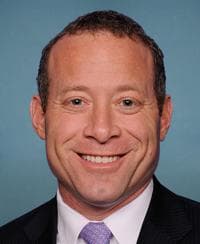
Full profile: /officials/G000583
Source: Congress.gov · FEC
Cosponsors (8)
Members who have signed on to support this bill since introduction. Source: Congress.gov.
- Brian K. Fitzpatrick (R-PA-1)Original· 2026-05-20
- Don Bacon (R-NE-2)Original· 2026-05-20
- Donald G. Davis (D-NC-1)Original· 2026-05-20
- Elise M. Stefanik (R-NY-21)Original· 2026-05-20
- Jared Moskowitz (D-FL-23)Original· 2026-05-20
- John H. Rutherford (R-FL-5)Original· 2026-05-20
- Laura Gillen (D-NY-4)Original· 2026-05-20
- Michael Lawler (R-NY-17)Original· 2026-05-20
Latest Action
The most recent step in the bill's legislative path. Committee Activity below shows referrals and reports; the full action-by-action history including floor proceedings lives at Congress.gov →
Committee Activity
Currently in
- House Committee on the JudiciaryReferred To · 2026-05-20
Plain-English Summary
The proposal would make it a federal crime to publicly share personal information like home addresses, phone numbers, or family details about police officers, prosecutors, and judges with the intent to harass, threaten, or endanger them. This would protect these officials from coordinated online attacks that could put them and their families at risk. The bill is currently under review by the House Judiciary Committee.
AI-assisted summary generated from the official bill metadata (title, subjects, actions) sourced from Congress.gov. Cached and reviewed. Always verify against the official text linked below.
Subjects
Full Bill Text
Verbatim text published on Congress.gov via GovInfo. Use Cmd+F / Ctrl+F to search within this excerpt.
[Congressional Bills 119th Congress] [From the U.S. Government Publishing Office] [H.R. 8927 Introduced in House (IH)] <DOC> 119th CONGRESS 2d Session H. R. 8927 To amend title 18, United States Code, to prohibit the doxxing of law enforcement officers, prosecutors, and judges, and for other purposes. _______________________________________________________________________ IN THE HOUSE OF REPRESENTATIVES May 20, 2026 Mr. Gottheimer (for himself, Mr. Bacon, Mr. Moskowitz, Ms. Stefanik, Ms. Gillen, Mr. Lawler, Mr. Davis of North Carolina, Mr. Fitzpatrick, and Mr. Rutherford) introduced the following bill; which was referred to the Committee on the Judiciary _______________________________________________________________________ A BILL To amend title 18, United States Code, to prohibit the doxxing of law enforcement officers, prosecutors, and judges, and for other purposes. Be it enacted by the Senate and House of Representatives of the United States of America in Congress assembled, SECTION 1. SHORT TITLE. This Act may be cited as the ``Stop the Doxx Act''. SEC. 2. FINDINGS. Congress finds the following: (1) Targeted harassment of law enforcement officers, prosecutors, and judges has increased significantly in recent years, including threats made possible by the online publication of personal information. (2) The publication of home addresses, personal contact information, and family details of public servants with intent to intimidate poses a direct threat to public safety and the integrity of the justice system. (3) No comprehensive Federal statute currently prohibits this conduct. SEC. 3. PROHIBITION ON DOXXING OF PROTECTED PUBLIC SERVANTS. (a) In General.--Chapter 73 of title 18, United States Code, is amended by adding at the end the following: ``Sec. 1522. Doxxing of protected public servants ``(a) Offense.--Whoever, in or affecting interstate or foreign commerce, knowingly publishes or otherwise makes publicly available the home address, personal telephone number, personal email address, or other personally identifying information of a covered public servant or an immediate family member, with intent to threaten, intimidate, or facilitate violence against that person, shall be-- ``(1) in the case of a first offense, fined under this title, imprisoned not more than 10 years, or both; ``(2) in the case of a second or subsequest offense, fined under this title, imprisoned for not more than 20 years, or both; or ``(3) in the case of an offense that results in bodily injury or death-- ``(A) in the case of a first offense, fined under this title, imprisoned for not more than 30 years, or both; or ``(B) in the case of a second or subsequent offense, fined under this title, imprisoned for not more than 40 years, or both. ``(b) Civil Action.--A covered public servant or an immediate family member who is the victim of a violation of this section may bring a civil action in an appropriate district court of the United States. In a civil action under this subsection, the court may award damages, injunctive relief, and attorney's fees. ``(c) Definitions.--In this section: ``(1) The term `covered public servant' means a Federal, State, or local law enforcement officer, prosecutor, or judge. ``(2) The term `immediate family member' means a spouse, child, parent, or sibling of a covered public servant. ``(3) The term `publishes' means to post on a publicly accessible website, social media platform, online forum, or any other digital or print medium accessible to third parties.''. (b) Clerical Amendment.--The table of sections for chapter 73 of title 18, United States Code, is amended by adding at the end the following: ``1522. Doxxing of protected public servants.''. SEC. 4. TRAINING FOR PROTECTED PUBLIC SERVANTS ON PERSONAL INFORMATION SECURITY. (a) In General.--The Attorney General shall establish and make available a comprehensive training program for covered public servants (as such term…
Show the remaining 141 wordsHide the remaining 141 words
is defined in section 1522 of title 18, United States Code) on protecting personal information online. (b) Delivery and Accessibility.--The training program shall be-- (1) made available online and through in-person formats to accommodate Federal, State, and local agencies of varying size and resource capacity; (2) updated no less than annually to reflect current threats and evolving digital environments; and (3) offered at no cost to covered public servants at the Federal, State, and local level. (c) Encouragement to State and Local Agencies.--The Attorney General shall encourage State and local law enforcement agencies, prosecutorial offices, and court systems to require completion of the training program established under this section as part of their standard onboarding and annual continuing education requirements. (d) Authorization of Appropriations.--There is authorized to be appropriated such sums as may be necessary to carry out this section. <all>
Related legislation
Bills by the same sponsor or covering overlapping subjects.
- HR10821To amend the Federal Deposit Insurance Act to make changes to the Standard Maximum Deposit Insurance Amount, and for other purposes.Referred to Committee · 2026-10-15
- HRES1618Recognizing the third anniversary of the October 7, 2023, terrorist attacks on Israel, honoring the victims and the hostages, and calling for the complete disarmament of Hamas for a durable end to the war in Gaza.Referred to Committee · 2026-10-06
- HR10757To provide for a limitation on contributions to the United Nations.Referred to Committee · 2026-10-06
- HRES1612Honoring Captain Smit Machchhar and the crew and passengers of Flydubai Flight 1073, and condemning the attempted terrorist attack on that flight.Referred to Committee · 2026-10-05