SHADOW Act
Sponsor
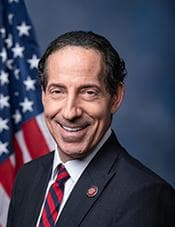
Full profile: /officials/R000606
Source: Congress.gov · FEC
Cosponsors (0)
Members who have signed on to support this bill since introduction. Source: Congress.gov.
No cosponsors on record. Bills can pass without cosponsors — this often means the sponsor introduced the bill alone, either because it's a messaging bill, a chairman's mark, or simply early in the legislative cycle.
Latest Action
The most recent step in the bill's legislative path. Committee Activity below shows referrals and reports; the full action-by-action history including floor proceedings lives at Congress.gov →
Committee Activity
Currently in
- House Committee on the JudiciaryReferred To · 2026-05-21
Plain-English Summary
The proposal would change the legal rules that judges use when deciding whether to pause a court decision while someone appeals it to a higher court. It would establish specific factors that judges must consider when deciding whether to grant these pauses, which affects anyone involved in lawsuits who wants to continue fighting their case in an appeals court.
AI-assisted summary generated from the official bill metadata (title, subjects, actions) sourced from Congress.gov. Cached and reviewed. Always verify against the official text linked below.
Subjects
Full Bill Text
Verbatim text published on Congress.gov via GovInfo. Use Cmd+F / Ctrl+F to search within this excerpt.
[Congressional Bills 119th Congress] [From the U.S. Government Publishing Office] [H.R. 8991 Introduced in House (IH)] <DOC> 119th CONGRESS 2d Session H. R. 8991 To amend section 2101 of title 28, United States Code, to set forth factors for stays pending appeal. _______________________________________________________________________ IN THE HOUSE OF REPRESENTATIVES May 21, 2026 Mr. Raskin introduced the following bill; which was referred to the Committee on the Judiciary _______________________________________________________________________ A BILL To amend section 2101 of title 28, United States Code, to set forth factors for stays pending appeal. Be it enacted by the Senate and House of Representatives of the United States of America in Congress assembled, SECTION 1. SHORT TITLE. This Act may be cited as the ``Supreme Court Honesty and Disclosure of Orders and Writs Act'' or the ``SHADOW Act''. SEC. 2. REQUIREMENT TO SET FORTH FACTORS FOR STAYS PENDING APPEAL. Section 2101(f) of title 28, United States Code, is amended-- (1) by striking ``In any case'' and inserting ``(1) In any case''; and (2) by adding at the end the following new paragraphs: ``(2) In determining whether to grant or deny a stay under this subsection the Supreme Court or a justice thereof shall-- ``(A) require a showing of specific, concrete, and irreparable injury that is distinct from and greater than any harm resulting solely from the operation of the stay that is being challenged; ``(B) ensure that the determination under this section does not entail findings or conclusions on the ultimate merits of the case or the likelihood of a particular party prevailing; and ``(C) provide that any such stay shall not be accorded precedential effect except to the extent necessary to resolve the dispute between the parties in which the stay was entered. ``(3)(A) The Supreme Court or justice shall set forth on the record the basis for an issuance or denial of a stay under this section, including-- ``(i) whether, absent such relief, the applicant will suffer an injury described in paragraph (2)(A); ``(ii) whether issuance of such relief will substantially injure any other party interested in the proceeding; and ``(iii) whether the determination to issue or deny such stay was in the public interest. ``(B) The basis under subparagraph (A) shall be published on the public docket of the Supreme Court at the time of the issuance or denial of such stay. ``(C) The requirement under subparagraph (B) shall not apply if the Supreme Court or a justice thereof determines that immediate action is necessary to prevent imminent or irreparable harm. If there is such a need, the basis under subparagraph (A) shall be published on the public docket of the Supreme Court not later than 7 days after the issuance or denial of such stay. ``(4) For purposes of this subsection, a `stay' includes any order of the Supreme Court or a justice thereof granting or denying relief to suspend, modify, or preserve the effect of a lower court's order granting or denying injunctive relief.''. SEC. 3. CONFORMING AMENDMENT TO THE ALL WRITS ACT. Section 1651 of title 28, United States Code, is amended by adding at the end the following new subsection: ``(c)(1) The Supreme Court or a justice thereof may only issue a writ enjoining any party from the conduct specified in the writ, if the Court or a justice thereof determines that enjoining such conduct is necessary as a result of a critical and exigent circumstance to protect an indisputably clear legal right that is at issue in the case. ``(2)(A) The Supreme Court or a justice thereof shall set forth on the record the reasons for the determination made…
Show the remaining 121 wordsHide the remaining 121 words
under paragraph (1) including identifying, if applicable, the legal right at issue in the case and why it is indisputably clear, the motion for a writ. ``(B) The reasons under subparagraph (A) shall be published on the public docket of the Supreme Court at the time at which the motion for the writ is granted or denied. ``(C) The requirement under subparagraph (B) shall not apply if the Supreme Court or a justice thereof determines that immediate action is necessary to prevent imminent or irreparable harm. If there is such a need, the basis under subparagraph (A) shall be published on the public docket of the Supreme Court not later than 7 days after the writ is granted or denied.''. <all>
Related legislation
Bills by the same sponsor or covering overlapping subjects.
- HR10765Preserving and Remembering the History of Trump and other Tyrants ActReferred to Committee · 2026-10-06
- HRES1603Expressing concern about the growing problem of book banning and the proliferation of threats to freedom of expression in the United States.Referred to Committee · 2026-10-01
- HR10504CURE ActReferred to Committee · 2026-09-17
- HR10456Renewing the Dream ActReferred to Committee · 2026-09-16