SCCOTUS Act
Sponsor
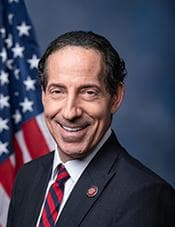
Full profile: /officials/R000606
Source: Congress.gov · FEC
Cosponsors (0)
Members who have signed on to support this bill since introduction. Source: Congress.gov.
No cosponsors on record. Bills can pass without cosponsors — this often means the sponsor introduced the bill alone, either because it's a messaging bill, a chairman's mark, or simply early in the legislative cycle.
Latest Action
The most recent step in the bill's legislative path. Committee Activity below shows referrals and reports; the full action-by-action history including floor proceedings lives at Congress.gov →
Committee Activity
Currently in
- House Committee on the JudiciaryReferred To · 2026-05-21
Plain-English Summary
The proposal would create a special panel to review petitions asking the Supreme Court to hear cases, potentially changing how the nation's highest court decides which cases to consider. This could affect anyone involved in legal disputes, from individuals to businesses, by altering the process that determines which cases get Supreme Court attention. The measure is currently under review by the House Judiciary Committee.
AI-assisted summary generated from the official bill metadata (title, subjects, actions) sourced from Congress.gov. Cached and reviewed. Always verify against the official text linked below.
Subjects
Full Bill Text
Verbatim text published on Congress.gov via GovInfo. Use Cmd+F / Ctrl+F to search within this excerpt.
[Congressional Bills 119th Congress] [From the U.S. Government Publishing Office] [H.R. 8992 Introduced in House (IH)] <DOC> 119th CONGRESS 2d Session H. R. 8992 To establish a panel to review certiorari petitions, and for other purposes. _______________________________________________________________________ IN THE HOUSE OF REPRESENTATIVES May 21, 2026 Mr. Raskin introduced the following bill; which was referred to the Committee on the Judiciary _______________________________________________________________________ A BILL To establish a panel to review certiorari petitions, and for other purposes. Be it enacted by the Senate and House of Representatives of the United States of America in Congress assembled, SECTION 1. SHORT TITLE. This Act may be cited as the ``Supreme Court Certiorari Oversight and Transparency Standards Act'' or the ``SCCOTUS Act''. SEC. 2. CERTIFICATION PANEL. (a) In General.--Chapter 81 of title 28, United States Code, is amended by inserting after section 1254 the following: ``Sec. 1255. Supreme Court certification panel ``(a) Establishment.--There is established a body to be known as the Supreme Court Certification Panel (hereinafter `the Panel'). ``(b) Composition.--The Panel shall consist of 13 circuit judges of the United States courts of appeals. ``(c) Random Selection and Rotation.-- ``(1) Term designations.--At the beginning of each term of the Supreme Court, the Director of the Administrative Office of the United States Courts shall, using the random selection process established under subsection (g)(11)(B), designate 1 circuit judge from each United States court of appeals, who shall serve on the Panel for that term. ``(2) Designation process.--Each circuit judge designated under this section shall be-- ``(A) an active judge who has served in Federal judicial office not less than 5 years; or ``(B) a senior or retired judge who is listed on the roster maintained under section 294. ``(3) Consecutive service.--No judge may serve on the Panel for more than 1 consecutive term. ``(4) Assignment.--The Panel shall be assigned all petitions for writs of certiorari for review. ``(d) Presiding Judge.--The most senior judge shall serve as Presiding Judge of the Panel for that term. ``(e) Support Staff.--The Director of the Administrative Office of the United States Courts shall provide administrative and clerical support to the Panel. ``(f) Vacancy.--If a member of the panel dies, retires, or is unable to serve the remainder of the member's term, within 90 days of the occurrence of the vacancy, the vacancy shall be filled by a circuit judge in accordance with subsection (c)(2). The circuit judge so designated shall serve for the remainder of the term of the former member. ``(g) Jurisdiction and Duties of Panel.-- ``(1) Primary function.--The Panel shall review all petitions for writs of certiorari filed with the Supreme Court and grant or deny such petitions. ``(2) Reviewing a petition for a writ of certiorari.-- ``(A) In general.--A decision to grant a petition for a writ of certiorari shall require the concurrence of 4 members of the Panel. ``(B) Written statement.--Each decision to grant a petition for a writ of certiorari shall include a written statement briefly explaining the reason for granting such request and identifying the questions presented for review. ``(C) Consolidation.--The Panel may consolidate petitions for writs of certiorari presenting substantially identical questions of law and certify them jointly. ``(3) Denials.--When a petition for a writ of certiorari is denied, the Panel shall enter an order of denial stating that none of the criteria in paragraph (5) were sufficiently met and no further explanation is required. ``(4) Stays pending appeal.--A member of the Panel shall have the same authority to grant a stay as a Justice of the Supreme Court has under Supreme Court Rule 23 (or any successor rule). ``(5) Criteria for certification.--The Panel…
Show the remaining 741 wordsHide the remaining 741 words
may grant a petition for a writ of certiorari only if one or more of the following criteria are met: ``(A) Considerations governing review.--A petition for a writ of certiorari may be granted only for compelling reasons, including-- ``(i) a United States court of appeals has entered a decision in conflict with the decision of another United States court of appeals on the same important matter; ``(ii) has decided an important Federal question in a way that conflicts with a decision by a State court of last resort, or has so far departed from the accepted and usual course of judicial proceedings, or sanctioned such a departure by an inferior court, as to call for an exercise of supervisory power of the Supreme Court; ``(iii) a State court of last resort has decided an important Federal question in a way that conflicts with the decision of another State court of last resort or of a United States court of appeals; ``(iv) a State court or a United States court of appeals has decided an important question of Federal law that has not been, but should be, settled by the Supreme Court, or has decided an important Federal question in a way that conflicts with relevant decisions of this Court. ``(B) Granting a petition before judgment.--A petition for a writ of certiorari to review a case pending in a United States court of appeals, before judgment is entered in that court, may only be granted upon a showing that the case is of such imperative public importance as to justify deviation from normal appellate practice and to require immediate determination by the Supreme Court. ``(6) Limitation.--The Panel may not reexamine factual findings or weigh the sufficiency of evidence in the record. ``(7) Operating procedures.-- ``(A) Meetings.--The Panel shall sit as a motions court, meeting at least once monthly during the term, and may conduct business electronically when necessary. ``(B) Quorum.--Six judges shall constitute a quorum. ``(C) Public reporting.-- ``(i) In general.--At the close of each term, the Panel shall issue a public report, published on the website of the Administrative Office of the United States Courts and submitted to the Committees on the Judiciary of the House of Representatives and the Senate summarizing-- ``(I) the number of petitions reviewed; ``(II) the number of petitions granted and denied; and ``(III) general statistical data on grounds for granting such petitions. ``(ii) Limitation.--No report issued pursuant to clause (i) may disclose confidential deliberations or identifying information about pending cases. ``(8) Transmission to the supreme court.--Each petition for a writ of certiorari that is granted shall be transmitted to the Clerk of the Supreme Court to be entered on the docket. ``(9) Review by the supreme court.--A petition for a writ of certiorari granted by the Panel shall be deemed granted by the Supreme Court. The Supreme Court shall set the case for oral argument pursuant to Supreme Court Rules. ``(10) Ethics and disqualification.-- ``(A) Ethics.--Panel judges shall be subject to the Code of Conduct for United States Judges and standards for recusal. ``(B) Disqualification.--A judge who participated in a case in an inferior court shall be disqualified from any consideration of a petition for writ of certiorari with respect to that case. ``(11) Implementation.-- ``(A) Rules.--Not later than 1 year after the date of enactment of this section, the Judicial Conference of the United States shall promulgate rules governing the administration and operation of the Panel consistent with this section. ``(B) Record keeping.--The Director of the Administrative Office of the United States Courts shall establish the random-selection mechanism and maintain public records of the selection process. ``(h) Definitions.--In this section, the term `term' means the term commencing on the first Monday in October of each year and such other adjourned or special term as the Supreme Court may hold.''. (b) Clerical Amendment.--The table of sections for chapter 81 of title 28, United States Code, is amended by inserting after the item relating to section 1255 of title 28, United States Code, the following: ``1254A. Supreme Court certification panel.''. SEC. 3. SEVERABILITY. If any provision of this Act, an amendment made by this Act, or the application of such a provision or amendment to any particular person or circumstance is held invalid, the remaining provisions of this Act and the amendments made by this Act, and the application of such remaining provisions and amendments to any other person or circumstance, shall not be affected thereby. <all>
Related legislation
Bills by the same sponsor or covering overlapping subjects.
- HR10765Preserving and Remembering the History of Trump and other Tyrants ActReferred to Committee · 2026-10-06
- HRES1603Expressing concern about the growing problem of book banning and the proliferation of threats to freedom of expression in the United States.Referred to Committee · 2026-10-01
- HR10504CURE ActReferred to Committee · 2026-09-17
- HR10456Renewing the Dream ActReferred to Committee · 2026-09-16