HR9015Referred to Committee
Physician Education for Fistula Treatment Act
Introduced
In Committee
3
Passed One Chamber4
Passed Both5
Signed into Law119th
Congress
2026-05-22
Introduced
0
Cosponsors
HR
ⓘType
Sponsor
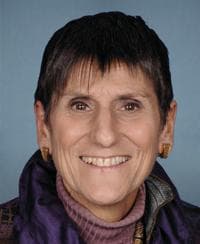
Rosa L. DeLauro
Democrat · CT · Representative
Votes with party: 98.3% (665 recorded votes)
Full profile: /officials/D000216
Source: Congress.gov · FEC
Cosponsors (0)
Members who have signed on to support this bill since introduction. Source: Congress.gov.
No cosponsors on record. Bills can pass without cosponsors — this often means the sponsor introduced the bill alone, either because it's a messaging bill, a chairman's mark, or simply early in the legislative cycle.
Latest Action
The most recent step in the bill's legislative path. Committee Activity below shows referrals and reports; the full action-by-action history including floor proceedings lives at Congress.gov →
Committee Activity
Currently in
- House Committee on Foreign AffairsReferred To · 2026-05-22
Plain-English Summary
The bill would provide funding and support to train doctors who specialize in women's health, particularly obstetrician-gynecologists and urogynecology specialists, in developing countries around the world. This assistance aims to help these countries improve medical care for women by building up their healthcare workforce in these specialized areas. The funding would help address gaps in women's healthcare services in the poorest nations globally.
AI-assisted summary generated from the official bill metadata (title, subjects, actions) sourced from Congress.gov. Cached and reviewed. Always verify against the official text linked below.
Subjects
International Affairs
Full Bill Text
Verbatim text published on Congress.gov via GovInfo. Use Cmd+F / Ctrl+F to search within this excerpt.
[Congressional Bills 119th Congress] [From the U.S. Government Publishing Office] [H.R. 9015 Introduced in House (IH)] <DOC> 119th CONGRESS 2d Session H. R. 9015 To authorize assistance to train and retain obstetrician-gynecologists and sub-specialists in urogynecology and to help improve the quality of care to meet the health care needs of women in least developed countries, and for other purposes. _______________________________________________________________________ IN THE HOUSE OF REPRESENTATIVES May 22, 2026 Ms. DeLauro introduced the following bill; which was referred to the Committee on Foreign Affairs _______________________________________________________________________ A BILL To authorize assistance to train and retain obstetrician-gynecologists and sub-specialists in urogynecology and to help improve the quality of care to meet the health care needs of women in least developed countries, and for other purposes. Be it enacted by the Senate and House of Representatives of the United States of America in Congress assembled, SECTION 1. SHORT TITLE. This Act may be cited as the ``Physician Education for Fistula Treatment Act''. SEC. 2. FINDINGS. Congress finds the following: (1) Obstetric fistula, an abnormal opening between a woman's genital tract and her urinary tract or rectum, is a devastating childbirth injury caused by prolonged, obstructed labor in the absence of timely and quality medical care. (2) Worldwide, an estimated 500,000 women and girls live with obstetric fistula with thousands more occurring annually. It occurs disproportionately among impoverished, vulnerable, and marginalized girls and women. (3) Women who experience an obstetric fistula suffer life- shattering consequences including chronic incontinence, shame, social isolation, poverty, and physical, mental, and emotional health problems. (4) Obstetric fistula is a violation of human rights and an indicator of the failure of health systems to deliver universally accessible, timely, and quality health care to women and girls who need it. (5) Obstetric fistula is preventable. Universal health coverage and universal access to quality care are essential in ending preventable maternal and newborn deaths and disabilities, including fistula. Skilled health personnel at birth, emergency obstetric and newborn care, and universal access to modern contraception are the most effective interventions to prevent maternal mortality and fistula. (6) Safeguarding the rights and dignity of women and girls and addressing underlying gender and socioeconomic inequalities and discrimination which drive obstetric fistula are equally important to end the condition. (7) In 2018 and 2020, the United Nations General Assembly resolutions on fistula were adopted, calling for ``Ending fistula within a decade''. This represents a turning point in the global fight to eliminate fistula, as it brings the global objective and timeline for ending fistula into alignment with achieving the Sustainable Development Goals (SDGs)/Agenda 2030. The resolutions also call for an increased focus on social determinants to tackle the root causes of fistula. (8) Obstetric fistula can be surgically treated. The impact of an obstetric fistula-repair surgery is immediate and women can be reintegrated into society. There is however a high unmet need for treatment and social reintegration of fistula survivors. (9) In 90 percent of cases where women develop fistula and timely medical care is not available, a stillborn baby is tragically delivered. (10) The United Nations Population Fund (UNFPA)-led global Campaign to End Fistula, is a key contributor to promoting the rights, dignity, and well-being of women and girls. The Campaign focuses on prevention, treatment, social reintegration, and advocacy. Aimed at ``leaving no one behind'' and ``reaching the furthest behind'', it contributes to achieving the SDGs and has also helped restore overall health, dignity, hope, and a sense of self-worth and agency to some of the poorest, most marginalized women and girls worldwide through its holistic, gender-sensitive, and rights-based approach to policies and programs for…
Show the remaining 1,043 wordsHide the remaining 1,043 words
the elimination of obstetric fistula and several other maternal morbidities. (11) UNFPA has supported over 150,000 surgical repairs over the last two decades. The Campaign to End Fistula and its partners have made remarkable progress, but the needs remain great. (12) With 4 years to reach the global goal of ending fistula by 2030, significantly intensified investment, efforts, and partnerships at the international and national levels are required. (13) The International Day to End Obstetric Fistula which takes place on May 23, 2024, will be commemorated this year with the theme: ``Her health, her right: Shaping a future without fistula'', emphasizing that every girl and woman has the fundamental right to health, including reproductive and sexual health, and that the continued existence of obstetric fistula is a ``clear violation'' of this right. SEC. 3. INTERNATIONAL OB/GYN AND UROGYNECOLOGY PROMOTION PROGRAM. (a) Purpose.--The purpose of assistance under this section is to train and retain obstetrician-gynecologists (OB-GYNs) and sub- specialists in urogynecology and to help improve the quality of care to meet the health care needs of women in least developed countries. (b) Authorization.-- (1) In general.--To carry out the purpose of subsection (a), the President, acting through the Director of the John E. Fogarty International Center for Advanced Study in the Health Sciences, is authorized to provide assistance for least developed countries to support the activities described in subsection (c). (2) Reference.--Assistance authorized under this section may be referred to as the ``International OB/GYN and Urogynecology Promotion Program''. (c) Activities Supported.--Activities that may be supported by assistance under subsection (b) include the following: (1) Fellowship and residency programs.--Establishment of fellowship and residency programs to be carried out in coordination with institutions of higher education (as such term is defined in section 101 of the Higher Education Act of 1965 (20 U.S.C. 1001)), institutions of higher learning, midwifery programs, and existing clinical centers in least developed countries-- (A) to support existing academic curricula for education training for midwifery students; (B) to develop and help sustain existing specialized curriculum training for medical students and residents to become knowledgeable and proficient in women's health care; and (C) to allow medical students, residents, and midwifery students to practice and develop expertise in geographical areas in which childbirth-related injuries are most prevalent. (2) Training centers.--Establishment of training centers-- (A) to address the shortage of OB-GYNs and sub- specialists in the urogynecology profession; and (B) to carry out specialized programs that are located at health care institutions that provide exceptionally high concentrations of expertise and related resources related to these medical professions and are delivered in a comprehensive and interdisciplinary fashion. SEC. 4. COMPREHENSIVE 10-YEAR STRATEGY TO ADDRESS THE SHORTAGE OF PHYSICIANS IN LEAST DEVELOPED COUNTRIES. (a) In General.--The President, acting through the Director of the John E. Fogarty International Center for Advanced Study in the Health Sciences, shall establish a comprehensive, integrated, 10-year strategy to address the shortage of physicians in least developed countries. (b) Elements.--Such strategy shall maintain sufficient flexibility and remain responsive to the needs of women afflicted with childbirth- related injuries and shall include the following: (1) A plan for implementation and coordination of programs and activities under this Act, including grants and contracts for prevention, treatment, and monitoring of childbirth-related injuries. (2) Specific objectives, multi-sector approaches, and specific strategies to treat women who suffer from childbirth- related injuries and to prevent further occurrences of childbirth-related injuries. (3) Assignment of priorities for relevant executive branch agencies. (4) Public health and health care delivery system research on the prevention, repair, and rehabilitation of childbirth- related injuries. (5) Social science research in fields such as anthropology, sociology, and related fields to monitor and evaluate the underlying social and economic factors that contribute to childbirth-related injuries. (6) Development, implementation, and evaluation of evidence-based systems of care connecting maternity care facilities with local care delivery and community education programs. Such systems of care should promote rapid and long- term prevention of childbirth-related injuries, including-- (A) culturally appropriate childbirth education, preparation, and planning; and (B) access to obstetrician-gynecologists (OB-GYNs), urogynecology care, or midwifery care. (7) Expansion of training centers and partnerships with institutions of higher learning for medical students and residents. (8) Priorities for the distribution of resources based on factors such as the size and demographics of the population suffering from childbirth-related injuries, the needs of that population, and the existing infrastructure or funding levels that may exist to treat and prevent childbirth-related injuries, including obstetric fistula. (9) A plan for institutional capacity-building of partnerships to strengthen universities, research centers, health-profession training programs, and government institutes to build the in-country capacity needed to eradicate childbirth-related injuries in least developed countries. (c) Report.--Not later than 2 years after the date of the enactment of this Act, the President shall submit to Congress a report that contains the strategy required under this section. SEC. 5. REPORT. (a) In General.--The President, acting through the Director of the John E. Fogarty International Center for Advanced Study in the Health Sciences, shall submit to Congress, on an annual basis, a report on the implementation of this Act for the preceding year. (b) Matters To Be Included.--The report required under subsection (a) shall include an evaluation of the effectiveness and performance of the International OB/GYN and Urogynecology Promotion Program established under section 3 and all related community outreach and medical programs. SEC. 6. DEFINITIONS. In this Act: (1) Childbirth-related injuries.--The term ``childbirth- related injuries'' means injuries associated with obstructed labor, including-- (A) pelvic organ prolapse; (B) a displacement of pelvic organs such as the uterus, bladder, or bowel; and (C) obstetric fistula. (2) Low-income country.--The term ``low-income country'' means a country with a per capita gross national income of $1,035 or less. (3) Least developed country.--The term ``least developed country'' means a country that-- (A) is a low-income country; and (B) according to the United Nations Economic Analysis and Policy Division, is confronting severe structural impediments to sustainable development. (4) Relevant executive branch agencies.--The term ``relevant executive branch agencies'' means the Department of State, the United States Agency for International Development, and any other department or agency of the United States that participates in international health and humanitarian activities pursuant to the authorities of such department or agency or the Foreign Assistance Act of 1961. <all>
Related legislation
Bills by the same sponsor or covering overlapping subjects.
- HR10544To modernize and strengthen Federal efforts to improve ovarian cancer awareness, hereditary cancer risk assessment, access to genetic counseling and testing, and access to specialty care, and for other purposes.Referred to Committee · 2026-09-24
- HRES1578Supporting the designation of September 2026 as "National Ovarian Cancer Awareness Month".Referred to Committee · 2026-09-24
- HRES1547Recognizing the importance of diapers to infant health and family well-being, and expressing support for the designation of the week of September 14-20, 2026, as "National Diaper Need Awareness Week".Referred to Committee · 2026-09-16
- HR4647Captain Paul W. Bud Bucha VA Medical Center Act of 2025Passed House · 2026-07-16