HR9132Referred to Committee
Preventing International Surrogacy Exploitation Act
Introduced
In Committee
3
Passed One Chamber4
Passed Both5
Signed into Law119th
Congress
2026-06-03
Introduced
28
Cosponsors
HR
ⓘType
Sponsor
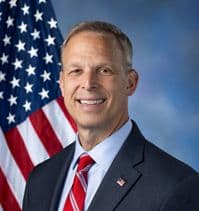
Scott Perry
Republican · PA · Representative
Votes with party: 86.2% (660 recorded votes)
Top industries funding sponsor:
- Conservative Groups$2,079k
Full profile: /officials/P000605
Source: Congress.gov · FEC
Cosponsors (28)
Members who have signed on to support this bill since introduction. Source: Congress.gov.
- Andy Biggs (R-AZ-5)Original· 2026-06-03
- Barry Moore (R-AL-1)Original· 2026-06-03
- Diana Harshbarger (R-TN-1)Original· 2026-06-03
- Keith Self (R-TX-3)Original· 2026-06-03
- Mark Harris (R-NC-8)Original· 2026-06-03
- Mary E. Miller (R-IL-15)Original· 2026-06-03
- Paul A. Gosar (R-AZ-9)Original· 2026-06-03
- Randy Fine (R-FL-6)Original· 2026-06-03
- Sheri Biggs (R-SC-3)Original· 2026-06-03
- Tim Burchett (R-TN-2)Original· 2026-06-03
- W. Gregory Steube (R-FL-17)Original· 2026-06-03
- Byron Donalds (R-FL-19)· 2026-06-04
- Warren Davidson (R-OH-8)· 2026-06-04
- Nicholas J. Begich III (R-AK)· 2026-06-08
- Andy Harris (R-MD-1)· 2026-06-09
- Elijah Crane (R-AZ-2)· 2026-06-11
- Harriet M. Hageman (R-WY)· 2026-06-22
- Addison P. McDowell (R-NC-6)· 2026-06-23
- Ralph Norman (R-SC-5)· 2026-06-23
- Lauren Boebert (R-CO-4)· 2026-06-25
- Scott DesJarlais (R-TN-4)· 2026-06-30
Latest Action
The most recent step in the bill's legislative path. Committee Activity below shows referrals and reports; the full action-by-action history including floor proceedings lives at Congress.gov →
Committee Activity
Currently in
- House Committee on the JudiciaryReferred To · 2026-06-03
Plain-English Summary
The proposal would ban foreign nationals from creating or using surrogacy agreements in the United States, meaning people from other countries could not hire American women to carry pregnancies for them or enforce any contracts related to such arrangements. This would affect international families seeking surrogacy services, fertility clinics that work with foreign clients, and women who might otherwise serve as surrogates for people living abroad. The bill is currently under review by the House Judiciary Committee.
AI-assisted summary generated from the official bill metadata (title, subjects, actions) sourced from Congress.gov. Cached and reviewed. Always verify against the official text linked below.
Subjects
Immigration
Full Bill Text
Verbatim text published on Congress.gov via GovInfo. Use Cmd+F / Ctrl+F to search within this excerpt.
[Congressional Bills 119th Congress] [From the U.S. Government Publishing Office] [H.R. 9132 Introduced in House (IH)] <DOC> 119th CONGRESS 2d Session H. R. 9132 To prohibit foreign nationals from entering into or enforcing surrogacy contracts in the United States, and for other purposes. _______________________________________________________________________ IN THE HOUSE OF REPRESENTATIVES June 3, 2026 Mr. Perry (for himself, Mr. Biggs of Arizona, Mrs. Biggs of South Carolina, Mr. Burchett, Mr. Fine, Mr. Gosar, Mrs. Harshbarger, Mr. Harris of North Carolina, Mrs. Miller of Illinois, Mr. Moore of Alabama, Mr. Self, and Mr. Steube) introduced the following bill; which was referred to the Committee on the Judiciary _______________________________________________________________________ A BILL To prohibit foreign nationals from entering into or enforcing surrogacy contracts in the United States, and for other purposes. Be it enacted by the Senate and House of Representatives of the United States of America in Congress assembled, SECTION 1. SHORT TITLE. This Act may be cited as the ``Preventing International Surrogacy Exploitation Act''. SEC. 2. FINDINGS AND PURPOSES. (a) Purposes.--The purposes of this Act are to-- (1) invalidate surrogate parentage contracts between prospective parents with citizenship or permanent residence in a foreign country and a surrogate mother in the United States; and (2) impose criminal penalties on surrogacy brokers who commercially facilitate such invalid agreements. (b) Findings.--Congress finds as follows: (1) Currently, unrestricted surrogacies allow foreign nationals, including those residing in adversarial countries to the United States, to obtain a surrogate mother transported to or residing in the United States for the purpose of giving birth to a child. (2) Upon receiving automatic United States citizenship, many infants born through an international surrogate contract are flown to adversarial countries to be raised abroad by their respective parent(s). (3) Children born through an international surrogate contract remain eligible to vote in United States elections, access sensitive government positions, and eventually sponsor their respective parents for immigrant visas once they turn 21 years old. (4) In the current unregulated environment, even foreign nationals in countries friendly to the United States are still susceptible to bribery and influence from adversarial countries' efforts to disrupt United States national security. (5) Recent reporting has shown more than 107 Chinese-owned surrogacy agencies are currently operating in Southern California. (6) Many countries, including Australia, Brazil, Britain, Canada, China, Denmark, France, Germany, India, Italy, Nepal, New Zealand, Portugal, Spain, Thailand, and Taiwan, have banned international commercial surrogacy altogether. SEC. 3. DEFINITIONS. In this Act: (1) Foreign national.--The term ``foreign national'' means an alien (as such term is defined in section 101 of the Immigration and Nationality Act (8 U.S.C. 1101)). (2) Immigration laws.--The term ``immigration laws'' has the meaning given such term in section 101 of the Immigration and Nationality Act (8 U.S.C. 1101). (3) Prospective parent.--The term ``prospective parent'' means an individual who, directly or indirectly, enters into a surrogacy agreement to become the legal or custodial parent of a child birthed by a surrogate parent. (4) Surrogacy agreement.-- (A) In general.--The term ``surrogacy agreement'' means a contract, agreement, or arrangement, without regard to whether it is oral or written or is direct or brokered, between 1 or more prospective parents and a surrogate parent, under which the surrogate parent agrees to become pregnant and give birth to a child, and, subject to subparagraph (B), to relinquish all parental rights and responsibilities to the prospective parent or parents. (B) Presumption.--With respect to a surrogacy agreement under which a surrogacy parent agrees to become pregnant and give birth to a child, that does not expressly address parental or custodial rights, there shall be a presumption that-- (i) the surrogate parent…
Show the remaining 457 wordsHide the remaining 457 words
has agreed to relinquish her parental or custodial rights; and (ii) the contract, agreement, or arrangement is a surrogacy agreement if the contract, agreement, or arrangement is with one or more prospective parents who is a foreign national. (5) Surrogacy broker.--The term ``surrogacy broker'' means any individual or entity that induces, arranges, procures, facilitates, or otherwise assists in the formation or execution of a surrogacy agreement. (6) Surrogate parent.--The term ``surrogate parent'' means a person who agrees to become pregnant and give birth to a child, and to relinquish all parental rights and responsibilities to another person under the terms of a surrogacy agreement. SEC. 4. CERTAIN INTERNATIONAL SURROGATE PARENTAGE CONTRACTS VOID AND UNENFORCEABLE. (a) In General.--Subject to subsection (b), a surrogacy agreement shall be void and unenforceable if the agreement is between a surrogate parent who is in the United States at the time of birth or who is a citizen or lawful permanent resident of the United States and-- (1) a prospective parent who is a foreign national; or (2) a surrogacy broker that arranges a surrogacy agreement with a prospective parent who is a foreign national. (b) Exception.--Subsection (a) shall not invalidate a surrogacy agreement between a surrogate parent and 2 prospective parents, if-- (1) the 2 prospective parents are legally married; and (2) at least 1 prospective parent is a citizen or lawful permanent resident of the United States. SEC. 5. COMMERCIAL FACILITATION OF FOREIGN SURROGACY PROHIBITED; PENALTY. A surrogacy broker who knowingly or recklessly induces, arranges, procures, facilitates, or otherwise assists in the formation or execution of a surrogacy agreement that is void and unenforceable under section 4 shall be fined under title 18, United States Code, imprisoned for not more than 10 years, or both. SEC. 6. CUSTODY OF CHILD WHEN INTERNATIONAL SURROGATE PARENTAGE CONTRACTS ARE VOID AND UNENFORCEABLE. Legal custody of a child born pursuant to a surrogacy agreement that is void and unenforceable under section 4 shall be decided based on a determination of the best interests of the child under the law of the State where the surrogate parent resides, with no effect given to the surrogacy agreement or any other purported agreement, contract, or understanding concerning the custody of the child. SEC. 7. LIMITATION ON ELIGIBILITY FOR IMMIGRATION BENEFITS. Notwithstanding any other provision of law, a foreign national who is a parent of a citizen of the United States born pursuant to a surrogacy agreement that is unenforceable under section 4, may not, by virtue of their parentage of such citizen, be accorded any right, privilege, or status under the immigration laws. SEC. 8. APPLICABILITY. This Act shall apply with respect to surrogacy agreements entered into on or after the date of enactment of this Act. <all>
Related legislation
Bills by the same sponsor or covering overlapping subjects.
- HJRES219Proposing an amendment to the Constitution of the United States to require a Judge to be a natural born citizen of the United States.Referred to Committee · 2026-10-15
- HR1342Stopping Political Discrimination in Disaster Assistance ActPassed House · 2026-09-16
- HR10305Strengthening Oversight in Public Buildings ActReferred to Committee · 2026-09-15
- HJRES206Proposing an amendment to the Constitution of the United States to require that any Representative or Senator be a natural born citizen.Referred to Committee · 2026-07-23