HR9137Referred to Committee
Protect College Sports Act of 2026
Introduced
In Committee
3
Passed One Chamber4
Passed Both5
Signed into Law119th
Congress
2026-06-04
Introduced
1
Cosponsors
HR
ⓘType
Sponsor
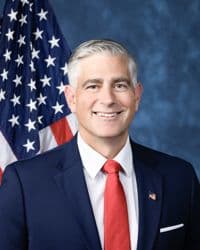
Michael Baumgartner
Republican · WA · Representative
Votes with party: 98.8% (657 recorded votes)
Full profile: /officials/B001322
Source: Congress.gov · FEC
Cosponsors (1)
Members who have signed on to support this bill since introduction. Source: Congress.gov.
1 cosponsor on record at Congress.gov. The named list is syncing into Govwatch and will appear here shortly — view on Congress.gov in the meantime.
Latest Action
The most recent step in the bill's legislative path. Committee Activity below shows referrals and reports; the full action-by-action history including floor proceedings lives at Congress.gov →
Referred to the Committee on the Judiciary, and in addition to the Committees on Energy and Commerce, and Education and Workforce, for a period to be subsequently determined by the Speaker, in each case for consideration of such provisions as fall within the jurisdiction of the committee concerned.
2026-06-04
Source: Congress.gov
Committee Activity
Currently in
- House Committee on Education and WorkforceReferred To · 2026-06-04
- House Committee on the JudiciaryReferred To · 2026-06-04
- House Committee on Energy and CommerceReferred To · 2026-06-04
Plain-English Summary
Protect College Sports Act of 2026 This bill establishes requirements for name, image, or likeness (NIL) agreements for college student athletes and provides a limited antitrust exemption for schools and conferences to pool and sell certain college sports media rights. The requirements address elements of the court-approved agreement to settle In re College Athlete NIL Litigation (i.e., House settlement ). First, the bill statutorily prohibits institutions, conferences, or interstate intercollegiate athletic associations (e.g., the National Collegiate Athletic Association [NCAA]) from restricting student athletes from entering NIL agreements (subject to specified limitations). Students must report to their institution NIL compensation greater than $600. The bill requires agents to register with a state and caps agent endorsement contract fees at 5%. The bill also provides student athletes with one transfer without losing athletic eligibility and restricts football personnel from becoming the head football coach at a different institution during the same season. Further, the bill prohibits institutions, conferences, or specified entities acting for the benefit of an institution from providing athletes with compensation that circumvents the limit on sharing revenue with student athletes established under the House settlement. The bill also makes the limit permanent and provides for an annual inflation adjustment. Additionally, the bill establishes (subject to specified conditions) a limited antitrust exemption for institutions or conferences that form joint agreements to transfer their sports telecasting rights to a third party. Such an agreement requires participation from at least 75% of the institutions in the Football Bowl Subdivision.
Plain-English rewrite of the Congressional Research Service summary published on Congress.gov. Cached and reviewed.
Subjects
Sports and Recreation
Full Bill Text
Verbatim text published on Congress.gov via GovInfo. Use Cmd+F / Ctrl+F to search within this excerpt.
[Congressional Bills 119th Congress] [From the U.S. Government Publishing Office] [H.R. 9137 Introduced in House (IH)] <DOC> 119th CONGRESS 2d Session H. R. 9137 To protect the name, image, and likeness rights of, and provide protections for, student athletes and to promote fair competition among intercollegiate athletics, and for other purposes. _______________________________________________________________________ IN THE HOUSE OF REPRESENTATIVES June 4, 2026 Mr. Baumgartner introduced the following bill; which was referred to the Committee on the Judiciary, and in addition to the Committees on Energy and Commerce, and Education and Workforce, for a period to be subsequently determined by the Speaker, in each case for consideration of such provisions as fall within the jurisdiction of the committee concerned _______________________________________________________________________ A BILL To protect the name, image, and likeness rights of, and provide protections for, student athletes and to promote fair competition among intercollegiate athletics, and for other purposes. Be it enacted by the Senate and House of Representatives of the United States of America in Congress assembled, SECTION 1. SHORT TITLE; TABLE OF CONTENTS. (a) Short Title.--This Act may be cited as the ``Protect College Sports Act of 2026''. (b) Table of Contents.--The table of contents for this Act is as follows: Sec. 1. Short title; table of contents. TITLE I--PROTECTIONS OF STUDENT ATHLETES AND FAIR COMPETITION Sec. 100. Definitions. Sec. 101. Name, image, and likeness protections. Sec. 102. Modifications to Sports Agent Responsibility and Trust Act. Sec. 103. Agent registry requirements for intercollegiate athletic associations. Sec. 104. Disclosures and establishment of name, image, and likeness agreement database. Sec. 105. Academic protections. Sec. 106. Medical coverage requirements. Sec. 107. Health, wellness, and safety standards. Sec. 108. Office of the Student Athlete Ombudsman. Sec. 109. Comparable standards for access to facilities, services, and events. Sec. 110. Rules governing certain mid-season coaching transitions. Sec. 111. Student athlete representation on intercollegiate athletic association governing boards. Sec. 112. Transfer protections. Sec. 113. Eligibility to participate in intercollegiate sports. Sec. 114. Prohibited compensation and agreements. Sec. 115. Extension of the revenue share cap. Sec. 116. Commission on the Future of College Athletics. Sec. 117. Recruitment and tampering. Sec. 118. Limitation on liability. Sec. 119. Private right of action. Sec. 120. Whistleblower protection. Sec. 121. Relationship to existing law. Sec. 122. Neutrality on employee or non-employee status. Sec. 123. Applicability. Sec. 124. Severability. TITLE II--SPORTS BROADCASTING Sec. 201. Definitions. Sec. 202. Limitation on liability for transmission of collegiate sports competitions. Sec. 203. Requirements for entities selling media rights. Sec. 204. Market level broadcast access for college football and basketball. Sec. 205. Prohibition on certain conference mergers or acquisitions. Sec. 206. Amendments to intercollegiate and interscholastic football contest limitations. Sec. 207. Media rights utilization requirement for college sports other than football and basketball. TITLE I--PROTECTIONS OF STUDENT ATHLETES AND FAIR COMPETITION SEC. 100. DEFINITIONS. In this title: (1) Antitrust laws.--The term ``antitrust laws'' has the meaning given that term in the 1st section of the Clayton Act (15 U.S.C. 12) and includes-- (A) section 5 of the Federal Trade Commission Act (15 U.S.C. 45) to the extent that such section 5 applies to unfair methods of competition; and (B) any similar State antitrust law, including a State law provision that applies to covering unfair methods of competition having the force and effect of law. (2) Associated entity.--The term ``associated entity'' means any individual or entity, including a collective, that is-- (A) known, or should have been known, to exist for or act for the benefit of, in coordination with, or at the direction of an institution to promote or support an institution's athletics program or student athletes, including by…
Show the remaining 16,319 wordsHide the remaining 16,319 words
creating or identifying name, image, and likeness compensation opportunities for an institution's student athletes; (B) an individual or entity that is or was a member, employee, director, officer, owner, or agent of an individual or entity described in subparagraph (A); (C) an individual or entity that directly or indirectly (including contributions by an affiliated entity, individual, or family member) has contributed more than $50,000 over their lifetime to a particular institution or to an individual or entity described in subparagraph (A); (D) an individual or entity that has directly or indirectly been directed or requested by an institution or third party acting on behalf of, for the benefit of, in coordination with, or at the direction of an institution to assist in the recruitment or retention of student athletes or prospective student athletes, or otherwise has assisted in the recruitment or retention of student athletes or prospective student athletes; or (E) an individual or entity owned, controlled, or operated by, or otherwise affiliated with the individuals or entities described in subparagraph (A). (3) Athlete agent.--The term ``athlete agent'' has the meaning given that term in section 2 of the Sports Agent Responsibility and Trust Act (15 U.S.C. 7801). (4) Collective.--The term ``collective''-- (A) means a person, corporation, booster organization, tax-exempt organization, or other entity that provides donations or other support directly or indirectly to or for the benefit or support of-- (i) a student athlete who is enrolled, or who may enroll, at an institution; or (ii) the intercollegiate athletics program or any booster organization of an institution; and (B) does not include-- (i) an immediate family member of a student athlete; or (ii) an individual or entity that-- (I) licenses trademark rights of an institution; and (II) does not-- (aa) license name, image, and likeness rights of student athletes; or (bb) make payments earmarked or designated to fund name, image, or likeness licenses or other payments to student athletes. (5) Compensation.--The term ``compensation''-- (A) means any payment, remuneration, or benefit provided to a student athlete or a prospective student athlete; and (B) does not include-- (i) grants-in-aid; (ii) Federal Pell Grants provided under section 401 of the Higher Education Act of 1965 (20 U.S.C. 1070a) or any other Federal or State grants unrelated to and not awarded with regard to participation in intercollegiate sports; (iii) health insurance and the costs of health care funded by an institution, intercollegiate athletic association, or conference; (iv) disability and loss-of-value insurance, including disability and loss-of- value insurance funded by an institution, intercollegiate athletic association, or conference; (v) career counseling, job placement services, or other guidance available to all students at an institution; (vi) hourly wages and benefits for work performed outside of participating in intercollegiate sports at a rate commensurate with the prevailing rate in the relevant State or locality for similar work; (vii) enhanced education benefits, including academic awards; (viii) financial literacy or tax education resources; or (ix) any program to connect student athletes with employers and facilitate employment opportunities, if-- (I) the financial terms of such employment opportunities are consistent with the terms offered to similarly situated employees who are not student athletes; and (II) such program is not used to induce a student athlete to attend a particular institution. (6) Conference.--The term ``conference'' means any organization that is not an intercollegiate athletic association and that-- (A) has 2 or more institutions as members; and (B) arranges championships for intercollegiate athletic competitions or sets rules for intercollegiate athletic competition. (7) Cost of attendance.--The term ``cost of attendance''-- (A) has the meaning given that term in section 472 of the Higher Education Act of 1965 (20 U.S.C. 1087ll); and (B) shall be calculated by the financial aid office of an institution applying the same standards, policies, and procedures for all students. (8) Grant-in-aid.--The term ``grant-in-aid'' means-- (A) a scholarship, grant, stipend, or other form of financial assistance, including the provision of tuition, room, board, books, or funds for fees or personal expenses, that-- (i) is paid or provided by an institution to a student for the undergraduate or graduate education of the student; and (ii) is in an amount that does not exceed the cost of attendance for such student at the institution; and (B) does not include compensation paid to a student athlete. (9) Image.--With respect to a student athlete, the term ``image'' means a picture, video, computer-generated representation, or other depiction that identifies, is linked to, or is reasonably linked to the student athlete. (10) Institution.--Except as otherwise explicitly provided, the term ``institution'' has the meaning given the term ``institution of higher education'' under section 101 of the Higher Education Act of 1965 (20 U.S.C. 1001). (11) Intercollegiate athletic association.--The term ``intercollegiate athletic association''-- (A) means any organization, not-for-profit corporation, association, or any other group organized in the United States that-- (i) sponsors or arranges intercollegiate athletic competition between institutions; (ii) sets common rules, standards, procedures, or guidelines for the administration of intercollegiate athletic competition; (iii) is composed of 2 or more institutions or conferences that are located in different States or participate in intercollegiate athletic competition in more than 1 State; and (iv) is not a conference; (B) includes-- (i) the National Collegiate Athletic Association; and (ii) any other national intercollegiate athletic association; and (C) does not include a corporation, association, or other group affiliated with professional athletic competition. (12) Intercollegiate athletic competition.--The term ``intercollegiate athletic competition'' means any intercollegiate sport contest, game, meet, match, tournament, regatta, or other intercollegiate sport event in which student athletes or varsity sports teams compete. (13) Intercollegiate sport.--The term ``intercollegiate sport''-- (A) means a sport played between institutions for which eligibility requirements for participation by a student athlete are established by an interstate intercollegiate athletic association; and (B) does not include a recreational, intramural, or club sport. (14) Likeness.--With respect to a student athlete, the term ``likeness'' means a physical or digital depiction or representation that identifies, is linked to, or is reasonably linked to the student athlete, including -- (A) the uniquely identifiable body, physical characteristics, or voice of the student athlete; (B) any other mark that identifies or distinguishes the student athlete; or (C) the jersey number associated with the student athlete during the period of athletic participation by the student athlete at an institution if the jersey number is accompanied by-- (i) a logo or color scheme that is clearly associated with the institution; or (ii) some other means by which the jersey number is associated with the student athlete. (15) Name.--With respect to a student athlete, the term ``name'' means the first or last name that identifies the student athlete, a nickname or assumed name of the student athlete, or a username associated with the student athlete on any public-facing internet platform when used in a context that identifies, is linked to, or is reasonably linked to the student athlete. (16) Name, image, and likeness agreement.--The term ``name, image, and likeness agreement'' means a contract or similar agreement between a student athlete (or group of student athletes) and a conference, institution, intercollegiate athletic association, associated entity, collective, or third party regarding the commercial use of the name, image, and likeness rights of the student athlete (or group of student athletes). (17) Name, image, and likeness rights.--The term ``name, image, and likeness rights'' means the ability of a student athlete to market and profit from the commercial use of his or her name, image, or likeness. (18) Prospective student athlete.--The term ``prospective student athlete'' means an individual who is recruited, actively being recruited, or has been contacted for the purposes of recruitment to attend an institution as a student athlete, but has not yet enrolled at the institution. (19) Revenue share cap.--The term ``revenue share cap'' means the Benefits Pool Limit set forth in the Injunctive Relief Settlement Agreement approved by the court in ``In Re College Athlete NIL Litigation'', No. 20-cv-03919 (N.D. Cal. June 6, 2025), or as modified pursuant to the amendment provision specified in paragraph 55 of that settlement. (20) Student athlete.--The term ``student athlete'' means an individual who is enrolled as a full-time student at an institution and who-- (A) makes satisfactory progress towards completing a degree; and (B) participates in intercollegiate athletic competition or competes for a varsity sports team as part of the institution's educational, developmental, or extracurricular programs. (21) Third party.--The term ``third party'' means an individual or entity that is not an institution, associated entity, collective, conference, or intercollegiate athletic association. (22) Valid business purpose.--The term ``valid business purpose'' means a purpose genuinely related to the promotion of goods or services provided to the general public for profit. (23) Varsity sports team.--The term ``varsity sports team'' means a sports team composed of student athletes that is organized by an institution for the purpose of intercollegiate athletic competition. SEC. 101. NAME, IMAGE, AND LIKENESS PROTECTIONS. (a) Student Athlete Name, Image, and Likeness Compensation.-- (1) In general.--Except as provided in this title, an institution, conference, intercollegiate athletic association, or any representative of such an entity may not-- (A) restrict the ability of a student athlete, group of student athletes, or prospective student athlete-- (i) to market or earn compensation for the value of their name, image, or likeness rights; or (ii) to enter into a name, image, and likeness agreement; (B) restrict the eligibility for intercollegiate athletic competition for a student athlete or prospective student athlete on the basis of the student athlete or prospective student athlete entering into a name, image, and likeness agreement or marketing or earning compensation for the value of their name, image, or likeness; (C) unless otherwise required by law, limit the eligibility or opportunity of a student athlete or prospective student athlete to apply for or receive a grant-in-aid, including the amount, duration, or renewal of such grant-in-aid, on the basis of the student athlete or prospective student athlete entering into a name, image, and likeness agreement, or marketing or earning compensation for the value of their name, image, or likeness; or (D) unless otherwise required by law, revoke, reduce, or decline to renew a grant-in-aid for a student athlete or prospective student athlete based on the student athlete or prospective student athlete entering into a name, image, and likeness agreement or marketing or earning compensation for the value of their name, image, or likeness. (2) Consent and compensation for group use.--An institution, conference, intercollegiate athletic association, collective, third party, or any representative thereof, may not use the name, image, or likeness of any group of student athletes to sell or promote any product or service unless the institution, conference, athletic association, collective, or third party, as the case may be, obtains an agreement from each member of the group for that purpose. (3) Exceptions.-- (A) Certain agreements.--An institution may restrict the eligibility for intercollegiate athletic competition of a student athlete or prospective student athlete who enters into a name, image, and likeness agreement that violates the code of student conduct of the institution that applies to all students enrolled at the institution. (B) Certain uses.--An institution may restrict the eligibility for intercollegiate athletic competition of a student athlete or prospective student athlete if, in connection with a name, image, and likeness agreement, the student athlete or prospective student athlete uses a facility, uniform, equipment, registered or unregistered trademark, copyright-protected product, or the official logo, mark, or other indicia of the institution without the express consent of the institution. (b) Mandatory Disclosures by Student Athletes.-- (1) In general.--All student athletes shall report to their institution-- (A) not later than 30 days after entering into a name, image, and likeness agreement, the terms of any such agreement that exceeds $600 in value, including multiple payments, remunerations, or benefits from the same entity that exceeds a total of $600 over a 12- month period; and (B) to the extent not reported under subparagraph (A), not later than 30 days after receiving compensation for the name, image, or likeness of the student athlete, the amount and source of any such compensation that exceeds $600, including multiple payments, remunerations, or benefits from the same entity that exceeds a total of $600 over a 12-month period. (2) Mandatory disclosures by recruited athletes.--With respect to a student athlete or prospective student athlete who is recruited to attend, but is not yet enrolled in, an institution, the student athlete or prospective student athlete shall report to the institution-- (A) the terms of any current or ongoing name, image, and likeness agreement that exceeds $600 in value, including multiple payments, remunerations, or benefits from the same entity that exceeds a total of $600 over a 12-month period; and (B) to the extent not reported under subparagraph (A), the amount and source of any current or ongoing name, image, and likeness compensation that exceeds $600, including multiple payments, remunerations, or benefits from the same person that exceeds a total of $600 over a 12-month period. (3) Exception.-- (A) In general.--Paragraphs (1) and (2) shall not apply to either marketing or earning compensation for the value of the name, image, and likeness rights of a student athlete or to the compensation within a name, image, and likeness agreement in which a student athlete receives less than $600, including multiple payments, remunerations, or benefits from the same person that totals less than $600 over a 12-month period. (B) Adjustment for inflation.--An intercollegiate athletic association shall adjust the amount described in subparagraph (A) for inflation by the percent increase, if any, in the Consumer Price Index for All Urban Consumers published by the Bureau of Labor Statistics of the Department of Labor for the most recent 12-month period for which applicable data is available. (4) Release of information.--Except as provided in section 104, an institution may not release any information provided by a student athlete or prospective student athlete in a disclosure under paragraph (1) or (2) without the express written consent of the student athlete, prospective student athlete, athlete agent of the student athlete or prospective student athlete, or, in case of a minor, the parent or legal guardian of the minor. (5) Limitation.--This subsection shall apply only to Division I institutions as defined by bylaw 20.9 of the National Collegiate Athletic Association, or a successor bylaw, and student athletes or prospective student athletes of such institutions. (c) Name, Image, or Likeness Compensation by Institutions.--Subject to the requirements of this title, an institution, intercollegiate athletic association, conference, collective, associated entity, or third party, may pay, provide, or facilitate compensation to a student athlete for the use of the name, image, or likeness of the student athlete. (d) Right to Representation.--An institution, intercollegiate athletic association, or conference may not restrict the eligibility for intercollegiate athletic competition, or any other event or activity relating to intercollegiate athletic competition, of a prospective student athlete or student athlete based on the prospective student athlete or student athlete having obtained an athlete agent or legal representative. (e) Educational Resources Regarding This Title.--An intercollegiate athletic association shall provide student athletes and prospective student athletes and the parents or guardians of student athletes or prospective student athletes with educational materials relating to this title. SEC. 102. MODIFICATIONS TO SPORTS AGENT RESPONSIBILITY AND TRUST ACT. (a) In General.--The Sports Agent Responsibility and Trust Act (15 U.S.C. 7801 et seq.) is amended-- (1) in section 2 (15 U.S.C. 7801)-- (A) in paragraph (5), by inserting before the period the following: ``and includes any name, image, and likeness agreement as defined in section 100 of the Protect College Sports Act of 2026''; (B) by redesignating paragraphs (6) through (9) as paragraphs (7) through (10), respectively; and (C) by inserting after paragraph (5) the following: ``(6) Intercollegiate athletic association.--The term `intercollegiate athletic association' has the meaning given that term in section 100 of Protect College Sports Act of 2026''; (2) in section 3 (15 U.S.C. 7802)-- (A) in subsection (a)-- (i) in paragraph (2), by striking ``or'' at the end; (ii) in paragraph (3), by striking the period at the end and inserting a semicolon; and (iii) by adding at the end the following: ``(4) enter into an agency contract or represent a student athlete in a manner that violates section 9; ``(5) charge a student athlete a fee in connection with an endorsement contract that exceeds 5 percent of the value of the endorsement contract; ``(6) enter into an agency contract with an athlete for a term that extends beyond the eligibility of the student athlete to participate in intercollegiate sport; ``(7) make any materially false, deceptive, or fraudulent representation as an athlete agent, including any materially false, deceptive, or fraudulent statement to a student athlete or prospective student athlete that misrepresents the existence, nature, or value of a name, image, or likeness opportunity the athlete agent can arrange on behalf of the student athlete or prospective student athlete through recruitment or transfer to an institution (as defined in section 100 of the Protect College Sports Act of 2026); or ``(8) make a materially false, deceptive, or fraudulent statement in the application for registration as an athlete agent.''; and (B) in subsection (b)(3), by striking ``Warning to Student Athlete: If you agree orally or in writing to be represented by an agent now or in the future you may lose your eligibility to compete as a student athlete in your sport.''; (3) by inserting after section 5 (15 U.S.C. 7804) the following: ``SEC. 5A. PRIVATE RIGHT OF ACTION. ``(a) In General.--Any current or former student athlete alleging a violation of paragraphs (4) through (8) of section 3(a), section 9, or section 10 may bring a civil action in an appropriate district court of the United States or in an appropriate State court. ``(b) Relief.--In a civil action brought under subsection (a) in which the plaintiff prevails, the court may award-- ``(1) a declaratory judgment that a name, image, or likeness agreement (as defined in section 100 of the Protect College Sports Act of 2026) or an agency contract, as applicable, is null and void; and ``(2) actual damages. ``(c) Attorney's Fees and Costs.--In a civil action brought under subsection (a) in which the defendant is not an institution (as defined in section 100 of the Protect College Sports Act of 2026), the court may, in its discretion, award reasonable attorney's fees and litigation costs to the prevailing party. ``(d) Invalidity of Pre-dispute Arbitration Agreements and Pre- dispute Joint Action Waivers.-- ``(1) In general.--Notwithstanding any other provision of law, no pre-dispute arbitration agreement or pre-dispute joint action waiver shall be valid or enforceable against a student athlete with respect to a dispute arising under this Act. ``(2) Applicability.--Any determination as to whether or how paragraph (1) applies to any dispute shall be made by a court, rather than an arbitrator, without regard to whether the agreement or waiver that is the subject of the dispute purports to delegate such determination to an arbitrator. ``(3) Definitions.--In this subsection: ``(A) Pre-dispute arbitration agreement.--The term `pre-dispute arbitration agreement' means any agreement to arbitrate a dispute that has not arisen at the time of the making of the agreement. ``(B) Pre-dispute joint-action waiver.--The term `pre-dispute joint-action waiver' means an agreement, whether or not part of a pre-dispute arbitration agreement, that would prohibit, or waive the right of, one of the parties to the agreement to participate in a joint, class, or collective action in a judicial, arbitral, administrative, or other forum, concerning a dispute that has not yet arisen at the time of the making of the agreement.''; and (4) by adding at the end the following: ``SEC. 9. REGISTRATION OF ATHLETE AGENTS AND OTHER REQUIREMENTS. ``(a) In General.--An athlete agent who seeks to represent a student athlete in an endorsement contract shall-- ``(1) register with a State before representing a student athlete for an endorsement contract; and ``(2) enter into an agency contract with the student athlete before providing representation in an endorsement contract. ``(b) Registration Established.--An individual is deemed to be registered with a State for purposes of this section if the individual is-- ``(1) a registered professional sports agent with a professional sports league or players association, in good standing; or ``(2) registered and certified under the All State Uniform Agent Acts in the State in which the agent operates, in good standing. ``(c) Certification to Intercollegiate Athletic Associations.-- ``(1) Requirement.--An athlete agent that represents a student athlete shall certify to each applicable intercollegiate athletic association that the athlete agent is registered with a State. ``(2) Prohibition.--It is unlawful for an individual to certify to an intercollegiate athletic association that the individual is an athlete agent if the individual is not registered with a State. ``(d) Requirements for Agency Contracts.--To be a valid contract, an agency contract shall-- ``(1) state the name of each party to the contract; ``(2) state the term of the contract; ``(3) state the registration information for the athlete agent; and ``(4) state the fee or commission charged by the athlete agent. ``SEC. 10. ENDORSEMENT CONTRACT REQUIREMENTS. ``(a) Requirements for Endorsement Contracts.--An endorsement contract made in interstate or foreign commerce is, at the option of the student athlete, void from the inception of such contract if such contract does not satisfy the following requirements: ``(1) The contract is in writing. ``(2) The contract plainly states that the student athlete has the right to obtain or retain an athlete agent or legal representation with respect to the contract. ``(3) The contract contains-- ``(A) a description of services rendered; ``(B) the names of each party to the contract; ``(C) the terms of the contract; ``(D) the amount of compensation to be provided to the student athlete under the contract; ``(E) a provision specifying the circumstance or event that would result in the termination of the contract due to nonperformance of obligations by the student athlete or other parties to the contract; and ``(F) a provision specifying that the validity and effectiveness of the contract, and the provision of compensation to the student athlete under the contract, is not conditioned upon any express or implicit requirement that the student athlete enroll or remain enrolled at an institution or reside in a particular location within the United States, unless the party making the contract with the student athlete is an institution, conference, associated entity, or collective affiliated with the institution and the contract is entered into after the student athlete has enrolled at such institution. ``(4) The contract is not for a term that extends beyond the eligibility of the student athlete to participate in intercollegiate sports, if such contract is between a student athlete and an institution, intercollegiate athletic association, conference, associated entity, or collective.''. (b) Clerical Amendments.--The table of contents for the Sports Agent Responsibility and Trust Act is amended-- (1) by inserting after the item relating to section 5 the following: ``Sec. 5A. Private right of action.''; and (2) by adding at the end the following: ``Sec. 9. Registration of athlete agents and other requirements. ``Sec. 10. Endorsement contract requirements.''. SEC. 103. AGENT REGISTRY REQUIREMENTS FOR INTERCOLLEGIATE ATHLETIC ASSOCIATIONS. (a) Requirements of Intercollegiate Athletic Associations.--An intercollegiate athletic association shall maintain a publicly available website that includes a searchable database of athlete agents that-- (1) are registered with a State and certified pursuant to section 9 of the Sports Agent Responsibility and Trust Act, as added by section 102; and (2) have certified compliance with all rules and bylaws of such intercollegiate athletic association, including any recruitment and tampering rules adopted under section 117. (b) Decertification Permitted.-- (1) In general.--An intercollegiate athletic association may decertify or fine an athlete agent for any violations of section 9 of the Sports Agent Responsibility and Trust Act, as added by section 102, or any violation of section 117 on recruitment and tampering. (2) Effect of decertification.--An athlete agent that is decertified pursuant to paragraph (1) may not represent or contact a student athlete or prospective student athlete of an institution that is a member of such intercollegiate athletic association. SEC. 104. DISCLOSURES AND ESTABLISHMENT OF NAME, IMAGE, AND LIKENESS AGREEMENT DATABASE. (a) Disclosures by Institutions.-- (1) Disclosure of data on name, image, and likeness agreements.--Not later than July 1 of the first year beginning after the date of the enactment of this Act, and each July 1 thereafter, each institution shall disclose to the intercollegiate athletic association of which the institution is a member, in an anonymized manner, the following data: (A) With respect to each name, image, and likeness agreement disclosed to the institution by a student athlete as required by section 101(b)-- (i) a description of services rendered; and (ii) the amount of compensation to be provided to the student athlete or group of athletes under the agreement. (B) With respect to each name, image, and likeness agreement entered into between the institution and a student athlete, disaggregated by intercollegiate sports program-- (i) the number of agreements the institution entered into; (ii) the average value of the agreements; and (iii) the total value of the agreements. (2) Report on revenue and student outcomes.--Not later than 60 days after the date on which an academic year ends, each institution with 1 or more intercollegiate sports programs shall submit to the governing athletic association for such institution a report that includes, for the academic year, the following: (A) The amount of revenues and expenditures of each such sports program, including the amount of associated entity and third-party donations, Federal funds, and State funds, including the total amount of remuneration for personnel of each intercollegiate sports program, individually by program and in the aggregate. (B) The average number of hours student athletes spent on intercollegiate athletic events and intercollegiate athletic competition, disaggregated by sports program. (C) The academic outcomes and majors for student athletes, disaggregated by sports program. (3) Treatment of men's and women's programs.--An institution shall treat men's and women's sports programs as distinct sports programs for the purposes of disclosure and reporting obligations under this subsection. (4) Protection of personally identifiable information.--In making a disclosure under paragraph (1), an institution shall ensure that no personally identifiable information of a student athlete is transmitted to an intercollegiate athletic association. (b) Disclosures by Associations and Database.-- (1) In general.--Not later than September of the first year beginning after the date of the enactment of this Act, each intercollegiate athletic association shall establish and maintain a publicly accessible, searchable database for student athletes and their agents to estimate the fair market value for name, image, and likeness agreements. (2) Content of database.--An intercollegiate athletic association shall include the data reported by institutions pursuant to subsection (a)(1) in the database described in paragraph (1). (3) Update of database.--An intercollegiate athletic association shall update the database described in paragraph (1) each September 1. (4) Privacy.--An intercollegiate athletic association shall take reasonable technical measures to ensure that information available in the database described in paragraph (1) may not be used to identify a student athlete. (5) Limitation.--This section applies only to institutions that compete in Division 1 as defined by bylaw 20.9 of the National Collegiate Athletic Association, or a successor bylaw. SEC. 105. ACADEMIC PROTECTIONS. (a) Prohibitions Relating to Coursework and Extracurricular Activities.-- (1) In general.--An employee or volunteer of an athletic department of an institution may not-- (A) exert undue pressure over or prevent a student athlete from selecting a course or an academic major of the student athlete's choice; (B) retaliate against a student athlete based on the student athlete's selection of any course or academic major; or (C) prevent a student athlete who seeks to secure employment or internships, participate in student groups or events, or serve as a volunteer from doing so, unless such activity interferes with mandatory class time or mandatory events related to intercollegiate athletic competition or membership on a varsity sports team. (2) Participation in athletic related activities.--In order to ensure each student athlete makes satisfactory progress toward the completion of a degree, each intercollegiate athletic association and any institution that is a member of such association may limit a student athlete to only participate in countable athletic-related activities as part of the educational, developmental, or extracurricular programs of the institution. (3) Rule of construction.--Paragraph (1) may not be construed as preventing an institution, an athletic department of an institution, or a representative thereof from-- (A) informing a student athlete of academic eligibility requirements and mandatory and expected team activities; or (B) providing other legitimate academic counseling and support services, in collaboration with the institution, to help the student athlete pursue the academic interests of and improve academic outcomes for the student athlete. (b) Financial Literacy and Life Skills.--An institution that offers financial literacy and life skills programming directed to student athletes may not include any marketing, advertising, referral, or solicitation offers in such programming. (c) Scholarship Protections.-- (1) In general.--Except as provided in paragraph (2), an institution that awards a grant-in-aid to a student athlete may not revoke, reduce, or condition the grant-in-aid of the student athlete-- (A) based on the athletic ability or performance of the student athlete or the contribution of the student athlete to the success of a varsity sports team; (B) as a result of an injury or illness based on a physical or mental medical condition of the student athlete; or (C) roster management decisions. (2) Exception.-- (A) In general.--An institution may revoke, reduce, or condition the grant-in-aid of a student athlete or former student athlete who-- (i) transfers to another institution; or (ii) does not remain in good standing in accordance with-- (I) the standards or code of conduct of the institution applicable to all students; (II) the established athletics program policies for participating in mandatory team athletic activities for a varsity sports team; or (III) the academic standards for athletic eligibility. (B) Notice.--An institution shall provide a student athlete with timely written notice with respect to any possible revocation or reduction of, or condition on, the grant-in-aid or athletic eligibility of the student athlete. (C) Reinstatement.--In the case of a revocation or reduction of, or condition on, the grant-in-aid of a student athlete under this paragraph, an institution may reinstate or remove any condition placed on such grant-in-aid if the student athlete subsequently cures or satisfies the reasons provided by the notice in subparagraph (B). (D) Former student athletes.-- (i) In general.--With respect to a former student athlete described in clause (ii), an institution shall provide the former student athlete-- (I) the opportunity to resume study at the institution for the purpose of completing the requirements necessary to earn a degree; and (II) the amount of grant-in-aid the former student athlete received while previously enrolled at the institution and participating-- (aa) in intercollegiate athletic competition; or (bb) as a member of a varsity sports team. (ii) Former student athlete described.--A former student athlete described in this subparagraph is a former student athlete of an institution who-- (I) was enrolled at the institution during their last year of eligibility to participate in intercollegiate athletic competition during the preceding 10-year period; (II) received grant-in-aid while enrolled at the institution; (III) was not subject to the revocation of grant-in-aid under subparagraph (A)(ii)(I); and (IV) has not completed the course of study for an undergraduate degree. (iii) Application.--This subparagraph applies only to institutions that compete in Division I, as defined by bylaw 20.9 of the National Collegiate Athletic Association, or successor bylaw. (E) Rule of construction.--Nothing in this paragraph may be construed to preclude-- (i) an institution from providing additional grant-in-aid protections for student athletes or former student athletes; or (ii) an intercollegiate athletic association, conference, institution, student athlete, or former student athlete from requesting or advocating for additional grant- in-aid protections. (3) Limitation.--Subsection (c)(2)(D) shall apply only to institutions that compete in Division I as defined by bylaw 20.9 of the National Collegiate Athletic Association, or a successor bylaw. SEC. 106. MEDICAL COVERAGE REQUIREMENTS. (a) In General.--Each Division I institution, as defined by bylaw 20.9 of the National Collegiate Athletic Association, or a successor bylaw, or an intercollegiate athletic association or conference comprised of Division I member institutions shall provide or cause to be provided-- (1) during the participation of a student athlete in an intercollegiate sport-- (A) all out-of-pocket medical expenses, such as copayments or deductibles, for the health care coverage of a student athlete for any injury or disease incurred through participation in an intercollegiate sport; (B) the expense for obtaining a medical second opinion independent of the institution for any injury or disease the student athlete incurred through participation in an intercollegiate sport; (C) catastrophic injury medical insurance for any injury or disease incurred through participation in an intercollegiate sport that exceeds $90,000 in medical costs; and (D) an end-of-college physical examination for a student athlete for the purpose of documenting and diagnosing any injury or condition related to the student athlete's participation in an intercollegiate sport; and (2) for the 5-year period beginning on the date after the last intercollegiate competition for the student athlete, the cost of all out-of-pocket medical expenses of the student athlete for health care coverage for any injury or disease incurred through participation in an intercollegiate sport. (b) Intercollegiate Athletic Association Post-eligibility Insurance and Catastrophic Injury Fund or Program.-- (1) In general.--An intercollegiate athletic association comprised of member institutions that compete in Division I, Division II, or Division III, as defined by bylaw 20 of the National Collegiate Athletic Association, or a successor bylaw, on behalf of its member institutions must establish a fund or program to help cover the cost of-- (A) in the case of a Division I institution that generates less than $20,000,000 in total annual athletics revenue during the preceding academic year, compliance with subsection (a)(2) (or, in the case of a Division II or Division III institution, voluntary compliance with subsection (a)(2)), in the event of demonstrated financial hardship; and (B) post-eligibility medical expenses for a member institution's student athletes diagnosed with significant long-term conditions related to their participation in an intercollegiate sport, including chronic traumatic encephalopathy and any other cognitive impairment. (2) Amount of fund.--The intercollegiate athletic association described in this subsection shall ensure that the fund or program established under this subsection is funded at an amount that totals at least $60,000,000 on the first day of each academic year. (3) Use of collective media rights.--In ensuring that the fund or program established under paragraph (2) is adequately funded, an intercollegiate athletic association may use the collective media rights revenue from a covered entity, in accordance with section 5(d)(3) of the Sports Broadcasting Act of 1961, as added by section 203. (c) Rule of Construction.--Nothing in this section may be construed to preclude an intercollegiate athletic association from-- (1) providing or causing to be provided to student athletes medical coverage in addition to the medical coverage required by subsection (a); or (2) exceeding $60,000,000 for the fund or program established in subsection (b) for any academic year. SEC. 107. HEALTH, WELLNESS, AND SAFETY STANDARDS. (a) Establishment of Standards.--Not later than 270 days after the date of the enactment of this Act, each institution, conference, and intercollegiate athletic association shall adhere to standards to protect student athletes from sports-related serious injury, conditions, and death, including-- (1) brain injury, by adhering to the concussion management practices, protocols, and legislation of the National Collegiate Athletic Association effective January 15, 2024, and as amended to strengthen protections for student athletes; (2) heat-related illness, by adhering to the American College of Sports Medicine Expert Consensus Statement on Exertional Heat Illness: Recognition, Management, and Return to Activity (April 2023), and as amended to strengthen protections for student athletes; (3) rhabdomyolysis, in accordance with the guidelines of the National Collegiate Athletic Association for exertional rhabdomyolysis published in 2025, and as amended to strengthen protections for student athletes; and (4) for any student athlete who is identified with-- (A) sickle cell trait, by following the guidelines published by the National Collegiate Athletic Association in 2025, and as amended to strengthen protections for student athletes; and (B) asthma, by following the guidelines of the National Athletic Trainers' Association Position Statement: Management of Asthma in Athletes (September 2005), and as amended to strengthen protections for student athletes. (b) Measures To Prevent, Assess, and Remediate Abuse or Misconduct.--Each institution, conference, and intercollegiate athletic association shall take reasonable actions to prevent, assess, and remediate-- (1) abuse or hazing of any student athlete, including physical and sexual abuse; and (2) sexual assault, sexual misconduct, and sexual harassment. (c) Provision of Information on Contact for Student Athlete Ombudsman.-- (1) Intercollegiate athletic association.--An intercollegiate athletic association shall provide to student athletes information on how to contact the Office of the Student Athlete Ombudsman, as established in section 108, on the internet website of the association. (2) Institution.--At the beginning of each academic year, an institution shall provide to student athletes information on how to locate the website specified under paragraph (1) or a link to the website and information on how to contact the Office of the Student Athlete Ombudsman, as established in section 108. (d) Athletic Health and Safety Officers.-- (1) In general.--Each institution shall designate an employee, who is independent of the athletic department, as the athletic health and safety officer for the institution. (2) Reporting.--The athletic health and safety officer designated under paragraph (1) shall report to an employee of the institution who is independent of the athletic department. (3) Officer responsibilities.--An employee who is designated by an institution under paragraph (1) as an athletic health and safety officer shall be responsible for, at a minimum-- (A) overseeing implementation of the applicable requirements the institution is subject to under this section, including any applicable training, oversight practices, policies, and procedures; and (B) consulting with student athletes and athletic department personnel and reporting any suspected violations of this section to the employee specified under paragraph (2). (e) Independence of Medical Professionals.-- (1) In general.--Medical personnel, including athletic trainers, physical therapists, and physicians, shall have the autonomous, unchallengeable authority to determine medical management and return to play decisions for student athletes under their care at an institution. (2) Limitation on nonmedical personnel.--No coach or other nonmedical personnel of an institution may attempt to influence or disregard the decisions of medical personnel with respect to the medical management and return to play decisions for student athletes under their care at the institution. (f) Rule of Construction.--Nothing in this section may be construed to preclude-- (1) an intercollegiate athletic association from establishing additional health, wellness, and safety standards to protect student athletes; or (2) an intercollegiate athletic association, conference, institution, or student athletes from requesting or advocating for additional health, wellness, and safety standards to protect student athletes. SEC. 108. OFFICE OF THE STUDENT ATHLETE OMBUDSMAN. (a) In General.--An intercollegiate athletic association shall establish an office to support student athletes, known as the ``Office of the Student Athlete Ombudsman'' (in this section referred to as the ``Office''). (b) Duties.--The Office shall-- (1) provide independent advice to student athletes at no cost about the applicable requirements of this title and the amendments made by this title, including with respect to their rights and responsibilities and the resources available; (2) assist in the resolution of student athlete concerns regarding the intercollegiate athletic association, conferences, or institutions; (3) provide independent advice to student athletes with respect to the role, responsibility, authority, and jurisdiction of the intercollegiate athletic association, conferences, or institutions; (4) provide student athletes with current contact information for external third-party resources for student athletes; and (5) provide independent advice to student athletes with respect to the relative value of engaging legal counsel. (c) Administration.--An interstate intercollegiate athletic association shall hire and provide salary, benefits, and administrative expenses for an Ombudsman and support staff for the Office. (d) Confidentiality.-- (1) In general.--The Office shall maintain as confidential any information communicated or provided to the Office in confidence in any matter involving the exercise of the official duties of the Office. (2) Exception.--The Office may, with the permission of the parties involved, disclose information described in paragraph (1) as necessary to resolve or mediate a dispute. (3) Application.--The confidentiality requirements under this subsection shall not apply to information-- (A) as necessary to comply with applicable reporting requirements mandated by Federal law; (B) relating to a felony personally witnessed by a member of the Office; (C) if necessary to protect an individual at imminent risk of serious harm; or (D) with the permission of the parties involved, as necessary to resolve or mediate a dispute. (4) Judicial and administrative proceedings.-- (A) In general.--The Ombudsman and any staff of the Office shall not be compelled to testify or produce evidence in any judicial or administrative proceeding with respect to any matter involving the exercise of the duties of the Office. (B) Confidentiality.--Any memorandum, work product, notes, or case file of the Office-- (i) shall be confidential; and (ii) shall not be-- (I) subject to discovery, subpoena, or any other means of legal compulsion; or (II) admissible as evidence in a judicial or administrative proceeding. (5) Prohibition on retaliation.--No employee, contractor, agent, volunteer, or member of an intercollegiate athletic association, a conference, or an institution shall take or threaten to take any action against a student athlete as a reprisal for disclosing information to or seeking assistance from the Office. (e) Independence in Carrying Out Duties.--The board of directors or other governing board or committee of an intercollegiate athletic association, a conference, or an institution shall not prevent or prohibit the Office from carrying out any duty or responsibility under this section. SEC. 109. COMPARABLE STANDARDS FOR ACCESS TO FACILITIES, SERVICES, AND EVENTS. Intercollegiate athletic associations and conferences shall maintain comparable standards for medical care, lodging, meals, rest, transportation, and, if applicable, athletic facilities for championship events or tournaments, across similarly situated men's and women's athletic programs. SEC. 110. RULES GOVERNING CERTAIN MID-SEASON COACHING TRANSITIONS. (a) In General.--An individual who serves, or has served at any point during a competitive season, as football athletic personnel for a varsity sports team for intercollegiate football at an institution shall not, during that same competitive season, perform for another institution any duties or responsibilities customarily associated with a head coach of a varsity sports team for intercollegiate football, including, at a minimum-- (1) recruiting or contacting prospective or current student athletes; (2) directing, participating in, or materially influencing recruiting strategy or evaluations; (3) directing, participating in, or materially influencing roster management decisions, including decisions relating to transfers; (4) facilitating, coordinating, negotiating, or otherwise materially influencing name, image, and likeness activities involving student athletes; (5) directing, supervising, or materially influencing coaching staff or team operations; (6) participating in practice planning, game preparation, strategic decision-making, or on-field activities; (7) publicly representing the institution in an intercollegiate football-related capacity in a manner that reflects or implies authority over the intercollegiate football program; and (8) undertaking any other activity customarily associated with a head coach of a varsity sports team for intercollegiate football. (b) Application.--Subsection (a) shall apply without regard to title, formal designation, compensation structure, employment status, or timing of any public announcement, and the applicable intercollegiate athletic association may prohibit any arrangement that, in substance or effect, provides an individual described in subsection (a) with authority or responsibilities customarily exercised by a head coach. (c) Determination of Ineligibility.--An individual described in subsection (a) who accepts employment, appointment, or designation as head coach of a varsity sports team for intercollegiate football at another institution during the same competitive season is ineligible to participate in intercollegiate athletic competition for intercollegiate football as head coach for the hiring institution through the conclusion of the competitive season, including any postseason competition, of the prior institution or the hiring institution, whichever occurs later. (d) Penalties for Non-compliance.--In the event an individual who accepts employment, appointment, or designation as head coach of a varsity sports team for intercollegiate football at another institution violates this section, that individual shall be ineligible to assume the duties as head coach of the varsity sports team for intercollegiate football at the hiring institution for the subsequent competitive season after the season in which the violation occurred and be subject to additional penalties sufficient to ensure compliance with this section. (e) Application.--This section applies only to institutions that compete in the Football Bowl Subdivision, as defined by bylaw 20.9.9 of the National Collegiate Athletic Association, or a successor bylaw. (f) Definitions.--In this section: (1) Applicable intercollegiate athletic association.--The term ``applicable intercollegiate athletic association'' means only an intercollegiate athletic association that has at least one member institution that is a member of the Football Bowl Subdivision, as defined by bylaw 20.9.9 of the National Collegiate Athletic Association, or a successor bylaw. (2) Competitive season.--The term ``competitive season'' means the period beginning with the first regularly scheduled intercollegiate athletic competition for intercollegiate football for an institution during a season and ending with the conclusion of the final intercollegiate athletic competition for intercollegiate football for the institution during that season. (3) Football athletic personnel.--The term ``football athletic personnel'' means any individual employed by, contracted with, or otherwise engaged by an institution who provides coaching, instruction, recruiting, roster management, or training as the head coach or a coordinator, including an offensive, defensive, or special teams coordinator, of student athletes who are members of or participate with the varsity sports team for intercollegiate football of the institution. (4) Intercollegiate football.--The term ``intercollegiate football''-- (A) means football played between institutions for which eligibility requirements for participation by a student athlete are established by an intercollegiate athletic association; and (B) does not include a recreational, intramural, or club sport. SEC. 111. STUDENT ATHLETE REPRESENTATION ON INTERCOLLEGIATE ATHLETIC ASSOCIATION GOVERNING BOARDS. (a) In General.--Not less than 1/3 of the membership and voting power of any board of directors or other governing board, or committees with authority to establish and enforce rules or bylaws shall be comprised of current student athletes or former student athletes who have graduated from their institution during the preceding 10-year period. (b) Limitation.-- (1) A former student athlete who is a current or former employee of an intercollegiate athletic association, a conference, or a member institution may not count towards the student athlete membership requirement pursuant to subsection (a); and (2) no member of any such board or committee shall vote on any matter that presents a conflict of interest for such member. SEC. 112. TRANSFER PROTECTIONS. An institution, a conference, an intercollegiate athletic association, or any representative of such entity shall permit a student athlete to transfer from one institution to another institution-- (1) once without losing or delaying eligibility to participate in intercollegiate sports; (2) except as provided in paragraph (3), a second time with a loss of eligibility to participate in intercollegiate sports during the first academic year following the transfer; and (3) additionally, without losing or delaying eligibility to participate in intercollegiate sports, upon-- (A) discontinuation of a sport in which the student athlete competes; (B) the departure of the head coach of the student athlete's varsity sports team; (C) sexual assault or harassment of the student athlete by an individual associated with the student athlete's varsity sports team; or (D) the student athlete pursuing a graduate degree. SEC. 113. ELIGIBILITY TO PARTICIPATE IN INTERCOLLEGIATE SPORTS. (a) In General.--An individual is eligible to participate on a varsity sports team or in intercollegiate athletic competition if the individual-- (1) is a student athlete; (2) meets uniform academic standards established by the relevant intercollegiate athletic association, conference, or institution; (3) is not a professional athlete; and (4) complies with established rules that restrict eligibility for violations of State or Federal law. (b) Years of Eligibility.-- (1) In general.--Subject to paragraph (2), the student athlete is eligible to compete in intercollegiate athletic competition for a maximum of 5 calendar years beginning at the start of the regular academic year immediately following, whichever occurs first-- (A) the student athlete's 19th birthday; (B) the student athlete's actual high school graduation date; (C) the student athlete's expected high school graduation date based on the first year of high school enrollment; or (D) the date a student athlete enrolls full time at an institution. (2) Exceptions.--Paragraph (1) does not apply during a period of absence for any of the following: (A) Reasons of pregnancy. (B) Religious mission. (C) Active-duty military service. (D) Other periods of absence adopted by rule or bylaw by an intercollegiate athletic association that apply uniformly to all student athletes. (c) Restrictions on Eligibility.-- (1) In general.--An intercollegiate athletic association or a conference may restrict a student athlete's eligibility to participate in intercollegiate sports if the student athlete-- (A) used an illegal or performance enhancing drug; or (B) participated in sports wagering activities. (2) Code of conduct.--An institution may restrict a student athlete's eligibility to participate in intercollegiate sports if the student athlete violated the institution's code of conduct that applies to all students. (d) Clarification on Prize Money.--For purposes of subsection (a)(3), a student athlete who competes in a sport other than football or basketball shall not be considered a professional athlete based solely on the amount of prize money the student athlete received based on place finish or performance in an athletic event before or after enrollment in an institution, so long as-- (1) the prize money was provided only by the sponsor of the athletics event; and (2) the sponsor of the athletics event is not an institution, employee of an institution, volunteer of an institution, collective, or an associated entity. (e) Transfer From 2-year Institution.--No intercollegiate athletic association or conference shall require a student athlete who transfers from a 2-year institution to a 4-year institution to meet additional or more stringent academic standards than the academic standards required for student athletes who transfer from a 4-year institution. (f) Rule of Construction.--Nothing in this section shall be construed to restrict the ability of an institution to-- (1) require student athletes to meet or maintain academic standards that are in addition to, or more stringent than, the standards described in subsection (a) if such standards are required of all students enrolled at the institution; (2) discipline or sanction a student athlete for violating a rule, regulation, or code of conduct that applies to all students enrolled at the institution; or (3) discipline or sanction a student athlete for violating a rule, regulation, or a code of conduct that applies to all student athletes participating in intercollegiate athletic competition at that institution. SEC. 114. PROHIBITED COMPENSATION AND AGREEMENTS. (a) Certain Agreements and Compensation Prohibited.--An institution, an employee of an institution, a volunteer of an institution, a conference, an employee of a conference, or an associated entity shall not-- (1) except as provided in subsection (b), arrange, provide, offer, or permit, directly or indirectly, compensation in an amount that would circumvent or result in the institution exceeding the revenue share cap to-- (A) a student athlete, a group of student athletes, or their family members; or (B) a prospective student athlete, a group of prospective student athletes, or their family members; or (2) enter into a name, image, and likeness agreement with a student athlete or prospective student athlete that is not-- (A) for a valid business purpose; and (B) commensurate with compensation paid to individuals with a similar profile, reputation, or notability who are not student athletes or prospective student athletes. (b) Personal Athletic and Education Benefits Permitted.--An intercollegiate athletic association, a conference, an institution, or any representative thereof shall not, pursuant to the Injunctive Relief Settlement Agreement approved by the court in ``In Re College Athlete NIL Litigation'', No. 20-cv-03919 (N.D. Cal. June 6, 2025), restrict the ability of a student athlete enrolled at an institution to receive compensation from an intercollegiate athletic association, an institution, a conference, or an associated entity, for personal benefits related to education or intercollegiate athletics, provided they are-- (1) reasonable costs of transportation and temporary lodging for family members of a student athlete while the student athlete is experiencing a documented physical or mental health concern or participating in an intercollegiate athletic competition; (2) reasonable costs for meals, shelter, medical coverage, and medical expenses not provided or covered by the institution; and (3) reasonable education-related financial benefits, such as institution fees, books, or other incidental educational expenses that are not otherwise provided by the institution. (c) Valid Business Purpose.--A name, image, and likeness agreement with a student athlete shall be for a valid business purpose. (d) Institution Defined.--In this section, the term ``institution'' means-- (1) an institution of higher education, as that term is defined in section 101 of the Higher Education Act of 1965 (20 U.S.C. 1001); and (2) an institution that is a party to, through membership in a conference or otherwise, ``In Re College Athlete NIL Litigation'', No. 20-cv-03919 (N.D. Cal. June 6, 2025), or has opted in to the Injunctive Relief Settlement in that case. SEC. 115. EXTENSION OF THE REVENUE SHARE CAP. (a) In General.--Upon expiration or termination of the Injunctive Relief Settlement Agreement approved by the court in ``In Re College Athlete NIL Litigation'', No. 20-cv-03919 (N.D. Cal. June 6, 2025), the revenue share cap shall continue to apply with respect to section 114(a), including any adjustments specified in subsection (b). (b) Adjustment of Revenue Share Cap.--Upon expiration of the Injunctive Relief Settlement Agreement approved by the court in ``In Re College Athlete NIL Litigation'', No. 20-cv-03919 (N.D. Cal. June 6, 2025), the annual revenue share cap shall be adjusted annually for inflation by the percent increase, if any, in the Consumer Price Index for All-Urban Consumers published by the Bureau of Labor Statistics of the Department of Labor for the most recent 12-month period for which applicable data is available. SEC. 116. COMMISSION ON THE FUTURE OF COLLEGE ATHLETICS. (a) Commission on the Future of College Athletics.-- (1) In general.--There is established within the legislative branch a commission, to be known as the ``Congressional Commission on the Future of College Athletics'' (referred to in this section as the ``Commission''), for the purpose of providing recommendations on the future of college athletics. (2) Purpose.--The purpose of the commission is to provide recommendations for the future of college athletics. (b) Membership.-- (1) Composition.--Subject to paragraph (2), the Commission shall be composed of 20 members, of whom-- (A) 4 members shall be appointed by the chair of the Committee on Commerce, Science, and Transportation, of which at least 1 member shall be a student athlete or former student athlete; (B) 4 members shall be appointed by the ranking member of the Committee on Commerce, Science, and Transportation of the Senate, of which at least 1 member shall be a student athlete or former student athlete; (C) 4 members shall be appointed by the chair of the Committee on Energy and Commerce of the House of Representatives, of which at least 1 member shall be a student athlete or former student athlete; (D) 4 members shall be appointed by the ranking member of the Committee on Energy and Commerce of the House of Representatives, of which at least 1 member shall be a student athlete or former student athlete; (E) 1 current or former student athlete appointed by the majority leader of the Senate, in consultation with the chair of the Committee on Commerce, Science, and Transportation of the Senate; (F) 1 current or former student athlete appointed by the minority leader of the Senate, in consultation with the ranking member of the Committee on Commerce, Science, and Transportation of the Senate; (G) 1 current or former student athlete appointed by Speaker of the House of Representatives, in consultation with the chair of the Committee on Energy and Commerce of the House of Representatives; and (H) 1 current or former student athlete appointed by the minority leader of the House of Representatives, in consultation with the ranking member of the Committee on Energy and Commerce of the House of Representatives. (2) Requirements.--Members of the Commission shall be individuals who are nationally recognized for expertise, knowledge, or experience in matters related to college athletics, university administration, sports law, labor law, athlete welfare, sports economics, health care, or sports medicine. (3) Co-chairs, executive director, and staff.-- (A) Co-chairs.--The Commission shall have 2 co- chairs, of whom-- (i) 1 co-chair shall be a member selected by the majority party; and (ii) 1 co-chair shall be a member selected by the minority party. (B) Executive director and staff.--The co-chairs of the Commission shall appoint an executive director of the Commission, and such staff as appropriate, with compensation. (c) Authority.--The Commission may, for the purpose of carrying out the duties of the Commission-- (1) hold such hearings and sit and act at such times and places, take such testimony, receive such evidence, and administer such oaths; and (2) require, by subpoena issued upon a majority vote of the Commission, the attendance and testimony of such witnesses and the production of such books, records, correspondence, memoranda, papers, and documents as the Commission considers relevant to the purpose of the Commission. (d) Duties.--The duties of the Commission are as follows: (1) To study and develop recommendations regarding-- (A) an alternative structure for providing compensation for student athletes, including consideration of the positive and negative implications associated with a collective bargaining structure and employment status for student athletes; (B) protecting and preserving athletic opportunities for student athletes, particularly in non-revenue generating, women's, and Olympic sports intercollegiate athletic programs; (C) whether any intercollegiate sport should be subject to spending or cost limitations; (D) whether to eliminate, extend, or change the Pool Benefits Limit set forth in the Injunctive Relief Settlement Agreement as approved or amended by the court in ``In Re College Athlete NIL Litigation'', No. 20-cv-03919 (N.D. Cal. June 6, 2025); (E) compliance with endorsement contract reporting requirements established by an athletic association or a conference; (F) adequacy of health and safety standards established pursuant to this title and compliance with those standards by institutions; (G) the adequacy of the athlete agent provisions of this title; (H) the extent to which student athletes experience abuse or mistreatment and measures that could protect student athletes from such abuse or mistreatment; (I) the benefits of the intercollegiate athletic system, including consideration of how the balance of education and athletics impacts the life skills, educational opportunities, leadership skills, character development, and personal growth of the student athlete; and (J) any other recommendations regarding intercollegiate athletics. (2) To draft a joint resolution of approval under subsection (i) that provides for implementation of the Commission's recommendation on whether to eliminate, raise, or lower the Pool Benefits Limit in section 114(a). (3) Not later than 5 years after the date of the enactment of this Act, to submit a report on the activities of the Commission, including recommendations for such legislative action as the Commission considers appropriate to-- (A) the Committee on Commerce, Science, and Transportation of the Senate; (B) the Committee on Energy and Commerce of the House of Representatives; and (C) the President. (e) Quorum.--Ten members of the Commission, of which 3 members shall be current or former student athletes, shall constitute a quorum. (f) Initial Meeting.--The Commission shall hold an initial meeting not later than 30 days after the date on which a sufficient number of members have been appointed under subsection (b) to constitute a quorum pursuant to subsection (e). (g) Public Hearings.--The Commission shall hold 1 or more public hearings. (h) Status.--The Commission is not an agency (as defined in section 551 of title 5, United States Code). (i) Joint Resolution.--Any Member of Congress may introduce a joint resolution for consideration to adopt any of the recommendations of the Commission, in whole or in part, including any recommendations from the Commission on whether to eliminate, raise, or lower the Pool Benefits Limit. (j) Termination.--The Commission shall terminate 90 days after the date on which the Commission submits the report required by this section. (k) Authorization of Appropriations.--There is authorized to be appropriated to the Commission such sums as may be necessary in any fiscal year, half of which shall be derived from the applicable account of the House of Representatives and half of which shall be derived from the contingent fund of the Senate. SEC. 117. RECRUITMENT AND TAMPERING. An intercollegiate athletic association may enforce provisions on recruitment and tampering of student athletes or prospective student athletes before and during their eligibility for intercollegiate athletic competition that-- (1) prohibit an institution, an employee of an institution, a conference, an employee of a conference, or an associated entity from contacting a student athlete who is enrolled at or committed to another institution for the purpose of recruiting them to transfer to or enroll at an institution except for during the 5 consecutive weeks starting 7 days after the last intercollegiate athletic competition in an academic year in the intercollegiate sport in which the student athlete competes and in which student athletes from the same intercollegiate athletic association competed; (2) prohibit an athlete agent from contacting an institution, employee of an institution, or institution associated on behalf of a student athlete who is enrolled at or committed to another institution for the purpose of facilitating the transfer or enrollment of the student athlete at the contacted institution except for during the 5 consecutive weeks starting 7 days after the last intercollegiate athletic competition in an academic year in the intercollegiate sport in which the student athlete competes and in which student athletes from the same intercollegiate athletic association competed; (3) prohibit an institution, an employee of an institution, a conference, an employee of a conference, an associated entity, or an athlete agent from recruiting or contacting a student athlete or prospective student athlete who has not affirmatively opted in to receive such recruitment or contact; or (4) prohibit an institution, an employee of an institution, a volunteer of an institution, an associated entity, an athlete agent, a conference, an employee of a conference, or a volunteer of a conference from inducing a student athlete to enroll at an institution or transfer to an institution by offering compensation to a student athlete in violation of paragraphs (1), (2), or (3). SEC. 118. LIMITATION ON LIABILITY. (a) In General.--It shall not be unlawful under the antitrust laws for an intercollegiate athletic association, a conference, or an institution to enforce or comply with, including through rules or bylaws-- (1) section 114; (2) section 115; (3) section 113; (4) sections 101(a)(3) and 101(b)(1) and subparagraphs (A) and (B) of section 101(b)(2); (5) section 117; (6) section 112; (7) rules, bylaws, or requirements of an intercollegiate athletic association that determine whether a specific institution is selected to participate in a championship or tournament if the process for selecting participants is not entitled to antitrust exemption under this subsection; (8) section 103; and (9) section 110. (b) Sanctions by an Intercollegiate Athletic Association.--It shall not be unlawful under the antitrust laws for an intercollegiate athletic association to, including through rules or bylaws-- (1) impose a fine against an institution, an employee, or volunteer of an institution, a conference, an employee of a conference, or an associated entity for a violation of sections 110, 112, 113, 114, or 115; (2) restrict an institution, employee or volunteer of an institution, a conference, or an employee of a conference, from participation in intercollegiate athletic competition, including championships or tournaments, for a violation of sections 110, 112, 113, 114, or 115; (3) restrict the eligibility of a student athlete who-- (A) is not eligible to participate in intercollegiate athletic competition or participate on a varsity sports team under section 113; (B) has transferred to an institution in a manner that does not comply with section 112; or (C) has received compensation in contravention of section 114 or section 115; or (4) decertify an athlete agent for violations of section 103 or the amendments made by section 102. (c) Requirements for an Intercollegiate Athletic Association.--An intercollegiate athletic association shall not be entitled to the antitrust exemptions set forth in subsections (a) and (b) unless the intercollegiate athletic association has established rules, bylaws, or other regulations implementing paragraphs (1) through (9) of subsection (a) and paragraphs (1) through (4) of subsection (b). SEC. 119. PRIVATE RIGHT OF ACTION. (a) Violations.--A person may file a civil action in an appropriate district court of the United States or in an appropriate State court only for a violation of the following: (1) Subsections (a) and (c) of section 101. (2) Section 104. (3) Section 105. (4) Section 106. (5) Section 107. (6) Section 108. (7) Section 109. (8) Section 111. (9) Section 112, only to the extent the claim-- (A) alleges an intercollegiate athletic association, a conference, or an institution has not complied with the transfer standard set forth in section 112; (B) is filed against a Division I, Division II, or Division III institution, as defined by bylaw 20 of the National Collegiate Athletic Association as of the date of the enactment of this Act, or an intercollegiate athletic association or a conference comprised of any such institutions; and (C) is filed in an appropriate district court of the United States. (10) Section 113, only to the extent the claim-- (A) alleges an intercollegiate athletic association, a conference, or an institution has not complied with the eligibility standard set forth in section 113; (B) is filed against a Division I, Division II, or Division III institution, as defined by bylaw 20 of the National Collegiate Athletic Association as of the date of the enactment of this Act, or an intercollegiate athletic association or a conference comprised of any such institutions; and (C) is filed in an appropriate district court of the United States. (11) Section 114(b). (b) Limitation.--The protection from antitrust liability set forth in section 118 shall not be limited by a private right of action filed under subsection (a). (c) Relief.-- (1) In general.--In a civil action brought under subsection (a) in which the plaintiff prevails, the court may award the plaintiff-- (A) actual damages; and (B) any other relief, including equitable relief or declaratory relief, that the court determines appropriate. (2) Attorney's fees and costs.--In a civil action brought under subsection (a), the court may, in its discretion, award reasonable attorney's fees and litigation costs to the prevailing party. (d) Limitation on Pre-dispute Agreements and Waivers.-- (1) Pre-dispute arbitration agreement.-- (A) In general.--Notwithstanding any other provision of law, no intercollegiate athletic association, conference, or institution shall include a pre-dispute arbitration agreement (as defined in section 401 of title 9, United States Code) in an agreement with a student athlete regarding a provision of this title or an amendment made by this title. (B) Treatment of claim.--If a claim for a violation of this title arises, a student athlete has the option to arbitrate the dispute if the intercollegiate athletic association, conference, or institution agrees to the arbitration. (2) Pre-dispute joint-action waiver.--Notwithstanding any other provision of law, no intercollegiate athletic association or conference shall enforce a pre-dispute joint-action waiver (as defined in section 401 of title 9, United States Code) against a student athlete or group of student athletes with respect to a dispute arising under this title or an amendment made to this title, so long as there are not fewer than 7 named plaintiffs. (e) Disputes Arising From Enforcement of Injunctive Relief Settlement.--Notwithstanding subsection (d)-- (1) a claim made by any entity or individual subject to the injunctive relief provisions in ``In Re College Athlete NIL Litigation'', No. 20-cv-03919 (N.D. Cal. June 6, 2025), regarding whether a name, image, or likeness agreement is for a valid business purpose shall follow the procedure set forth in article 6, section 2, of such settlement; and (2) in any dispute regarding whether an institution, an employee of an institution, a volunteer of an institution, a conference, an employee of a conference, or an associated entity complied with paragraph (1) or (2) of section 114(a), an institution, an employee of an institution, a volunteer of an institution, a conference, an employee of a conference, or an associated entity shall follow the procedure set forth in article 6, section 2 of ``In Re College Athlete NIL Litigation'', No. 20-cv-03919 (N.D. Cal. June 6, 2025). (f) Notice Requirement for Civil Actions.-- (1) In general.--A civil action may be brought by a person under this section only if, prior to filing such action, the plaintiff provides to the defendant 60 days written notice identifying the specific provisions set forth in subsection (a) that the plaintiff alleges have been or are being violated. (2) Effect of cure.--In the event a cure is possible, if, within the 60-day period under paragraph (1), the defendant cures the violation and provides the plaintiff with an express written statement that the violation has been cured and no such further violation shall occur, an action shall not be permitted. SEC. 120. WHISTLEBLOWER PROTECTION. (a) In General.--No institution, conference, or intercollegiate athletic association, or any agent thereof, may discharge, demote, suspend, withdraw or reduce benefits from, threaten, harass, or in any other manner discriminate against an employee, a student athlete, a prospective student athlete, a former student athlete, a contractor, a subcontractor, a service provider, or an agent of an institution, a conference, or an intercollegiate athletic association because of any lawful act done by such individual-- (1) to provide information to, or cause information to be provided to, an agency of the Federal Government, an agency of State government, Congress, or any law enforcement agency regarding any act or omission that such individual reasonably believes to be a violation of this title; or (2) to file, cause to be filed, testify, participate in, or otherwise assist in a proceeding filed or about to be filed relating to an alleged violation of this title. (b) Enforcement Action.-- (1) In general.--An individual aggrieved by a violation of subsection (a) may bring an action in the appropriate district court of the United States for the relief set forth in paragraph (2). (2) Relief.--An individual prevailing in any action under paragraph (1) may obtain-- (A) compensatory damages and the cost of the action, including reasonable attorney's fees and other litigation costs reasonably incurred; (B) in addition to any other relief available at law, equitable relief that may be necessary or appropriate to correct a violation of subsection (a) or make the individual whole again; (C) temporary relief while the case is pending; and (D) if the prevailing individual is an employee-- (i) reinstatement with the same seniority status that the individual would have had, but for the discrimination; and (ii) backpay otherwise owed to the individual, with interest. (c) Rights Retained by Individual.--Nothing in this section shall be construed to diminish the rights, privileges, or remedies of any individual under any Federal or State law, or under any labor contract. (d) Nonenforceability of Certain Provisions Waiving Rights and Remedies or Requiring Arbitration of Disputes.-- (1) Waiver of rights and remedies.--The rights and remedies provided for in this section may not be waived by any agreement, policy form, condition of employment, or athletic agreement or participation. (2) Predispute arbitration agreements.--No predispute arbitration agreement shall be valid or enforceable if the agreement requires arbitration of a dispute arising under this section. SEC. 121. RELATIONSHIP TO EXISTING LAW. (a) In General.--No State or political subdivision of a State may adopt, maintain, enforce, or continue in effect any law, regulation, rule, requirement, or standard that-- (1) conflicts with any provision of this title that would prevent compliance with this title; or (2) governs, regulates, or invalidates policies or rules of an institution, a conference, or an intercollegiate athletic association that regulates-- (A) the compensation to a student athlete or prospective student athlete for the use of their name, image, or likeness, except as necessary to comply with this title; (B) transfers of student athletes between institutions; or (C) the eligibility of a student athlete to participate in intercollegiate athletics. (b) Preservation of State Laws.--The following State laws, rules, regulations, or requirements, or common law rights or remedies shall not be preempted, displaced, or supplanted except to the extent that such law rule, regulation, requirement, or common law right or remedy conflicts with subsection (a): (1) Uniform Athlete Agent Acts. (2) Civil rights laws. (3) Tort law. (4) Criminal law. (5) Any law, whether statutory or common law, that gives rise to a cause of action for personal injury, wrongful death, property damage, sexual assault, injury, or harassment, or other financial, physical, reputational, or psychological injury based in negligence, strict liability, products liability, or failure to warn. (6) Laws that relate to student or campus safety. (7) Fraud. (8) Privacy or data breach. (9) Contract law. (10) Trademark law. (11) Copyright law. (12) Consumer protection law. (c) Rules of Construction.-- (1) Antitrust laws.--To the extent liability for violations of the antitrust laws is not limited by this title, subsection (a) shall not be construed to preempt, displace, or supplant the antitrust laws. (2) Federal trademark and copyright law.--Nothing in this title or the amendments made by this title may be construed to override, modify, or amend the applicability of Federal trademark or copyright law. SEC. 122. NEUTRALITY ON EMPLOYEE OR NON-EMPLOYEE STATUS. This title is neutral on, and does nothing to alter, employee or non-employee status for student athletes. SEC. 123. APPLICABILITY. This title, and the amendments made by this title, shall apply with respect to any action or proceeding that is pending on or commenced on or after the date of the enactment of this Act. SEC. 124. SEVERABILITY. If any provision of this title, or an amendment made by this title, is determined to be unenforceable or invalid, the remaining provisions of this title and the amendments made by this title shall not be affected. TITLE II--SPORTS BROADCASTING SEC. 201. DEFINITIONS. (a) References to Sports Broadcasting Act of 1961.--In this Act, the term ``Sports Broadcasting Act of 1961'' means the Act of September 30, 1961 (15 U.S.C. 1291 et seq.). (b) Amendments to Sports Broadcasting Act of 1961.--The Sports Broadcasting Act of 1961 is amended-- (1) by redesignating sections 5 and 6 (15 U.S.C. 1295, 1291 note) as sections 8 and 9, respectively; and (2) in section 8, as so redesignated-- (A) by striking ``As used in this Act, `persons' means'' and inserting the following: ``As used in this Act:'' ``(12) Persons.--The term `persons' means''; (B) by inserting before paragraph (12), as so designated, the following: ``(1) Collective media rights revenue.--The term `collective media rights revenue' means revenue derived from the sale or transfer of the media rights of the member institutions and member conferences of the covered entity resulting from the joint agreement described in section 5. ``(2) Conference.--The term `conference' means any organization that is not an intercollegiate athletic association and that-- ``(A) has 2 or more institutions as members; and ``(B) arranges championships for intercollegiate athletic competitions or sets rules for intercollegiate athletic competitions. ``(3) Covered entity.--The term `covered entity' means the entity formed by a joint agreement of institutions or conferences described in subparagraph (A) or (B) of section 5(b)(1) that meets each of the requirements under section 5. ``(4) Grant-in-aid.--The term `grant-in-aid'-- ``(A) means a scholarship, grant, stipend, or other form of financial assistance, including the provision of tuition, room, board, books, or funds for fees or personal expenses, that-- ``(i) is paid or provided by an institution to a student for the undergraduate or graduate course of study of the student; and ``(ii) is in an amount that does not exceed the cost of attendance for the student at the institution; and ``(B) does not include compensation paid to an individual who is a student athlete or a former student athlete. ``(5) Institution.--The term `institution' has the meaning given the term `institution of higher education' in section 101 of the Higher Education Act of 1965 (20 U.S.C. 1001). ``(6) Intercollegiate athletic association.--The term `intercollegiate athletic association'-- ``(A) means any organization, not-for-profit corporation, association, or other group organized in the United States that-- ``(i) is composed of 2 or more institutions or conferences that-- ``(I) are located in different States; or ``(II) participate in intercollegiate athletic competitions in more than 1 State; ``(ii) sponsors or arranges intercollegiate athletic competitions between institutions; ``(iii) sets common rules, standards, procedures, or guidelines for the administration of intercollegiate athletic competition; and ``(iv) is not a conference; ``(B) includes-- ``(i) the National Collegiate Athletic Association; and ``(ii) any other national intercollegiate athletic association; and ``(C) does not include a corporation, association, or other group affiliated with professional athletic competition. ``(7) Intercollegiate athletic competition.--The term `intercollegiate athletic competition' means any varsity intercollegiate sport contest, game, meet, match, tournament, regatta, or other intercollegiate sport event in which student athletes or varsity sports teams compete. ``(8) Intercollegiate football.--The term `intercollegiate football' means the intercollegiate sport of football. ``(9) Intercollegiate sport.--The term `intercollegiate sport'-- ``(A) means a sport played at the intercollegiate level, administered by an athletic department, between institutions for which eligibility requirements for participation by a student athlete are established by an interstate intercollegiate athletic association; and ``(B) does not include a recreational, intramural, or club sport. ``(10) Member conference.--The term `member conference', with respect to the covered entity, means a conference that is a member of the covered entity. ``(11) Member institution.--The term `member institution', with respect to the covered entity, means an institution that is a member of the covered entity.''; and (C) by inserting after paragraph (12), as so redesignated, the following: ``(13) Student athlete.--The term `student athlete' means an individual who-- ``(A) is enrolled as a full-time student at an institution; ``(B) makes satisfactory progress towards completing a degree; and ``(C) participates in intercollegiate athletic competitions or competes for a varsity sports team as part of the institution's educational, developmental, or extracurricular programs. ``(14) Top 5 historic opponents in intercollegiate football.--The term `top 5 historic opponents in intercollegiate football', with respect to an institution, means the 5 other institutions against which the institution has played the most intercollegiate athletic competitions within intercollegiate football. ``(15) Top 10 historic opponents in intercollegiate football.--The term `top 10 historic opponents in intercollegiate football', with respect to an institution, means the 10 other institutions against which the institution has played the most intercollegiate athletic competitions within intercollegiate football. ``(16) Traditional rivalry.--The term `traditional rivalry' means an intercollegiate athletic competition within intercollegiate football that is between varsity sports teams of 2 institutions that-- ``(A) are both members of the covered entity; ``(B) are not members of the same conference; and ``(C) rank among each other's top 10 historic opponents in intercollegiate football. ``(17) Varsity sports team.--The term `varsity sports team' means a team composed of student athletes that is organized by an institution for the purpose of intercollegiate athletic competitions.''. SEC. 202. LIMITATION ON LIABILITY FOR TRANSMISSION OF COLLEGIATE SPORTS COMPETITIONS. (a) In General.--Section 1 of the Sports Broadcasting Act of 1961 (15 U.S.C. 1291) is amended-- (1) by striking ``That the'' and inserting the following: ``SEC. 1. EXEMPTION OF CERTAIN AGREEMENTS FROM ANTITRUST LAWS. ``(a) Professional Sports.--The''; and (2) by adding at the end the following: ``(b) College Sports.--The antitrust laws, as defined in subsection (a), shall not apply to any joint agreement, by or among institutions engaging in or conducting organized intercollegiate sports, or conferences that have such institutions as members, to form and operate a covered entity that complies with and enforces the requirements of section 5 and sells or otherwise transfers to a third party all or any part of the rights of the institutions or conferences in the sponsored telecasting of the intercollegiate athletic competitions engaged in or conducted by the institutions or conferences.''. (b) Technical and Conforming Amendments.--The Sports Broadcasting Act of 1961 is amended-- (1) in section 2 (15 U.S.C. 1292)-- (A) by striking ``Section 1'' and inserting ``Section 1(a)''; and (B) by striking ``in section 1'' and inserting ``in section 1(a)''; (2) in section 3 (15 U.S.C. 1293), by striking ``section 1'' each place it appears and inserting ``section 1(a)''; and (3) in section 4 (15 U.S.C. 1294), by striking ``section 1'' and inserting ``section 1(a)''. SEC. 203. REQUIREMENTS FOR ENTITIES SELLING MEDIA RIGHTS. The Sports Broadcasting Act of 1961, as amended by section 201(b)(1) of this Act, is amended by inserting after section 4 (15 U.S.C. 1294) the following: ``SEC. 5. REQUIREMENTS FOR ENTITIES SELLING MEDIA RIGHTS. ``(a) Condition on Antitrust Exemption.--Section 1(b) shall not apply to any joint agreement entered into by institutions or conferences to form the covered entity unless the covered entity complies with the requirements under this section and section 6. ``(b) Membership of the Covered Entity.-- ``(1) Eligible membership.--A joint agreement to form the covered entity shall be comprised of a voluntary association of institutions or conferences that includes, at a minimum, as of the date on which the joint agreement is entered into, not less than 75 percent of the institutions participating in the Football Bowl Subdivision, as defined by Bylaw 20.9.9 of the National Collegiate Athletic Association. ``(2) Invitation requirement.-- ``(A) In general.--The covered entity shall offer membership on fair and nondiscriminatory terms to each conference and each institution that is in Division I, as defined by Bylaw 20.9 of the National Collegiate Athletic Association as of the date of enactment of the Protect College Sports Act of 2026. ``(B) Optional participation.--No conference or institution shall be required to join the covered entity or accept an offer under subparagraph (A), but no conference or institution eligible for membership under subparagraph (A) may be refused an invitation to join the covered entity. ``(c) Voting Rights.-- ``(1) In general.-- ``(A) Votes of conferences and institutions.-- Subject to subparagraph (C), the covered entity shall-- ``(i) in the bylaws of the covered entity-- ``(I) provide that each member conference or member institution has 1 vote on each type of decision or determination described in paragraph (2); and ``(II) specify the minimum number of votes required for each type of decision or determination described in paragraph (2); and ``(ii) require the bylaws to be adopted unanimously by the member conferences and member institutions. ``(B) Votes of student athletes.--The covered entity shall-- ``(i) for purposes of decisions and determinations described in paragraph (2)(C), designate not fewer than 10 individuals who, as of the date of designation, are student athletes or were student athletes during the preceding 10-year period; and ``(ii) ensure that each individual designated under clause (i) has 1 vote on a decision or determination described in paragraph (2)(C). ``(C) Non-voting member conferences.--If a conference and 1 or more of the institutions of the conference are members of the covered entity, the conference shall be a non-voting member of the covered entity. ``(2) Voting thresholds.-- ``(A) Major decisions.--A major decision, as defined by the bylaws of the covered entity, shall require a vote totaling not less than \2/3\ of the member conferences or member institutions exercising their voting rights. ``(B) Non-major decisions.--A non-major decision, as defined by the bylaws of the covered entity, shall require a vote totaling not less than a majority of the member conferences or member institutions exercising their voting rights. ``(C) Revenue distributions or changes to voting allocations.--A determination regarding the allocation of collective media rights revenue or a decision to change a voting threshold described in this paragraph shall require a unanimous vote of the member conferences, member institutions, or current or former student athletes exercising their voting rights. ``(D) Media rights requirement.--A determination of which media rights shall be contributed to the covered entity pursuant to subsection (f) shall require a unanimous vote of the member conferences or member institutions exercising their voting rights. ``(d) Revenue Allocation Formula.-- ``(1) Method.--Not less frequently than once each academic year, the covered entity shall distribute the collective media rights revenue among member conferences and member institutions-- ``(A) according to the allocation of collective media rights revenue most recently determined in accordance with subsection (c)(2)(C); and ``(B) in accordance with the requirements of this subsection. ``(2) Requirements.--The distribution of collective media rights revenue under paragraph (1) shall-- ``(A) ensure that-- ``(i) each member conference or member institution receives a minimum distribution of collective media rights revenue, the amount of which shall be established under a bylaw adopted in accordance with subsection (c)(2)(C); and ``(ii) each member institution receives more collective media rights revenue (excluding revenue from the College Football Playoff) during each academic year than the largest amount of collective media rights revenue (excluding revenue from the College Football Playoff) that the institution received in any single academic year during the period of academic year 2021-2022 through academic year 2024-2025; ``(B) distribute not less than 15 percent of the collective media rights revenue that remains after compliance with subparagraph (A) equally among all member institutions that received revenue from intercollegiate athletic competitions within intercollegiate football in the Football Bowl Subdivision during academic year 2024-2025; and ``(C) distribute the collective media rights revenue that remains after compliance with subparagraphs (A) and (B) to member institutions based on the performance of each institution during the academic year with respect to the institution's contribution to the collective media rights revenue. ``(3) Transfer of revenue.--Before distributing collective media rights revenue under paragraph (1), the covered entity shall, in accordance with section 106, transfer an amount of collective media rights revenue to the fund or program established under that section to ensure that the program or fund is adequately funded. ``(e) Protection of Women's and Olympic Sports.-- ``(1) In general.--Any member institution that receives collective media rights revenue shall, consistent with applicable intercollegiate athletic association rules, offer and maintain at least as many grant-in-aid opportunities and roster spots for non-revenue generating intercollegiate sports programs, including women's and Olympic intercollegiate sports programs, during each academic year as the member institution provided during the 2024-2025 academic year. ``(2) Definition.--For purposes of this subsection, the term `non-revenue generating intercollegiate sports program' means an intercollegiate sports program at an institution for which, during an academic year, the revenues generated specifically attributable to that sports program are less than the direct and allocated operating expenses of that sports program. ``(f) Contribution of Media Rights.-- ``(1) Condition of participation.--The covered entity shall require each member institution or member conference, as a condition of receiving a distribution of collective media rights revenue from the covered entity, to contribute to the covered entity, for sale by the covered entity, the media rights of the member institution or member conference, determined by a vote described in subsection (c)(2)(D), with the exception of the rights in the sponsored telecasting of the basketball tournaments organized by the National Collegiate Athletic Association. ``(2) Exclusive authority.--The covered entity shall have the exclusive authority to negotiate, sell, license, sublicense, and otherwise transfer on a pooled basis media rights contributed under paragraph (1), with the exception of the rights in the sponsored telecasting of the basketball tournaments organized by the National Collegiate Athletic Association. ``(3) Binding agreement.--The covered entity shall maintain a written agreement, binding on all member institutions or member conferences, that governs the collection and distribution of collective media rights revenue for the duration of the agreement. ``(g) Preservation of Conference Opponents and Traditional Rivalries.-- ``(1) Conference opponents.--If, as of the date of enactment of the Protect College Sports Act of 2026, more than 6 of the top 10 historic opponents in intercollegiate football of a member institution were intra-conference opponents of the member institution in intercollegiate football during the most recently completed season, the covered entity shall require the member institution to preserve, to the maximum extent practicable, intercollegiate athletic competitions within intercollegiate football amongst all of its current conference opponents as of that date of enactment. ``(2) Traditional rivalries.-- ``(A) In general.--If, as of the date of enactment of the Protect College Sports Act of 2026, more than 2 of the top 10 historic opponents in intercollegiate football of a member institution were out-of-conference opponents of the member institution in intercollegiate football during the most recently completed season, the covered entity shall require the member institution to play intercollegiate athletic competitions within intercollegiate football that constitute traditional rivalries, and ensure that-- ``(i) the member institution plays not fewer than 2 intercollegiate athletic competitions within intercollegiate football that constitute a traditional rivalry every 4 years; and ``(ii) the member institution plays not less than 1 intercollegiate athletic competition within intercollegiate football each year with an institution that is in a different conference and is one of the top 5 historic opponents in intercollegiate football of the member institution. ``(B) Institutions with fewer than 4 out-of- conference rivals.--If a member institution is subject to the requirements under subparagraph (A), and fewer than 4 of the top 10 historic opponents of the member institution in intercollegiate football are member institutions that belong to a different conference, the member institution shall seek to comply with clauses (i) and (ii) of subparagraph (A) to the extent practicable. ``(C) Savings clause.--Nothing in this paragraph shall be construed to affect the ability of a member institution to engage in intercollegiate athletic competitions within intercollegiate football against any other member institution within the same conference that was 1 of the top 10 historic opponents in intercollegiate football of the member institution as of the date of enactment of the Protect College Sports Act of 2026. ``(3) Periodic review; authority to modify requirements.--8 years after the date of enactment of the Protect College Sports Act of 2026, and periodically thereafter, but not more frequently than once every 4 years, the covered entity-- ``(A) may review the effects of the requirements under this subsection on fan interest, student athletes, media revenues, and preservation of traditional rivalries and historic opponents; and ``(B) may modify the requirements under this subsection. ``(h) Enforcement of the Act; Right to Cure.-- ``(1) Private right of action.--Subject to paragraph (2), a person aggrieved by a violation of section 1(b), this section, section 6, or section 7, including a party to a joint agreement to form the covered entity, may bring a civil action against the covered entity in an appropriate district court of the United States. ``(2) Notice and opportunity to cure.--A person may only bring a civil action under paragraph (1) for a violation of section 1(b), this section, section 6, or section 7 if-- ``(A) not later than 1 year before bringing the civil action, the person provides to the defendant specific notice of the violation and an opportunity to cure the violation; and ``(B) the defendant does not cure the violation during the 1-year period beginning on the date of the notice described in subparagraph (A). ``(i) Participation in Covered Entity Optional.-- ``(1) In general.--Nothing in this Act shall, under Federal or State law, establish or be construed to require, mandate, or encourage any institution or conference to join, participate in, or transfer any media rights to the covered entity or to create or give rise to any duty, obligation, or standard of care to take such action. ``(2) Effect on liability.--Nothing in this Act, any amendments made by this Act, or a decision by an institution or conference to decline to join or participate in the covered entity may be used to support any claim, cause of action, or theory of liability under Federal or State law that would impose liability on an institution or conference or compel an institution or conference to join or participate in the covered entity.''. SEC. 204. MARKET LEVEL BROADCAST ACCESS FOR COLLEGE FOOTBALL AND BASKETBALL. The Sports Broadcasting Act of 1961 is amended by inserting after section 5 (as added by section 203 of this Act) the following: ``SEC. 6. MARKET-LEVEL BROADCAST ACCESS FOR COLLEGE FOOTBALL AND BASKETBALL. ``(a) Definitions.--In this section: ``(1) Designated market area.--The term `designated market area' has the meaning given the term in section 122(j)(2)(C) of title 17, United States Code. ``(2) Local designated market area.-- ``(A) In general.--The term `local designated market area' means an area that-- ``(i) consists of a designated market area that includes the principal campus of an institution that is a member of the covered entity; and ``(ii) at the election of the member institution and the applicable network, distributor, or licensee holding market-level rights, may include not more than 1 additional geographically adjacent designated market area, or designated market area within the State in which the principal campus of the member institution is located, in which a substantial portion of the student body, alumni, or in- State resident population of the member institution resides. ``(B) Publication of list.--The Federal Communications Commission shall-- ``(i) not later than 180 days after the date of enactment of the Protect College Sports Act of 2026, publish a list of designated market areas described in subparagraph (A); and ``(ii) maintain the list described in clause (i) on a public website. ``(3) Local outlet option.--The term `Local Outlet option' means the opportunity for not less than 1 outlet to carry a live intercollegiate athletic competition without charge to viewers within the local designated market area of a member institution that is participating in the competition. ``(b) Requirement of Local Outlet Option.-- ``(1) In general.--As a condition of the exemption under section 1(b)(1), the covered entity shall make commercially available by purchase or license, on a non-exclusive basis, for each intercollegiate athletic competition in football or basketball, not less than 1 Local Outlet option in the local designated market area of each member institution participating in the competition. ``(2) Rule of construction.--Nothing in paragraph (1) shall be construed to require carriage of an intercollegiate athletic competition by more than 1 Local Outlet in a given designated market area. ``(3) No effect on national media agreements.--Nothing in paragraph (1) shall limit the covered entity's ability to negotiate nationwide or regional media agreements. ``(4) Requirement fulfillment.--A national rights holder may satisfy the requirement under paragraph (1) by making intercollegiate athletic competitions available to viewers in the applicable local designated market areas using an offering that the rights holder owns or is affiliated with that is freely available to viewers. ``(c) Good Faith Negotiation.-- ``(1) In general.--Each covered entity, and any network, distributor, or licensee holding market-level rights or seeking Local Outlet option rights to intercollegiate athletic competitions described in subsection (b), shall negotiate in good faith to fulfill the requirement of that subsection. ``(2) Enforcement.--The Federal Communications Commission shall have jurisdiction over complaints alleging a violation of paragraph (1).''. SEC. 205. PROHIBITION ON CERTAIN CONFERENCE MERGERS OR ACQUISITIONS. The Sports Broadcasting Act of 1961 is amended by inserting after section 6 (as added by section 204 of this Act) the following: ``SEC. 7. PROHIBITION ON CERTAIN CONFERENCE MERGERS AND ACQUISITIONS. ``(a) In General.--It shall be unlawful under the antitrust laws, as defined in section 1(a), for any conference that reported more than $1,000,000,000 in revenue on its fiscal year 2025 tax return to merge or consolidate with, or to acquire the assets, media rights (including media rights of an institution), or membership of, another conference, if as a result of the transaction, the number of institutions that are members of the conference would be less than the membership requirements under section 5(b)(1)(A). ``(b) Defenses Not Applicable.--A transaction prohibited under subsection (a) may not be justified by efficiencies, procompetitive effects, or any other defense under the antitrust laws, as defined in section 1(a). ``(c) Effect.--Any transaction consummated in violation of subsection (a) shall be void.''. SEC. 206. AMENDMENTS TO INTERCOLLEGIATE AND INTERSCHOLASTIC FOOTBALL CONTEST LIMITATIONS. Section 3 of the Sports Broadcasting Act of 1961 (15 U.S.C. 1293) is amended-- (1) in the matter preceding paragraph (1)-- (A) by striking ``second Friday in September'' and inserting ``first Friday in September''; and (B) by striking ``second Saturday in December'' and inserting ``third Saturday in December''; (2) in paragraph (2), by striking ``and'' at the end; (3) in paragraph (3), by striking the period at the end and inserting ``, and''; and (4) by adding at the end the following: ``(4) the season and any postseason, including championships, of such intercollegiate football contests conclude not later than January 8 of any year, to the extent practicable.''. SEC. 207. MEDIA RIGHTS UTILIZATION REQUIREMENT FOR COLLEGE SPORTS OTHER THAN FOOTBALL AND BASKETBALL. (a) Definitions.--In this section, the terms ``covered entity'', ``intercollegiate athletic competition'', ``member conference'', and ``member institution'' have the meanings given those terms in section 8 of the Sports Broadcasting Act, as redesignated by section 201(b)(1) of this Act. (b) Requirement of Use.--A distributor to which any media rights for intercollegiate athletic competitions in a sport other than football or basketball are sold, licensed, or otherwise conveyed by the covered entity or its member institutions or member conferences after the date of enactment of this Act shall affirmatively use those rights by making the competitions reasonably available to the public not later than 1 year after the effective date of the agreement under which the rights are sold, licensed, or otherwise conveyed. (c) Reversion of Rights.-- (1) Failure to use rights; opportunity to cure.--If a distributor to which media rights for intercollegiate athletic competitions in a sport other than football or basketball are sold, licensed, or otherwise conveyed as described in subsection (b) does not use the rights during the 1-year period beginning on the effective date of the agreement under which the rights are sold, licensed, or otherwise conveyed, the covered entity, member institution, or member conference notifies the distributor after the expiration of that 1-year period of the distributor's failure to use the rights, and the distributor does not use the rights during the 180-day period beginning on the date of the notification, the rights for that sport shall revert to the originating covered entity, member institution, or member conference. (2) Reconveyance.--Upon the reversion of rights under paragraph (1), the covered entity, member institution, or member conference may resell, relicense, or otherwise reconvey the rights to another entity without penalty or liability for breach of the original agreement described in that paragraph. (d) Savings.--Nothing in this section shall be construed to modify the Sports Broadcasting Act of 1961, as amended by this title. <all>
Related legislation
Bills by the same sponsor or covering overlapping subjects.
- HR9834No Racketeers on our Shores ActReferred to Committee · 2026-09-16
- HR9621Northwest Endangered Salmon Predation Prevention Act of 2026Referred to Committee · 2026-09-15
- HR4584To make technical amendments to update statutory references to certain provisions which were formerly classified to chapters 14 and 19 of title 25, United States Code, and to correct related technical errors.Passed House · 2026-09-14
- HR10109Wildfire Event Contract Prohibition ActReferred to Committee · 2026-08-17