Stop the Wait Act of 2025
Sponsor
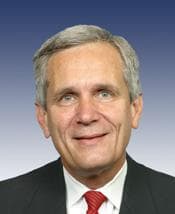
Full profile: /officials/D000399
Source: Congress.gov · FEC
Cosponsors (88)
Members who have signed on to support this bill since introduction. Source: Congress.gov.
- Adriano Espaillat (D-NY-13)Original· 2025-02-04
- Al Green (D-TX-9)Original· 2025-02-04
- Alexandria Ocasio-Cortez (D-NY-14)Original· 2025-02-04
- Andrea Salinas (D-OR-6)Original· 2025-02-04
- André Carson (D-IN-7)Original· 2025-02-04
- April McClain Delaney (D-MD-6)Original· 2025-02-04
- Bennie G. Thompson (D-MS-2)Original· 2025-02-04
- Bonnie Watson Coleman (D-NJ-12)Original· 2025-02-04
- Brad Sherman (D-CA-32)Original· 2025-02-04
- Brendan F. Boyle (D-PA-2)Original· 2025-02-04
- Brian K. Fitzpatrick (R-PA-1)Original· 2025-02-04
- Chellie Pingree (D-ME-1)Original· 2025-02-04
- Cleo Fields (D-LA-6)Original· 2025-02-04
- Daniel S. Goldman (D-NY-10)Original· 2025-02-04
- Danny K. Davis (D-IL-7)Original· 2025-02-04
- Darren Soto (D-FL-9)Original· 2025-02-04
- Debbie Dingell (D-MI-6)Original· 2025-02-04
- Debbie Wasserman Schultz (D-FL-25)Original· 2025-02-04
- Delia C. Ramirez (D-IL-3)Original· 2025-02-04
- Dina Titus (D-NV-1)Original· 2025-02-04
- Donald Norcross (D-NJ-1)Original· 2025-02-04
- Donald S. Beyer, Jr. (D-VA-8)Original· 2025-02-04
- Eleanor Holmes Norton (D-DC)Original· 2025-02-04
- Emanuel Cleaver (D-MO-5)Original· 2025-02-04
- Emilia Strong Sykes (D-OH-13)Original· 2025-02-04
- Frederica S. Wilson (D-FL-24)Original· 2025-02-04
- Grace Meng (D-NY-6)Original· 2025-02-04
- Greg Casar (D-TX-35)Original· 2025-02-04
- Gwen Moore (D-WI-4)Original· 2025-02-04
- Henry C. "Hank" Johnson, Jr. (D-GA-4)Original· 2025-02-04
- Jahana Hayes (D-CT-5)Original· 2025-02-04
- Jamie Raskin (D-MD-8)Original· 2025-02-04
- Janice D. Schakowsky (D-IL-9)Original· 2025-02-04
- Jared F. Golden (D-ME-2)Original· 2025-02-04
- Jasmine Crockett (D-TX-30)Original· 2025-02-04
- Jason Crow (D-CO-6)Original· 2025-02-04
- Jesús G. "Chuy" García (D-IL-4)Original· 2025-02-04
- Jimmy Panetta (D-CA-19)Original· 2025-02-04
- Joaquin Castro (D-TX-20)Original· 2025-02-04
- John Garamendi (D-CA-8)Original· 2025-02-04
- Josh Gottheimer (D-NJ-5)Original· 2025-02-04
- Judy Chu (D-CA-28)Original· 2025-02-04
- Julia Brownley (D-CA-26)Original· 2025-02-04
- Kathy Castor (D-FL-14)Original· 2025-02-04
- Linda T. Sánchez (D-CA-38)Original· 2025-02-04
- Lizzie Fletcher (D-TX-7)Original· 2025-02-04
- Lori Trahan (D-MA-3)Original· 2025-02-04
- Lucy McBath (D-GA-6)Original· 2025-02-04
- Marc A. Veasey (D-TX-33)Original· 2025-02-04
- Mark Takano (D-CA-39)Original· 2025-02-04
- Mary Gay Scanlon (D-PA-5)Original· 2025-02-04
- Maxine Waters (D-CA-43)Original· 2025-02-04
- Nanette Diaz Barragán (D-CA-44)Original· 2025-02-04
- Nikema Williams (D-GA-5)Original· 2025-02-04
- Nydia M. Velázquez (D-NY-7)Original· 2025-02-04
- Paul Tonko (D-NY-20)Original· 2025-02-04
- Pramila Jayapal (D-WA-7)Original· 2025-02-04
- Ro Khanna (D-CA-17)Original· 2025-02-04
- Rosa L. DeLauro (D-CT-3)Original· 2025-02-04
- Sanford D. Bishop, Jr. (D-GA-2)Original· 2025-02-04
- Seth Magaziner (D-RI-2)Original· 2025-02-04
- Stephen F. Lynch (D-MA-8)Original· 2025-02-04
- Steve Cohen (D-TN-9)Original· 2025-02-04
- Summer L. Lee (D-PA-12)Original· 2025-02-04
- Suzanne Bonamici (D-OR-1)Original· 2025-02-04
- Sylvia R. Garcia (D-TX-29)Original· 2025-02-04
- Teresa Leger Fernandez (D-NM-3)Original· 2025-02-04
- Val T. Hoyle (D-OR-4)Original· 2025-02-04
- Veronica Escobar (D-TX-16)Original· 2025-02-04
- Yassamin Ansari (D-AZ-3)Original· 2025-02-04
- Jerrold Nadler (D-NY-12)· 2025-03-06
- Sharice Davids (D-KS-3)· 2025-03-24
- Julie Johnson (D-TX-32)· 2025-03-25
- Dwight Evans (D-PA-3)· 2025-04-28
- Ayanna Pressley (D-MA-7)· 2025-07-10
- Josh Riley (D-NY-19)· 2025-09-30
- Lateefah Simon (D-CA-12)· 2025-10-31
- Maxine Dexter (D-OR-3)· 2025-10-31
- Mark Pocan (D-WI-2)· 2026-02-02
- Adelita S. Grijalva (D-AZ-7)· 2026-02-03
- Jonathan L. Jackson (D-IL-1)· 2026-04-09
Latest Action
The most recent step in the bill's legislative path. Committee Activity below shows referrals and reports; the full action-by-action history including floor proceedings lives at Congress.gov →
Referred to the Committee on Ways and Means, and in addition to the Committee on Energy and Commerce, for a period to be subsequently determined by the Speaker, in each case for consideration of such provisions as fall within the jurisdiction of the committee concerned.
2025-02-04
Source: Congress.gov
Committee Activity
Currently in
- House Committee on Energy and CommerceReferred To · 2025-02-04
- House Committee on Ways and MeansReferred To · 2025-02-04
Previously
- Ways and Means CommitteeReferred To · 2025-02-04
- Energy and Commerce CommitteeReferred To · 2025-02-04
Plain-English Summary
Stop the Wait Act of 2025 This bill phases out the initial waiting period for Social Security Disability Insurance (SSDI) benefits and eliminates the waiting period for certain disabled individuals to become eligible for Medicare. Under current law, individuals generally must wait five months after the onset of disability to begin receiving SSDI benefits. The bill would gradually reduce this waiting period before eliminating it entirely in the year 2030. Further, the bill would eliminate the 24-month waiting period for certain disabled workers and other individuals to become eligible for Medicare. Under current law, individuals under the age of 65 may generally enroll in Medicare after they have been eligible for SSDI or Social Security child’s, widow’s, or widower’s benefits by reason of disability for 24 months. The bill would eliminate this waiting period for individuals for whom the annual cost of certain medical insurance would exceed a specified percentage of their household income (i.e., those who cannot afford minimum essential coverage). Medicare eligibility for these individuals must be available retroactively to the first month that an individual qualified for SSDI or Social Security child’s, widow’s, or widower’s benefits by reason of disability.
Plain-English rewrite of the Congressional Research Service summary published on Congress.gov. Cached and reviewed.
Subjects
Related legislation
Bills by the same sponsor or covering overlapping subjects.
- HR10548To amend the African Growth and Opportunity Act to exclude from eligibility each sub-Saharan African country that does not effectively enforce its environmental laws and fulfill its international environmental obligations.Referred to Committee · 2026-09-24
- HR10258PROOF ActReferred to Committee · 2026-09-03
- HRES1470Expressing support for the designation of July 2026 as "Plastic Pollution Action Month".Referred to Committee · 2026-08-03
- HR9544Save MEDICARE Act of 2026Referred to Committee · 2026-07-17