Workforce for AI Trust Act
Sponsor
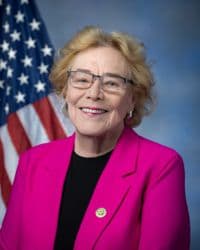
- Progressive Groups$78k
Full profile: /officials/L000397
Source: Congress.gov · FEC
Cosponsors (2)
Members who have signed on to support this bill since introduction. Source: Congress.gov.
Latest Action
The most recent step in the bill's legislative path. Committee Activity below shows referrals and reports; the full action-by-action history including floor proceedings lives at Congress.gov →
Ordered to be Reported in the Nature of a Substitute (Amended) by the Yeas and Nays: 35 - 0.
2026-06-25
Source: Congress.gov
Committee Activity
Currently in
- House Committee on Science, Space, and TechnologyMarkup By · 2026-06-25
Previously
- House Committee on Science, Space, and TechnologyReferred To · 2026-06-18
Plain-English Summary
Workforce for AI Trust Act This bill provides for various workforce development and research programs related to artificial intelligence (AI). For example, the bill authorizes the National Institute of Standards and Technology (NIST) to support education and workforce development activities to expand careers in the AI workforce. Further, the bill requires NIST to develop a common system for describing and classifying AI-related tasks, knowledge, and skills that can be used to develop job descriptions or competency areas (an AI workforce framework ). NIST must develop guidelines for using the framework and take other steps to support external use (e.g., through outreach and dissemination to AI education programs). Separately, the National Science Foundation (NSF) may make awards through eligible institutions of higher education to support graduate and postdoctoral research fellowships across disciplines (including in social science and humanities) related to trustworthy AI. NSF may also make awards to support institutional workshops to advance the development and training of trustworthy AI systems. NSF must encourage the use of AI to accelerate work across NSF-supported fields, including by supporting (1) training for undergraduate and graduate students and postdoctoral researchers, (2) workshops on the application of trustworthy AI to new uses, and (3) supplements to existing research awards for applying AI to ongoing research. Further, NSF must generally ensure that merit review panels convened to evaluate AI-related proposals incorporate perspectives from diverse research disciplines (e.g., social science, ethics, and linguistics).
Plain-English rewrite of the Congressional Research Service summary published on Congress.gov. Cached and reviewed.
Subjects
Full Bill Text
Verbatim text published on Congress.gov via GovInfo. Use Cmd+F / Ctrl+F to search within this excerpt.
[Congressional Bills 119th Congress] [From the U.S. Government Publishing Office] [H.R. 9334 Introduced in House (IH)] <DOC> 119th CONGRESS 2d Session H. R. 9334 To amend the National Artificial Intelligence Initiative Act of 2020 to facilitate the growth of multidisciplinary teams that can advance the development and training of safe and trustworthy artificial intelligence systems, and for other purposes. _______________________________________________________________________ IN THE HOUSE OF REPRESENTATIVES June 18, 2026 Ms. Lofgren (for herself and Mr. Lucas) introduced the following bill; which was referred to the Committee on Science, Space, and Technology _______________________________________________________________________ A BILL To amend the National Artificial Intelligence Initiative Act of 2020 to facilitate the growth of multidisciplinary teams that can advance the development and training of safe and trustworthy artificial intelligence systems, and for other purposes. Be it enacted by the Senate and House of Representatives of the United States of America in Congress assembled, SECTION 1. SHORT TITLE. This Act may be cited as the ``Workforce for AI Trust Act''. SEC. 2. NSF ARTIFICIAL INTELLIGENCE RESEARCH AND EDUCATION; NIST ARTIFICIAL INTELLIGENCE GOVERNANCE WORKFORCE. (a) Definition.--Section 5002 of the National Artificial Intelligence Initiative Act of 2020 (15 U.S.C. 9401; enacted as part of title LIV of division E of the William M. (Mac) Thornberry National Defense Authorization Act for Fiscal Year 2021 (Public Law 116-283)) is amended by adding at the end the following new paragraph: ``(12) National laboratory.--The term `National Laboratory' has the meaning given such term in section 2 of the Energy Policy Act of 2005 (42 U.S.C. 15801).''. (b) Fellowships.--Subsection (e) of section 5401 of the National Artificial Intelligence Initiative Act of 2020 (15 U.S.C. 9451) is amended-- (1) in paragraph (2)-- (A) in the heading, by striking ``faculty''; and (B) by adding at the end the following new subparagraph: ``(D) Interdisciplinary artificial intelligence fellowships.-- ``(i) In general.--The Director of the National Science Foundation may support graduate and postdoctoral research fellowships for students and postdoctoral researchers from across disciplines, including social science disciplines and the humanities, by making awards through eligible institutions of higher education for research and related activities related to the trustworthy design, development, training, deployment, evaluation, and understanding of artificial intelligence. ``(ii) Use of awards.--An institution of higher education that receives an award under clause (i) to support graduate and postdoctoral research fellowships for students and postdoctoral researchers described in such clause shall use such award for any of the following, as the case may be: ``(I) For graduate fellowships, tuition, education-related fees, and stipends for up to three academic years. ``(II) For postdoctoral fellowships, salaries, benefits, relocation costs, related conference travels, and research expenses for up to three years. ``(III) Such other expenses as the Director of the National Science Foundation determines appropriate. ``(iii) Eligibility.--To be eligible to receive an award under clause (i) to support graduate and postdoctoral research fellowships for students and postdoctoral researchers described in such clause, an institution of higher education applying for such an award shall ensure such students and postdoctoral researchers satisfy the following: ``(I) Are citizens, nationals, or lawful permanent residents of the United States. ``(II) Demonstrate a commitment to a career in research into fields and research areas that will contribute to the development and deployment of trustworthy artificial intelligence systems, including in areas of security, safety, reliability, or other aspects of artificial intelligence trustworthiness as established by the National Institute of Standards and Technology pursuant to section 22A of the National Institute of Standards and Technology Act (15 U.S.C. 278h-1). ``(III) For graduate fellowships, are-- ``(aa) full-time students in an eligible program at the institution of higher education, as determined by the…
Show the remaining 1,741 wordsHide the remaining 1,741 words
Director of the National Science Foundation; or ``(bb) students pursuing a degree on a less than full-time basis, but not less than half- time basis, in an eligible program at the institution of higher education, as determined by the Director. ``(IV) For postdoctoral fellowships, have a doctoral degree in an eligible program, as determined by the Director, have received such degree not earlier than five years before the date that such fellowship begins, and have a postdoctoral appointment at a host institution. ``(iv) Application.--An institution of higher education that seeks an award under clause (i) shall submit to the Director of the National Science Foundation an application at such time, in such manner, and containing such information as the Director may require. At a minimum, the Director shall require such an application to include a description of the following: ``(I) How the proposed research and activities are designed to contribute to the development and deployment of trustworthy artificial intelligence systems, including ways to design, train, evaluate, and understand such systems. ``(II) How the students and postdoctoral researchers described in clause (i) who are the subject of such application will be integrated with artificial intelligence researchers at such institution in a role consistent with being a member of an interdisciplinary or transdisciplinary team. ``(III) How such institution plans to disseminate to the broader artificial intelligence systems research community any research findings, learned best practices, or technical solutions that are the outcome of such an award. ``(vi) Administrative agreements.-- Fellowships supported by an award under clause (i) may include temporary artificial intelligence-related positions at Federal or State agencies, National Laboratories, private sector entities, institutions of higher education, the Institute, or other artificial intelligence relevant entities, as determined appropriate by the Director of the National Science Foundation.''; and (2) by adding at the end the following new paragraph: ``(4) Artificial intelligence skills-based training across the national science foundation.--The Director of the National Science Foundation shall seek to encourage the application of artificial intelligence systems to accelerate scientific discovery and technology development across all fields of STEM supported by the Foundation, including by supporting the following: ``(A) Training for undergraduate and graduate students and postdoctoral researchers through existing technical and skills-based training or certification programs, and, as appropriate, by providing for additional experiential learning experiences. ``(B) Development and hosting of intra or inter- institutional workshops on the application of trustworthy artificial intelligence systems to new uses in research, development, demonstration, testing, dissemination, and evaluation. ``(C) Administrative and award supplements to existing research awards to support professional development experiences for graduate students and postdoctoral researchers who receive a substantial portion of the support of such students and researchers in connection with such research awards to learn how to apply artificial intelligence systems to the research of such students and researchers, as determined by the Director.''. (c) Workshops.--Subsection (d) of section 5401 of the National Artificial Intelligence Initiative Act of 2020 (15 U.S.C. 9451) is amended by adding at the end the following new paragraph: ``(3) Workshops.--The Director of the National Science Foundation may make awards for the development and hosting of intra- or inter-institutional workshops to facilitate the growth of multidisciplinary teams that can advance the development and training of trustworthy artificial intelligence systems.''. (d) Peer Review Panels.--Section 5401 of the National Artificial Intelligence Initiative Act of 2020 (15 U.S.C. 9451) is amended-- (1) by redesignating subsection (g) as subsection (h); and (2) by inserting after subsection (f) the following new subsection: ``(g) Peer Review Panels.--As practicable and appropriate, the Director of the National Science Foundation shall ensure any merit review panel convened to evaluate a proposal related to artificial intelligence systems research and related activities integrates perspectives from multiple and diverse research disciplines, including researchers from social science, technology ethics, normative ethics, legal, and linguistic disciplines.''. SEC. 3. NIST ACTIVITIES TO DESCRIBE AND SUPPORT THE ARTIFICIAL INTELLIGENCE WORKFORCE. (a) Authorities to Support Workforce Frameworks.--Subsection (b) of section 2 of the National Institute of Standards and Technology Act (15 U.S.C. 272) is amended-- (1) in paragraph (12), by striking ``and'' after the semicolon; (2) in paragraph (13), by striking the period at the end and inserting ``; and''; and (3) by adding at the end the following new paragraph: ``(14) to provide industry, government, and research, nonprofit, and educational institutions with workforce frameworks for critical and emerging technologies and other science, technology, engineering, and mathematics domains for the purpose of bolstering scientific and technical education, training, and workforce development.''. (b) NIST Activities to Support the Artificial Intelligence Governance Workforce.--Section 22A of the National Institute of Standards and Technology Act (15 U.S.C. 278h-1) is amended-- (1) in subsection (b)-- (A) by redesignating paragraphs (3) through (5) as paragraphs (4) through (6), respectively; and (B) by inserting after paragraph (2) the following new paragraph: ``(3) support education and workforce development activities to expand the artificial intelligence workforce, including careers related to helping organizations govern, map, measure, and manage artificial intelligence related risk, including testing, evaluation, verification, and validation of artificial intelligence;''; and (2) by adding at the end the following new subsection: ``(i) Definition.--In this section, the term `artificial intelligence' has the meaning given such term in section 5002 of the National Artificial Intelligence Initiative Act of 2020 (15 U.S.C. 9401).''. (c) Artificial Intelligence Workforce Framework.-- (1) In general.--Title LIII of the National Artificial Intelligence Initiative Act of 2020 (15 U.S.C. 9441 et seq.) is amended by adding at the end the following new section: ``SEC. 5304. NIST ACTIVITIES TO CATEGORIZE THE ARTIFICIAL INTELLIGENCE WORKFORCE. ``(a) In General.--The Director of the National Institute of Standards and Technology, in consultation with the Secretary of Labor, the Director of the National Science Foundation, the Director of the Office of Personnel Management, and the heads of other Federal departments and agencies, as appropriate, shall develop fundamental reference resources for describing and sharing information regarding work related to artificial intelligence to address workforce gaps. ``(b) Activities.-- ``(1) In general.--In carrying out subsection (a), the Director of the National Institute of Standards and Technology shall carry out the following: ``(A) Develop and periodically update an artificial intelligence workforce framework, which shall include the following components: ``(i) A common, consistent lexicon to describe artificial intelligence employment- related activities by work role, competency area, or other categorization, as appropriate. ``(ii) A description of the tasks, knowledge, or skills that are needed to perform artificial intelligence work. ``(B) Support interoperability and avoid unnecessary duplication of the such components of such framework with components in other workforce frameworks, including the National Initiative for Cybersecurity Education Cybersecurity Workforce Framework or successor framework. ``(C) Develop guidelines regarding how to use the artificial intelligence workforce framework under subparagraph (A) for different aspects of workforce development, education, and training purposes. ``(D) Support external use of such framework, including relating to the following: ``(i) The development of technical guidelines and best practices related to the artificial intelligence workforce, or dissemination of existing related guidelines, as appropriate. ``(ii) Outreach and dissemination to artificial intelligence programs at all education levels of such framework to prepare and improve a skilled artificial intelligence workforce for the public and private sectors. ``(2) Stakeholder input.--In carrying out this subsection, the Director of the National Institute of Standards and Technology shall seek input from the following: ``(A) Federal departments and agencies. ``(B) State, local, Tribal, and territorial governments. ``(C) Industry. ``(D) Institutions of higher education. ``(E) National Laboratories. ``(F) Labor organizations. ``(G) Non-profit organizations. ``(c) Supporting Efforts to Identify and Address Federal Artificial Intelligence Workforce Gaps.--The Director of the National Institute of Standards and Technology shall use the artificial intelligence workforce framework under subsection (b)(1)(A) to provide technical assistance to the following: ``(1) The Director of the National Science Foundation, in developing criteria to designate qualified institutions of higher education for the Federal AI Scholarship-for-Service Program under section 10313(d) of the Research and Development, Competition, and Innovation Act (42 U.S.C. 18993(d)). ``(2) The Director of the Office of Personnel Management, to align the appropriate roles, knowledge, skills, abilities, and tasks specified in such framework with the activities described in section 105 of the AI in Government Act (title I of division U of the Consolidated Appropriations Act, 2021 (Public Law 116-260)). ``(d) Publication.--Not later than one year after the development of the artificial intelligence workforce framework under subsection (b)(1)(A), the Director of the National Institute of Standards and Technology shall submit to the Committee on Science, Space, and Technology of the House of Representatives and the Committee on Commerce, Science, and Transportation of the Senate such framework and make such framework publicly available on the website of the National Institute of Standards and Technology. ``(e) Definitions.--In this section: ``(1) Artificial intelligence system.--The term `artificial intelligence system' means any data system, software, hardware, application, tool, service, or utility that operates in whole or in part using artificial intelligence. ``(2) Labor organization.--The term `labor organization' has the meaning given such term in section 2(5) of the National Labor Relations Act (29 U.S.C. 152(5)), except that such term shall also include the following: ``(A) Any organization composed of labor organizations, such as a labor union federation or a State or municipal labor body. ``(B) Any organization which would be included in the definition for such term under such section, but for the fact that the organization represents individuals-- ``(i) employed by the United States, any wholly owned Government corporation, any Federal Reserve Bank, or any State or political subdivision thereof; ``(ii) employed by persons subject to the Railway Labor Act (45 U.S.C. 151 et seq.); or ``(iii) employed as agricultural laborers. ``(3) Non-profit organization.--The term `non-profit organization' means an organization described in section 501(c)(3) of the Internal Revenue Code of 1986 and exempt from tax under section 501(a) of such Code. ``(4) Technical standard.--The term `technical standard' has the meaning given such term in section 12(d)(5) of the National Technology Transfer and Advancement Act of 1995 (15 U.S.C. 272 note). ``(5) Workforce framework.--The term `workforce framework' means a common taxonomy and lexicon for any given domain that includes the building blocks of tasks, knowledge, or skills that can be structured to form work roles or competency areas.''. (2) Clerical amendments.--The tables of contents in section 2(b) and title LIII of division E of the William M. (Mac) Thornberry National Defense Authorization Act for Fiscal Year 2021 are amended by inserting after the item relating to section 5303 the following new item: ``Sec. 5304. NIST activities to categorize the artificial intelligence workforce.''. <all>
Related legislation
Bills by the same sponsor or covering overlapping subjects.
- HR10574American Leadership in Fusion ActReferred to Committee · 2026-09-24
- HR10575Deterring Extraterritorial Foreign Exploitation of Networks Damaging Intellectual Property (DEFEND IP) Act of 2026Referred to Committee · 2026-09-24
- HR6207Chip EQUIP ActReported by Committee · 2026-09-16
- HR9439Voluntary Consumer AI Disclosure Pilot ActReferred to Committee · 2026-06-24