HR9475Referred to Committee
National Task Force on Caregiving Youth of Veterans Act.
Introduced
In Committee
3
Passed One Chamber4
Passed Both5
Signed into Law119th
Congress
2026-06-25
Introduced
0
Cosponsors
HR
ⓘType
Sponsor
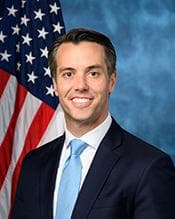
Morgan McGarvey
Democrat · KY · Representative
Votes with party: 97.8% (672 recorded votes)
Top industries funding sponsor:
- Climate & Environment$5k
Full profile: /officials/M001220
Source: Congress.gov · FEC
Cosponsors (0)
Members who have signed on to support this bill since introduction. Source: Congress.gov.
No cosponsors on record. Bills can pass without cosponsors — this often means the sponsor introduced the bill alone, either because it's a messaging bill, a chairman's mark, or simply early in the legislative cycle.
Latest Action
The most recent step in the bill's legislative path. Committee Activity below shows referrals and reports; the full action-by-action history including floor proceedings lives at Congress.gov →
Committee Activity
Currently in
- House Committee on Armed ServicesReferred To · 2026-06-25
- House Committee on Veterans' AffairsReferred To · 2026-06-25
Plain-English Summary
The proposal would create a national task force to study and address the needs of young people who serve as caregivers for family members, particularly those caring for veterans or military-connected families. The task force would likely research the challenges these youth face, such as missed school or limited social opportunities, and develop recommendations to support them. This affects millions of young caregivers across the country who balance school, work, and caring responsibilities for sick, disabled, or elderly relatives.
AI-assisted summary generated from the official bill metadata (title, subjects, actions) sourced from Congress.gov. Cached and reviewed. Always verify against the official text linked below.
Subjects
Armed Forces and National Security
Full Bill Text
Verbatim text published on Congress.gov via GovInfo. Use Cmd+F / Ctrl+F to search within this excerpt.
[Congressional Bills 119th Congress] [From the U.S. Government Publishing Office] [H.R. 9475 Introduced in House (IH)] <DOC> 119th CONGRESS 2d Session H. R. 9475 To establish the National Task Force on Caregiving Youth. _______________________________________________________________________ IN THE HOUSE OF REPRESENTATIVES June 25, 2026 Mr. McGarvey introduced the following bill; which was referred to the Committee on Veterans' Affairs, and in addition to the Committee on Armed Services, for a period to be subsequently determined by the Speaker, in each case for consideration of such provisions as fall within the jurisdiction of the committee concerned _______________________________________________________________________ A BILL To establish the National Task Force on Caregiving Youth. Be it enacted by the Senate and House of Representatives of the United States of America in Congress assembled, SECTION 1. SHORT TITLE. This Act may be cited as the ``National Task Force on Caregiving Youth of Veterans Act.'' SEC. 2. FINDINGS. Congress finds the following: (1) Caregiving youths provide unpaid care to veterans and members of the Armed Forces with disabilities, illnesses, or injuries. (2) The care provided by youths to veterans and members of the Armed Forces often includes physical assistance, emotional support, household management, and advocacy, which may adversely affect their education, long term mental and physical health, and economic opportunities. (3) Research indicates that millions of caregiving youths across the United States who provide care to members of the Armed Forces and veterans face increased risks of academic disruption, social isolation, and long-term health challenges. (4) Caregiving youths who provide care to members of the Armed Forces and veterans contribute significantly to the well- being of members of the Armed Forces and veterans and their families, reducing institutional care needs and strengthening family cohesion. (5) Existing Federal programs do not adequately identify or support caregiving youths who provide care for member of the Armed Forces and veterans, and there is no coordinated strategy across agencies to address their needs. (6) A national task force is necessary to assess the scope of caregiving youths providing care for members of the Armed Forces and veterans, support ongoing research, and develop policy and programmatic solutions to ensure such youths receive appropriate recognition and assistance. SEC. 3. ESTABLISHMENT OF NATIONAL TASK FORCE ON CAREGIVING YOUTH. (a) Establishment.--Not later than 180 days after the date of the enactment of this Act, the Secretary of Veterans Affairs shall establish the National Task Force on Caregiving Youth (referred to in this section as the ``Task Force''). (b) Membership.--The Task Force shall be composed of not fewer than 18 members, as follows: (1) The Department of Veterans Affairs, including a representative of each of the following designated by the Secretary of Veterans Affairs: (A) The Veteran Benefits Administration. (B) The National Cemetery Administration. (C) The Veteran Health Administration. (D) The Caregiver Support Program. (E) The Veterans Experience Office. (2) The Department of Health and Human Services, including a representative of each of the following (or successor office) designated by the Secretary of Health and Human Services: (A) The Centers for Medicare and Medicaid Services. (B) The Administration for Community Living. (C) The Indian Health Service. (D) The Administration for Children and Families. (3) The Department of Education, including a representative of each of the following (or successor office) designated by the Secretary of Education: (A) The Office of Elementary and Secondary Education Program. (B) The Office of Special Education Programs. (C) The Office of Student Support and Accountability. (4) The Department of Defense, including a representative of each of the following (or successor office) designated by the Secretary of Defense: (A) The Department of Defense Education Activity. (B) The…
Show the remaining 824 wordsHide the remaining 824 words
Office of Military Community and Family Policy. (C) The Defense Health Agency. (5) One representative from each of three non-profit organizations that specialize in military family support, caregiving youth initiatives, mental health advocacy, or educational access for caregivers designated by the Secretary of Veterans Affairs. (c) Chairperson.--The Secretary of Veterans Affairs shall designate the Under Secretary of Veterans Affairs for Health or designee to serve as Chairperson of the Task Force. (d) Meetings.-- (1) In general.--The Task Force shall meet at least once each calendar year quarter. (2) Quorum.--Two-thirds of the members of the Task Force shall constitute a quorum. (e) Duties.--The duties of the Task Force include the following: (1) Not later than 180 days after the establishment of the Task Force, to seek to enter into an agreement with a federally funded research and development center to conduct a national study on caregiving youth. Such study, which shall be completed not later than two years after the date of the enactment of this Act, shall include the following: (A) An analysis of the prevalence, demographics, and socio-economic impacts of caregiving youth. (B) Short- and long-term effects on the education, employment, safety, and physical and mental health caregiving youth. (C) Geographic disparities in access of caregiving youth to support services. (D) Barriers to Federal, State, and local assistance programs for caregiving youth. (E) An identification of gaps in services available for caregiving youth. (F) An identification of the benefits of caregiving for veterans, members of the Armed Forces, and caregiving youth. (2) Not later than 30 days after the establishment of the Task Force, to consult directly with stakeholders including-- (A) caregivers and survivors of veterans and members of the Armed Forces; (B) representatives of nonprofit organizations that specialize in military family support, caregiving youth initiatives, mental health advocacy, or educational access for caregivers; and (C) relevant Federal advisory commissions. (3) Not later than 180 days after the establishment of the Task Force, to develop targeted policy recommendations to Congress, and Federal, State, and local agencies on how the Federal departments represented on the Task Force pursuant to subsection (b) can expand program support, resources, and accommodation for caregiving youths who provide care for members of the Armed Forces and veterans, including-- (A) school-based resources and scholarship programs; (B) improved mental health support by integrating trauma-informed care for caregiving youth within frameworks of such departments; (C) creating support programs within each such department; and (D) establishing financial assistance models. (4) To explore the feasibility and advisability of the development of a standardized database to-- (A) track the demographics and services used by caregiving youths who provide care for members of the Armed Forces and veterans; (B) develop joint initiatives between relevant Federal agencies to provide comprehensive support; and (C) align Federal programs with State and local resources to ensure no caregiving youth is overlooked. (5) To formalize nonprofit engagement by establishing a Caregiving Youth Advisory Council that-- (A) is composed of advocates for caregivers; (B) hosts quarterly roundtables to incorporate front-line perspectives; and (C) provides recommendations to relevant Federal agencies regarding the allocation and use of Federal grants to support non-profit organizations by expanding direct service programs for caregiving youth. (6) To conduct a survey of all existing efforts of Federal agencies to support caregiving youth, including best practices and past and ongoing efforts to collect data, research, and other relevant information. (f) Authority To Enter Into Agreements.--The Task Force may enter into agreements with entities, including academic institutions, research entities, and nonprofit organizations, to assist in conducting the national study and developing policy recommendations. (g) Reporting Requirements.-- (1) Initial report.--Not later than one year after the date of the enactment of this Act, the Task Force shall submit to Congress an initial report that includes a description of the research methodology and preliminary findings of the Task Force related to the duties of the Task Force, including stakeholder consultation, national study design, and early policy considerations. (2) Annual reports.--Not later than one year after the date of the submission of the initial report under paragraph (1), and annually thereafter through the termination date specified under subsection (h), the Task Force shall submit to Congress a report that describes the progress of the Task Force on such duties, including updates, policy recommendations, Federal collaboration efforts, nonprofit engagement, and survey results. (h) Termination.--The Task Force shall terminate on the day that is five years after the date of the enactment of this Act. (i) Caregiving Youth Defined.--In this section, the term ``caregiving youth'' means an individual under the age of 26-- (1) who provides unpaid care, including physical assistance, emotional support, household management, medication oversight, or advocacy, to a veteran or member of the Armed Forces with a disability, chronic illness, or injury; and (2) without regard to whether the individual or the parent of the individual qualifies for the Program of Comprehensive Assistance for Family Caregivers of the Department of Veterans Affairs. <all>
Related legislation
Bills by the same sponsor or covering overlapping subjects.
- HR9287Child Safety and Well-Being Act of 2026Referred to Committee · 2026-06-11
- HR9196Helen Keller Education ActReferred to Committee · 2026-06-08
- HR9195Alice Cogswell and Anne Sullivan Macy ActReferred to Committee · 2026-06-08
- HR9031Young Adult Tax Credit ActReferred to Committee · 2026-05-26