K–9 Hero Act of 2026
Sponsor
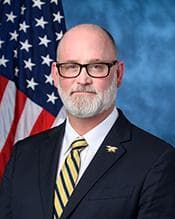
Full profile: /officials/V000135
Source: Congress.gov · FEC
Cosponsors (0)
Members who have signed on to support this bill since introduction. Source: Congress.gov.
No cosponsors on record. Bills can pass without cosponsors — this often means the sponsor introduced the bill alone, either because it's a messaging bill, a chairman's mark, or simply early in the legislative cycle.
Latest Action
The most recent step in the bill's legislative path. Committee Activity below shows referrals and reports; the full action-by-action history including floor proceedings lives at Congress.gov →
Committee Activity
Currently in
- House Committee on Oversight and Government ReformReferred To · 2026-07-14
Plain-English Summary
The federal government would create a grant program to help pay for veterinary care costs for retired dogs that previously worked for federal agencies, such as military or law enforcement dogs. This would assist the owners or caretakers of these animals in covering medical expenses as the dogs age after their service ends. The program aims to support people caring for these working dogs during their retirement years.
AI-assisted summary generated from the official bill metadata (title, subjects, actions) sourced from Congress.gov. Cached and reviewed. Always verify against the official text linked below.
Subjects
Full Bill Text
Verbatim text published on Congress.gov via GovInfo. Use Cmd+F / Ctrl+F to search within this excerpt.
[Congressional Bills 119th Congress] [From the U.S. Government Publishing Office] [H.R. 9664 Introduced in House (IH)] <DOC> 119th CONGRESS 2d Session H. R. 9664 To require the establishment of a grant program to assist with certain veterinary expenses of retired Federal working dogs, and for other purposes. _______________________________________________________________________ IN THE HOUSE OF REPRESENTATIVES July 14, 2026 Mr. Van Orden introduced the following bill; which was referred to the Committee on Oversight and Government Reform _______________________________________________________________________ A BILL To require the establishment of a grant program to assist with certain veterinary expenses of retired Federal working dogs, and for other purposes. Be it enacted by the Senate and House of Representatives of the United States of America in Congress assembled, SECTION 1. SHORT TITLE. This Act may be cited as the ``K-9 Hero Act of 2026''. SEC. 2. FINDINGS. Congress finds the following: (1) In 2022, the Government Accountability Office report titled ``Working Dogs: Federal Agencies Need to Better Address Health and Welfare'' (GAO-23-104489) included a finding that, as of 2022, approximately 5,100 working dogs were managed pursuant to 40 Federal programs, including as follows: (A) 2,942 for the Department of Homeland Security, including-- (i) 1,097 for the Transportation Security Administration, carrying out duties relating to explosives detection; (ii) 863 for the United States Border Patrol of United States Customs and Border Protection, carrying out duties relating to human detection; (iii) 498 for the Office of Field Operations of United States Customs and Border Protection, carrying out duties relating to human detection; (iv) 151 for the Office of Training and Development of United States Customs and Border Protection, carrying out duties relating to human detection; (v) 130 for the elements of United States Customs and Border Protection involved in agriculture activities, carrying out duties relating to disease surveillance; (vi) 111 for the United States Secret Service; (vii) 70 for the Federal Protective Service, carrying out duties relating to explosives detection; (viii) 18 for the United States Coast Guard, carrying out duties relating to explosives detection; and (ix) 4 for the Federal Emergency Management Agency. (B) 564 for the Air Force. (C) 469 for the Army. (D) 319 for the Navy. (E) 189 for the Marine Corps. (F) 140 for the United States Special Operations Command. (G) 32 for the National Security Agency. (H) 24 for the Pentagon Force Protection Agency. (I) 19 for the National Geospatial-Intelligence Agency. (J) 9 for the National Guard Bureau. (K) 4 for the Defense Intelligence Agency. (2) A report of the Government Accountability Office titled ``Medical Conditions and Care for End-of-Service Military Working Dogs'' (GAO-17-358), issued in 2017, included a finding that the average cost of care for a retired military working dog is an average of $1,182 per fiscal year, excluding the cost for specialty medical expenses required for such dogs, such as extensive surgeries from service-related injuries, medical supplements vital for health, and treatments for other illnesses accumulated through service. (3) Owners of retired Federal working dogs are therefore required to rely on nonprofit organizations to assist in paying for such medical expenses. (4) Nonprofit organizations secure funds for such payments to owners via fundraising and donors, but do not always receive the necessary amount of funds to assist owners in covering such medical expenses. (5) Awarding Federal grants to such nonprofits for such payments to owners would ensure the coverage of such necessary amounts. SEC. 3. GRANT PROGRAM FOR CERTAIN MEDICAL EXPENSES OF RETIRED FEDERAL WORKING DOGS. (a) Grant Program.--Not later than October 1, 2026, the Secretary of Defense and the Secretary of Homeland Security shall jointly carry out a program under which…
Show the remaining 839 wordsHide the remaining 839 words
the Secretaries, in coordination with the heads of other relevant Federal departments and agencies, may award grants to eligible nonprofit organizations to assist with the covered medical expenses of retired Federal working dogs (in this section referred to as the ``program''). (b) Eligibility.--A nonprofit organization is eligible to receive a grant under the program if the primary activities of the nonprofit organization are to provide care for retired Federal working dogs or financial assistance to the owners of such dogs for the purpose of covering the costs of covered medical expenses. (c) Applications.--To receive a grant under the program, an eligible nonprofit organization shall submit to the Secretary of Defense and the Secretary of Homeland Security an application at such time, in such manner, and containing such information as the Secretaries may require, including information that demonstrates that the nonprofit organization meets the eligibility requirements under such subsection. (d) Limitations on Grant Amounts.-- (1) Total amount limitation.--The total amount of grants awarded under the program to an eligible nonprofit organization may not exceed $1,000,000 per fiscal year. (2) Reduction in grant amounts.--If an eligible nonprofit organization does not expend the full amount of a grant awarded to such organization under the program for a fiscal year, the grant amount awarded for any subsequent fiscal year shall be reduced by an amount equal to such unexpended amount. (e) Use of Grant Amounts.--A grant awarded under the program may only be used for the purpose of covering the costs of covered medical expenses of retired Federal working dogs. (f) Oversight.-- (1) Requirements.--In carrying out the program, the Secretary of Defense and the Secretary of Homeland Security shall jointly-- (A) develop data and statistics relating to health outcomes for retired Federal working dogs, to be used by eligible nonprofit organizations that receive a grant under the program; and (B) establish processes to monitor and document the amount of funding necessary to support a retired Federal working dog with respect to covered medical expenses. (2) Collection of information.--The Secretary of Defense and the Secretary of Homeland Security shall collect such information from eligible nonprofit organizations that receive a grant under the program as the Secretaries determine appropriate to monitor and evaluate the use of grants, including to monitor health outcomes for each retired Federal working dog supported by such a grant over a five-year period following the receipt of such grant. (3) Recipient reports required.--As a condition of receiving a grant under the program, an eligible nonprofit organization shall agree to submit to the Secretary of Defense and the Secretary of Homeland Security, on an annual basis for the duration of the period during which the eligible nonprofit organization uses such grant amounts, a report describing the purposes for which such amounts were used. (g) Reports to Congress.--Not later than October 1, 2027, and on an annual basis thereafter until September 30, 2031, the Secretary of Defense and the Secretary of Homeland Security shall jointly submit to the appropriate congressional committees a report on the implementation of the program. Such report shall include the following: (1) An identification of the number of retired Federal working dogs supported pursuant to a grant awarded under the program. (2) An assessment of the average annual covered expenses for each retired Federal working dog supported pursuant to such a grant, and a description of how the Secretaries used such average to determine grant amounts. (3) A description of the disbursement of grant amounts awarded under the program with respect to categories of retired Federal working dogs and eligible nonprofit organizations. (h) Authorization of Appropriations.--There is authorized to be appropriated to the Secretary to carry out the program $5,000,000 for each of fiscal years 2027 through 2031. (i) Definitions.--In this section: (1) The term ``appropriate congressional committees'' means-- (A) the Committee on Armed Services and the Committee on Homeland Security of the House of Representatives; and (B) the Committee on Armed Services and the Committee on Homeland Security and Governmental Affairs of the Senate. (2) The term ``average annual covered expenses'' means the average amount of covered expenses for a retired Federal working dog during a fiscal year. (3) The term ``covered expense'' means any expense that derives from medical treatment or health care provided to a retired Federal working dog, including-- (A) any expense resulting from the treatment by a veterinarian of an injury, illness, or other health condition, regardless of whether such condition manifested in such dog during the period in which such dog conducted work on behalf of a Federal department or agency; and (B) any expense relating to a medical procedure, diagnostic test, medication, medical supplement, or dietary alternative necessary to preserve and maintain the health of such dog. (4) The term ``eligible nonprofit organization'' means a nonprofit organization that meets the eligibility criteria under subsection (b). (5) The term ``retired Federal working dog'' means any dog previously owned and managed by a Federal department or agency and assigned work on behalf of such department or agency, that is retired from such work. <all>
Related legislation
Bills by the same sponsor or covering overlapping subjects.
- HR10067Ride in Freedom ActReferred to Committee · 2026-08-06
- HR9942House Our Heroes ActReferred to Committee · 2026-07-30
- HR9665VA Police Security Enhancement ActReferred to Committee · 2026-07-22
- HR6904Veterans Readiness and Employment Improvement and Accountability ActReferred to Committee · 2026-05-20