HR9668Referred to Committee
STOP Senior Fraud Act
Introduced
In Committee
3
Passed One Chamber4
Passed Both5
Signed into Law119th
Congress
2026-07-14
Introduced
3
Cosponsors
HR
ⓘType
Sponsor
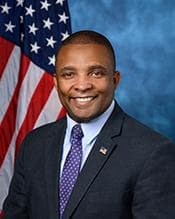
Donald G. Davis
Democrat · NC · Representative
Votes with party: 78.5% (659 recorded votes)
Top industries funding sponsor:
- Progressive Groups$238k
Full profile: /officials/D000230
Source: Congress.gov · FEC
Cosponsors (3)
Members who have signed on to support this bill since introduction. Source: Congress.gov.
Latest Action
The most recent step in the bill's legislative path. Committee Activity below shows referrals and reports; the full action-by-action history including floor proceedings lives at Congress.gov →
Committee Activity
Currently in
- House Committee on Financial ServicesReferred To · 2026-07-14
Plain-English Summary
Banks and other financial institutions would be allowed to pause or block transactions they suspect might be exploiting elderly people or other vulnerable adults, such as those with cognitive impairments. The law would protect these institutions from legal liability when they take such actions in good faith to prevent financial abuse. This gives financial companies a tool to help prevent scams and fraud targeting seniors and vulnerable populations.
AI-assisted summary generated from the official bill metadata (title, subjects, actions) sourced from Congress.gov. Cached and reviewed. Always verify against the official text linked below.
Subjects
Finance and Financial Sector
Full Bill Text
Verbatim text published on Congress.gov via GovInfo. Use Cmd+F / Ctrl+F to search within this excerpt.
[Congressional Bills 119th Congress] [From the U.S. Government Publishing Office] [H.R. 9668 Introduced in House (IH)] <DOC> 119th CONGRESS 2d Session H. R. 9668 To authorize financial institutions to delay or refuse transactions that may involve the financial exploitation of older adults and vulnerable persons, and for other purposes. _______________________________________________________________________ IN THE HOUSE OF REPRESENTATIVES July 14, 2026 Mr. Davis of North Carolina (for himself and Mr. Nunn of Iowa) introduced the following bill; which was referred to the Committee on Financial Services _______________________________________________________________________ A BILL To authorize financial institutions to delay or refuse transactions that may involve the financial exploitation of older adults and vulnerable persons, and for other purposes. Be it enacted by the Senate and House of Representatives of the United States of America in Congress assembled, SECTION 1. SHORT TITLE. This Act may be cited as the ``Safeguarding Transactions to Outpace Predatory Senior Fraud Act'' or the ``STOP Senior Fraud Act''. SEC. 2. TEMPORARY HOLD ON TRANSACTIONS. (a) In General.--A financial institution may refuse or temporarily delay a disbursement or transaction from an account if the financial institution reasonably believes that financial exploitation has occurred, or is being attempted through such transaction or account, and the account is held by or on behalf of-- (1) an older adult; (2) a vulnerable person; or (3) a person who has experienced financial exploitation or fraud previously in connection with the account and has reported it to the financial institution. (b) Duration of Delay.-- (1) In general.--Any delay of a disbursement or transaction conducted under subsection (a) shall last not longer than 55 days after the date the disbursement or transaction is initially requested. (2) Extension.--A financial institution may extend a delay under subsection (a) until up to 85 days after the date the disbursement or transaction is initially requested if the financial institution conducts an internal review that finds that facts and circumstances support the reasonable belief that financial exploitation of the specified adult has occurred, is occurring, has been attempted, or will be attempted. (3) Termination of delay.--A financial institution may terminate a delay imposed on a disbursement or transaction under subsection (a) if-- (A) the financial institution determines that financial exploitation will not take place if the transaction occurs; or (B) a Federal court directs the institution to release the funds. (c) Notice Requirement.--If a financial institution refuses or delays a disbursement or transaction under subsection (a), such financial institution shall as soon as practical and without unreasonable delay after delaying or refusing such disbursement or transaction-- (1) notify all parties authorized to transact on the account, unless the financial institution reasonably believes that these persons have engaged in, are engaging in, have attempted to engage in, or will attempt to engage in the suspected financial exploitation of the eligible adult; (2) notify a trusted contact identified by the owner of the account or a third party the financial institution has determined is reasonably associated with the holder of the account, if available and appropriate and not suspected of the fraud, as determined by the financial institution; and (3) report the suspected financial exploitation to the appropriate State and local protective services, law enforcement, and a Federal regulatory authority within two business days. (d) Employee Training.--Each financial institution shall provide training to each employee of the financial institution that the financial institution has reason to expect may handle transactions with holders of accounts about-- (1) identifying financial exploitation; (2) handling transactions involving older adults and vulnerable persons; and (3) refusing or delaying transactions under this section. (e) Safe Harbor.--A financial institution shall not be liable to…
Show the remaining 351 wordsHide the remaining 351 words
any person-- (1) for refusing or delaying a disbursement or transaction in good faith and in compliance with this section; (2) for deciding not to delay, refuse, or prevent a transaction in good faith and in compliance with this section; or (3) for disclosing information to a trusted contact, Adult Protective Services or appropriate law enforcement in compliance with this section. (f) Rulemaking.--The Director of the Bureau of Consumer Financial Protection may issue such rules as the Director of the Bureau of Consumer Financial Protection determines appropriate to carry out this section. (g) Rule of Construction.--Nothing in this section may be construed to preempt any requirement of any State or local law or regulation that is more protective of older adults, vulnerable persons or persons who have experienced financial exploitation or fraud. (h) Definitions.--In this section: (1) The term ``vulnerable person'' means-- (A) a person with a physical or mental impairment that substantially limits or restricts the person's ability to provide for their own care or protection; or (B) a person who has a developmental disability. (2) The term ``financial exploitation'' means-- (A) the wrongful or unauthorized taking, withholding, appropriation, or use of the money, assets, or other property or the identifying information of a vulnerable person or senior adult by any person; or (B) an act to obtain control, through deception, intimidation, fraud, or undue influence, over the money, assets, or other property of a vulnerable person or senior adult to deprive such person of the ownership, use, benefit, or possession of the property. (3) The term ``financial institution'' has the meaning given the term in section 803 of the Dodd-Frank Wall Street Reform and Consumer Protection Act. (4) The term ``older adult'' means an individual who is 62 years of age or older. (5) The term ``trusted contact'' means a person designated, in writing, by the holder of an account at a financial institution, who may be contacted if there is a concern about activity in account of the person. (i) Effective Date.--This section shall take effect 180 days after the date of the enactment of this section. <all>
Related legislation
Bills by the same sponsor or covering overlapping subjects.
- HR10732No Betting on Your Own Race ActReferred to Committee · 2026-10-05
- HR10085Lifelong Learning ActReferred to Committee · 2026-08-13
- HRES1293Recognizing and celebrating "National Salvation Army Week" on May 11 through May 17, 2026.Referred to Committee · 2026-05-15
- HR7530Assistance for Rural Water Systems Act of 2026Referred to Committee · 2026-03-20