Expanding Opportunities for Recovery Act of 2026
Sponsor
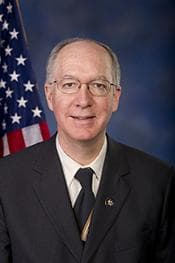
Full profile: /officials/F000454
Source: Congress.gov · FEC
Cosponsors (0)
Members who have signed on to support this bill since introduction. Source: Congress.gov.
No cosponsors on record. Bills can pass without cosponsors — this often means the sponsor introduced the bill alone, either because it's a messaging bill, a chairman's mark, or simply early in the legislative cycle.
Latest Action
The most recent step in the bill's legislative path. Committee Activity below shows referrals and reports; the full action-by-action history including floor proceedings lives at Congress.gov →
Committee Activity
Currently in
- House Committee on Energy and CommerceReferred To · 2026-07-14
Plain-English Summary
The federal government would give money to states to help more people get treatment for opioid addiction and abuse, allowing them to expand clinically appropriate services in their communities. This funding would be distributed through the Center for Substance Abuse Treatment and would help states provide services like medication-assisted treatment, counseling, and other evidence-based approaches to address the opioid crisis. The bill would primarily benefit people struggling with opioid addiction and the states working to expand their treatment capacity.
AI-assisted summary generated from the official bill metadata (title, subjects, actions) sourced from Congress.gov. Cached and reviewed. Always verify against the official text linked below.
Subjects
Full Bill Text
Verbatim text published on Congress.gov via GovInfo. Use Cmd+F / Ctrl+F to search within this excerpt.
119 HR 9675 IH: Expanding Opportunities for Recovery Act of 2026 U.S. House of Representatives 2026-07-14 text/xml EN Pursuant to Title 17 Section 105 of the United States Code, this file is not subject to copyright protection and is in the public domain. I119th CONGRESS2d SessionH. R. 9675IN THE HOUSE OF REPRESENTATIVESJuly 14, 2026Mr. Foster introduced the following bill; which was referred to the Committee on Energy and CommerceA BILLTo authorize the Assistant Secretary for Mental Health and Substance Use, acting through the Director of the Center for Substance Abuse Treatment, to award grants to States to expand access to clinically appropriate services for opioid abuse, dependence, or addiction. 1.Short titleThis Act may be cited as the Expanding Opportunities for Recovery Act of 2026. 2.Opioid addiction treatment (a)In generalThe Assistant Secretary for Mental Health and Substance Use, acting through the Director of the Center for Substance Abuse Treatment (in this section referred to as the Assistant Secretary) shall award grants to States to expand access to clinically appropriate services for opioid abuse, dependence, or addiction. (b)RequirementsAs conditions on the receipt of a grant under this section, a State shall agree to comply with the following: (1)The grant will be administered through the head of the State’s primary agency responsible for programs and activities relating to the treatment of substance abuse. (2)The services through the grant will be evidence-based such as medication-assisted treatment for substance use disorder. (3)The services through the grant will be provided according to a physician or a clinician’s recommendation to ensure that individuals receive the optimal level of substance use disorder treatment for the amount of time that is deemed medically necessary. (4)The services through the grant will be provided exclusively to individuals— (A)who lack health insurance; or (B)whose health insurance— (i)does not cover such services; or (ii)places other barriers on the receipt of such services, such as— (I)limiting coverage of such services to a certain period of time; or (II)imposing nonquantitative treatment limitations that are more stringent than treatment limitations imposed on other medical conditions (such as a requirement to use less expensive services, like outpatient treatment, prior to more expensive, but physician-recommended services, such as inpatient or residential treatment). (5)The grant will not be used to pay or subsidize the cost of more than 60 consecutive days of opioid abuse, dependence, or addiction treatment in the case of any individual. (c)Permissible provision of medicationsIn expanding access to clinically appropriate services for opioid abuse, dependence, or addiction through a grant under this section, a State may provide for the use of medications, in conjunction with other treatment, so long as the medications— (1)are lawfully marketed under the Federal Food, Drug, and Cosmetic Act (21 U.S.C. 301 et seq.); (2)are clinically indicated to address the abuse, dependence, or addiction; and (3)are offered consistent with consumer choice. (d)CoordinationThe Assistant Secretary shall coordinate the program under this section with the program for prevention and treatment of, and provision of recovery support services for, substance abuse under subpart II of part B of title XIX of the Public Health Service Act (42 U.S.C. 300x–21 et seq.). (e)Evaluation; dissemination of information; technical assistance (1)In generalThe Assistant Secretary shall— (A)require States receiving a grant under this section to report appropriate outcome measures associated with use of the grant, including any— (i)decreases in substance use; (ii)changes in retention in care; (iii)connections to the next appropriate level of care; (iv)decreases in involvement with criminal justice activities; and (v)other outcome data as appropriate; (B)require States receiving a grant under this section to report data on individuals’ length of time under clinically appropriate addiction treatment, and…
Show the remaining 91 wordsHide the remaining 91 words
the use of medication-assisted treatment; (C)evaluate the activities supported by grants under this section; (D)submit to the Congress and the Secretary, and make publicly available on the internet site of the Substance Abuse and Mental Health Services Administration, information about the results of such evaluation; and (E)offer technical assistance to States receiving a grant under this section regarding activities funded through the grant. (2)Use of certain fundsOf the funds appropriated to carry out this section for any fiscal year, 5 percent shall be available to carry out activities under this subsection.
Related legislation
Bills by the same sponsor or covering overlapping subjects.
- HR10298Public Service Loan Forgiveness Inclusion Act of 2026Referred to Committee · 2026-09-04
- HR10230Strengthening Oversight for the Financial Sector Act of 2026Referred to Committee · 2026-09-02
- HR9902Federal Naming Standards ActReferred to Committee · 2026-07-23
- HR9803Protecting Immigrants From Legal Exploitation Act of 2026Referred to Committee · 2026-07-21