Medicare-X Choice Act of 2026
Sponsor
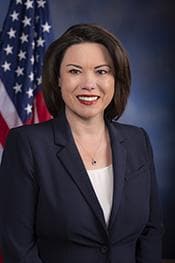
Full profile: /officials/C001119
Source: Congress.gov · FEC
Cosponsors (2)
Members who have signed on to support this bill since introduction. Source: Congress.gov.
Latest Action
The most recent step in the bill's legislative path. Committee Activity below shows referrals and reports; the full action-by-action history including floor proceedings lives at Congress.gov →
Referred to the Committee on Energy and Commerce, and in addition to the Committees on Ways and Means, and the Judiciary, for a period to be subsequently determined by the Speaker, in each case for consideration of such provisions as fall within the jurisdiction of the committee concerned.
2026-07-15
Source: Congress.gov
Committee Activity
Currently in
- House Committee on the JudiciaryReferred To · 2026-07-15
- House Committee on Ways and MeansReferred To · 2026-07-15
- House Committee on Energy and CommerceReferred To · 2026-07-15
Plain-English Summary
The proposal would create a new government-run health insurance option that Americans could choose as an alternative to private insurance plans. This public plan would compete with existing insurance companies and could help reduce healthcare costs for individuals and families who enroll in it. The plan would affect millions of Americans seeking health coverage, insurance companies, and healthcare providers across the country.
AI-assisted summary generated from the official bill metadata (title, subjects, actions) sourced from Congress.gov. Cached and reviewed. Always verify against the official text linked below.
Subjects
Full Bill Text
Verbatim text published on Congress.gov via GovInfo. Use Cmd+F / Ctrl+F to search within this excerpt.
119 HR 9702 IH: Medicare-X Choice Act of 2026 U.S. House of Representatives 2026-07-15 text/xml EN Pursuant to Title 17 Section 105 of the United States Code, this file is not subject to copyright protection and is in the public domain. I119th CONGRESS2d SessionH. R. 9702IN THE HOUSE OF REPRESENTATIVESJuly 15, 2026Ms. Craig (for herself, Ms. Norton, and Mr. Quigley) introduced the following bill; which was referred to the Committee on Energy and Commerce, and in addition to the Committees on Ways and Means, and the Judiciary, for a period to be subsequently determined by the Speaker, in each case for consideration of such provisions as fall within the jurisdiction of the committee concernedA BILLTo establish a public health plan. 1.Short titleThis Act may be cited as the Medicare-X Choice Act of 2026. 2.Establishment and administration of a public health planThe Social Security Act is amended by adding at the end the following new title: XXIIMedicare Exchange Health Plan 2201.Establishment (a)Establishment of plan (1)In generalThe Secretary shall establish a coordinated and low-cost health plan, to be known as the Medicare Exchange health plan (referred to in this section as the health plan) to provide access to quality health care for enrollees. (2)Timeframe (A)Individual market availabilityThe Secretary shall make the health plan available in the individual market, in all rating areas, for plan year 2028 and each subsequent plan year. (B)Small group marketThe Secretary shall make the health plan available in the small group market, in all rating areas, for plan year 2028 and each subsequent plan year. (b)Establishment of funds (1)Plan Reserve Fund (A)In generalThere is established in the Treasury of the United States a Plan Reserve Fund, to be administered by the Secretary of Health and Human Services, for purposes of establishing the Medicare Exchange health plan and administering such plan, consisting of amounts appropriated to such fund during the period of fiscal years 2027 through 2036. (B)AppropriationThere is appropriated $1,000,000,000, out of monies in the Treasury not otherwise obligated, to the Plan Reserve Fund for fiscal year 2027, to remain available until expended. (2)Data and Technology Fund (A)In generalThere is established in the Treasury of the United States a Data and Technology Fund, to be administered by the Secretary of Health and Human Services, acting through the Chief Actuary of the Centers for Medicare & Medicaid Services, for purposes of updating technology and performing data collection under section 2205 in order to establish appropriate premiums for all geographic regions of the United States, consisting of amounts appropriated to such fund during the period of fiscal years 2027 through 2036. (B)AppropriationThere is appropriated $1,000,000,000, out of amounts in the Treasury not otherwise appropriated, to the Data and Technology Fund for fiscal year 2027, to remain available until expended. (c)RulemakingNot later than 180 days after the date of enactment of the Medicare-X Choice Act of 2026, the Secretary shall promulgate such regulations as may be necessary to carry out this title. Rules promulgated under this subsection shall be finalized not later than 270 days after the date of enactment of the Medicare-X Choice Act of 2026. 2202.Availability of plan (a)EligibilityAn individual shall be eligible to enroll in the health plan if such individual, for the entire period for which enrollment is sought— (1)is a qualified individual within the meaning of section 1312 of the Patient Protection and Affordable Care Act (42 U.S.C. 18032); and (2)is not eligible for benefits under the Medicare program under title XVIII. (b)ExchangesIn accordance with the timeframe under section 2201(a)(2), the health plan shall be made available through the American Health Benefit Exchanges described in sections…
Show the remaining 3,029 wordsHide the remaining 3,029 words
1311 and 1321 of the Patient Protection and Affordable Care Act (42 U.S.C. 18031, 18041), including the Small Business Health Options Program Exchange. 2203.Plan requirements (a)General requirementsThe health plan shall comply with all requirements, as applicable, of subtitle D of title I of the Patient Protection and Affordable Care Act and title XXVII of the Public Health Service Act applicable to qualified health plans, and such health plan shall be a qualified health plan, including for purposes of the Internal Revenue Code of 1986. (b)Levels of coverageThe Secretary— (1)shall make available a silver level and gold level version of the plan, in accordance with section 1301(a)(1)(C)(ii) of the Patient Protection and Affordable Care Act; and (2)may make available no more than 2 versions of the plan for each of the 4 levels of coverage described in subparagraphs (A) through (D) of section 1302(d)(1) of the Patient Protection and Affordable Care Act. (c)Primary care servicesThe health plan shall provide coverage for primary care services, and shall not impose any cost-sharing requirements for such services. 2204.Administrative contracting (a)In generalThe Secretary may enter into contracts for the purpose of performing administrative functions (including functions described in subsection (a)(4) of section 1874A) with respect to the health plan in the same manner as the Secretary may enter into contracts under subsection (a)(1) of such section. The Secretary shall have the same authority with respect to the public health insurance option as the Secretary has under such subsection (a)(1) and subsection (b) of section 1874A with respect to title XVIII. (b)Transfer of insurance riskAny contract under subsection (a) shall not involve the transfer of insurance risk from the Secretary to the entity entering into such contract with the Secretary, except in the case of an alternative payment model under section 2209(h). 2205.Data collectionSubject to all applicable privacy requirements, including the requirements under the regulations promulgated pursuant to section 264(c) of the Health Insurance Portability and Accountability Act of 1996 (42 U.S.C. 1320d–2 note), the Secretary may collect data from State insurance commissioners and other relevant entities to establish rates for premiums and for other purposes, including to improve quality, and reduce racial, ethnic, socioeconomic, geographic, gender, sexual identity, and other health disparities, including such disparities experienced by people with disabilities and older adults, with respect to the health plan. 2206.Premiums; risk pool (a)Setting premiums (1)In generalThe Secretary shall establish premiums for the health plan that cover the full actuarial cost of offering such plan, including the administrative costs of offering such plan. Such premiums shall vary geographically and between the small group market and the individual market in accordance with differences in the cost of providing such coverage. If, for any plan year, the amount collected in premiums exceeds the amount required for health care benefits and administrative costs in that plan year, such excess amounts shall remain available to the Secretary to administer the health plan and finance beneficiary costs in subsequent years. (2)Initial plan yearFor plan year 2028, the Secretary shall set premiums for the health plan for each rating area in which the health plan is available for such plan year, taking into consideration the premium rates for plans offered in each such rating area for plan year 2027. (b)Risk poolAfter plan year 2028, all enrollees in the health plan within a State shall be members of a single risk pool, except that the Secretary may establish separate risk pools for the individual market and small group market if the State has not exercised its authority under section 1312(c)(3) of the Patient Protection and Affordable Care Act. 2207.Reimbursement rates (a)Medicare rates (1)In generalExcept as provided in paragraph (2) and subsections (b) and (c) and subject to subsection (d), the Secretary shall reimburse health care providers furnishing items and services under the health plan at rates determined for equivalent items and services under the original Medicare fee-for-service program under parts A and B of title XVIII. (2)Authority to increase payments rates in rural areasIf the Secretary determines appropriate, the Secretary may increase the reimbursements rates described in paragraph (1) by up to 50 percent for items and services furnished in rural areas (as defined in section 1886(d)(2)(D)). (b)Prescription drugsSubject to subsection (d), payment rates for prescription drugs shall be at a rate negotiated by the Secretary. Such negotiations may be in conjunction with negotiations for selected drugs under part E of title XI. (c)Additional items and servicesSubject to subsection (d), the Secretary shall establish reimbursement rates for any items and services provided under the health plan that are not items and services provided under the original Medicare fee-for-service program under parts A and B of title XVIII. (d)Innovative payment methodsThe Secretary may utilize innovative payment methods, including value-based payment arrangements, in making payments for items and services (including prescription drugs) furnished under the health plan. (e)Comprehensive study on covering additional services (1)In generalThe Secretary, acting through the Administrator of the Centers for Medicare & Medicaid Services, shall conduct a comprehensive study, in consultation with stakeholders, and develop recommendations for Congress on the need for, and cost of providing coverage for, additional services under the health plan. (2)ContentThe study shall under paragraph (1) shall include— (A)consideration of providing coverage for long-term services and supports, home and community based services, assistive and enabling technologies, and vision, hearing, and dental services; (B)consideration of providing coverage for other services in addition to the services described in subparagraph (A) that could most benefit the health and financial well-being of beneficiaries, including by reducing health disparities, if included for coverage under the plan; (C)the costs associated with covering additional services described in subparagraphs (A) and (B), for beneficiaries through cost-sharing and premiums, and for the Federal Government; and (D)an assessment of the implications of covering such additional services for the risk pool of the health plan and for the individual and small group markets. (3)Submission of reportNot later than 2 years after the date of enactment of this title, the Secretary shall submit to Congress a report on the findings and recommendations of the study under this subsection and shall make such report publicly available on the website of the Department of Health and Human Services. 2208.Participating providers (a)Requirement To participate in order To be enrolled under MedicareSubject to subsection (d), beginning January 1, 2028, a health care provider may not be enrolled under the Medicare program under section 1866(j) unless the provider is also a participating provider under the health plan. (b)Requirement To participate in order To participate in MedicaidSubject to subsection (d), beginning January 1, 2028, a health care provider may not be a participating provider under a State Medicaid plan under title XIX (or a waiver of such a plan) unless the provider is also a participating provider under the health plan. (c)Additional providersThe Secretary shall establish a process to allow health care providers not described in subsection (a) or (b) to become a participating provider under the health plan. (d)Opt-OutThe Secretary shall establish a process by which a health care provider described in subsection (a) or (b) may opt out of being a participating provider under the health plan, under exceptional circumstances where participation in the health plan threatens the provider’s ability to operate. 2209.Delivery system reform for an enhanced health plan (a)In generalFor plan years beginning with plan year 2028, the Secretary may utilize innovative payment mechanisms and policies to determine payments for items and services under the health plan. The payment mechanisms and policies under this section may include patient-centered medical home and other care management payments, accountable care organizations, accountable communities for health, value-based purchasing, bundling of services, differential payment rates, performance or utilization based payments, telehealth, remote patient monitoring, partial capitation, and direct contracting with providers. (b)Requirements for innovative paymentsThe Secretary shall design and implement the payment mechanisms and policies under this section in a manner that— (1)seeks to— (A)improve health outcomes; (B)reduce health disparities (including racial, ethnic, socioeconomic, geographic, gender, sexual identity, and other disparities, including such disparities experienced by people with disabilities and older adults); (C)improve coordination to provide more efficient and affordable quality care; (D)address geographic variation in the provision of health services; or (E)prevent or manage chronic illness; (2)promotes care that is integrated, patient-centered, quality, and efficient; (3) implements patient feedback mechanisms, including culturally- and disability-competent mechanisms; and (4)uses person-reported experiences to improve service delivery. (c)Encouraging the use of high-Value servicesTo the extent allowed by the benefit standards applied to all health benefits plans participating in the Exchanges (as described in section 2202(b)), the health plan may modify cost-sharing and payment rates to encourage the use of services that promote health and value. (d)Promotion of delivery system reformThe Secretary shall monitor and evaluate the progress of payment and delivery system reforms under this section and shall seek to implement such reforms subject to the following: (1)To the extent that the Secretary finds a payment and delivery system reform successful in improving quality and reducing costs, the Secretary shall implement such reform on as large a geographic scale as practical and economical. (2)The Secretary may delay the implementation of such a reform in geographic areas in which such implementation would place the public health insurance option at a competitive disadvantage. (3)The Secretary may prioritize implementation of such a reform in high-cost geographic areas or otherwise in order to reduce total program costs or to promote high-value care. (4)The Secretary may prioritize implementation of such a reform to reduce racial, ethnic, socioeconomic, geographic, gender, sexual identity, or other health disparities, including such disparities experienced by people with disabilities or older adults. (e)Non-Uniformity permittedNothing in this section shall prevent the Secretary from varying payments based on different payment structure models (such as accountable care organizations and medical homes) under the health plan for different geographic areas. (f)Integration with social services (1)In generalThe Secretary shall establish processes and, when appropriate, collaborate with other agencies to integrate medical care under the health plan with food, housing, transportation, and income assistance if the Secretary determines that such integration is expected to— (A)reduce spending without reducing the quality of patient care; (B)improve the quality of patient care without increasing spending; or (C)reduce racial, ethnic, socioeconomic, geographic, gender, sexual identity, or other health disparities, including any such disparities experienced by people with disabilities or older adults. (2)Authorization of a grant program (A)In generalThe Secretary may establish a grant program to permit broader experimentation with accountable communities for health model. (B)Eligible recipientsThe Secretary may award a grant under this section to— (i)an institution of higher learning (as defined in section 3452(f) of title 38, United States Code); (ii)a local educational agency (as defined in section 8101 of the Elementary and Secondary Education Act of 1965); (iii)a health care agency; (iv)a nonprofit entity that the Secretary determines has a demonstrated history of community engagement; or (v)any other entity, as the Secretary determines appropriate. (C)Use of fundsA recipient of a grant under this section may use the grant to— (i)support community needs assessment; (ii)establish social service partnerships; or (iii)establish interactive data systems across health and social service providers. (D)Authorization of appropriationsThere are authorized to be appropriated such sums as may be necessary to carry out this paragraph. (3)RegulationsIf the Secretary establishes a grant program under this section, the Secretary shall promulgate regulations on— (A)the evaluation of applications for grants under the program; and (B)administration of the program. (g)TelehealthThe Secretary shall ensure the integration of telehealth tools, including technology-enabled collaborative learning and capacity building models, that increase patient access to medical care (including specialty care), particularly in remote or underserved areas, if the Secretary determines that such integration is expected to— (1)reduce spending without reducing the quality of patient care; or (2)improve the quality of patient care without increasing spending. (h)Alternative payment model (1)In generalThe Secretary shall evaluate the possibility of providing incentives, and, if appropriate, apply incentives, for enrollees in the health plan who receive services from providers who are participating in an alternative payment model (as defined in section 1833(z)(3)(C)). (2)Authority to use apms in use under traditional MedicareNothing in this section shall preclude the Secretary from using alternative payment models (as so defined) under this title that are in use under title XVIII. 2210.No effect on Medicare benefits or Medicare Trust FundsNothing in this title shall— (1)affect the benefits available under title XVIII; or (2)impact the Federal Hospital Insurance Trust Fund under section 1817 or the Federal Supplementary Medical Insurance Trust Fund under section 1841 (including the Medicare Prescription Drug Account within such Trust Fund).. 3.Exclusion of providers that place additional restrictions on Medicare exchange health plan patients from Federal health care programsSection 1128(b) of the Social Security Act (42 U.S.C. 1320a–7(b)) is amended by adding at the end the following new paragraph: (18)Placement of restrictions on Medicare Exchange health plan patientsAny individual or entity that places restrictions on the individuals the individual or provider will accept for treatment and fails to either— (A)exempt enrollees in the Medicare Exchange health plan established under title XXII from such restrictions; or (B)apply such restrictions to enrollees in the Medicare Exchange health plan in the same manner and to the same extent the restrictions are applied to all other individuals seeking care.. 4.Reinsurance (a)In generalThe Secretary of Health and Human Services shall establish a mechanism to pool, on a nationwide basis, the costs of the highest-cost patients enrolled in individual health insurance coverage (as defined in section 2791 of the Public Health Service Act (42 U.S.C. 300gg–91)) offered on or off the Exchanges, to the extent such costs are not already pooled pursuant to section 1343 of the Patient Protection and Affordable Care Act (42 U.S.C. 18063), for the purpose of reducing premiums for such individual health insurance coverage. (b)Authorization of appropriationsFor purposes of carrying out paragraph (1), there is authorized to be appropriated $10,000,000,000 for each of fiscal years 2028, 2029, and 2030. 5.Expansion of tax credit (a)In generalSubparagraph (A) of section 36B(c)(1) of the Internal Revenue Code of 1986 is amended by striking but does not exceed 400 percent. (b)Applicable percentagesSection 36B(b)(3)(A) of the Internal Revenue Code of 1986 is amended to read as follows: (A)Applicable percentageThe applicable percentage for any taxable year shall be the percentage such that the applicable percentage for any taxpayer whose household income is within an income tier specified in the following table shall increase, on a sliding scale in a linear manner, from the initial premium percentage to the final premium percentage specified in such table for such income tier: In the case of household income (expressed as a percent of poverty line) within the following income tier:The initial premium percentage is—The final premium percentage is— Up to 150 percent00 150 percent up to 200 percent02.0 200 percent up to 250 percent2.04.0 250 percent up to 300 percent4.06.0 300 percent up to 400 percent6.08.5 400 percent and up8.58.5.. (c)Limitation on recaptureClause (i) of section 36B(f)(2)(B) of the Internal Revenue Code of 1986 is amended— (1)by striking In the case of a taxpayer and all that follows through the amount of the increase and inserting The amount of the increase; (2)by striking the period at the end of the last row of the table; and (3)by adding at the end of the table the following new row: 400 percent and up$5,000.. (d)Fixing the family glitch (1)In generalClause (i) of section 36B(c)(2)(C) of the Internal Revenue Code of 1986 is amended to read as follows: (i)Coverage must be affordable (I)EmployeesAn employee shall not be treated as eligible for minimum essential coverage if such coverage consists of an eligible employer-sponsored plan (as defined in section 5000A(f)(2)) and the employee’s required contribution (within the meaning of section 5000A(e)(1)(B)) with respect to the plan exceeds 9.5 percent of the employee’s household income. (II)Family membersAn individual who is eligible to enroll in an eligible employer-sponsored plan (as defined in section 5000A(f)(2)) by reason of a relationship the individual bears to the employee shall not be treated as eligible for minimum essential coverage by reason of such eligibility to enroll if the employee’s required contribution (within the meaning of section 5000A(e)(1)(B), determined by substituting family for self-only) with respect to the plan exceeds 9.5 percent of the employee’s household income.. (2)Conforming amendments (A)Clause (ii) of section 36B(c)(2)(C) of the Internal Revenue Code of 1986 is amended by striking Except as provided in clause (iii), an employee and inserting An individual. (B)Clause (iii) of section 36B(c)(2)(C) of such Code is amended by striking the last sentence of clause (i) and inserting clause (i)(II). (C)Clause (iv) of section 36B(c)(2)(C) of such Code is amended by striking the 9.5 percent under clause (i)(II) and inserting the 9.5 percent under clauses (i)(I) and (i)(II). (e)Effective dateThe amendments made by this section shall apply to taxable years beginning after December 31, 2026. 6.Authority to negotiate fair prices for Medicare prescription drugs (a)In generalSection 1860D–11 of the Social Security Act (42 U.S.C. 1395w–111) is amended by striking subsection (i). (b)Effective dateThe amendment made by this section shall take effect on the date of enactment of this Act. 7.Strengthening antitrust enforcement in health care marketsThere are authorized to be appropriated for the purpose of studying health care markets, including anticompetitive practices within those markets, and taking appropriate antitrust enforcement action for each of fiscal years 2027 through 2031, to remain available until expended— (1)$50,000,000 to the Antitrust Division of the Department of Justice; and (2)$100,000,000 to the Federal Trade Commission. 8.ReportsThe Antitrust Division of the Department of Justice and the Federal Trade Commission shall submit to Congress a report— (1)not later than the date that is 1 year after the date of enactment of this Act, detailing the activities on which the Antitrust Division or the Commission spent funds authorized under section 7; and (2)not later than September 30, 2032, that includes— (A)the findings of any study conducted by the Antitrust Division or the Commission on or after the date of enactment of this Act; (B)the activities on which the Antitrust Division or the Commission spent funds authorized under section 7; and (C)the impact of any enforcement action taken on or after the date of enactment of this Act by the Antitrust Division or the Commission on improving consumer access to affordable health care.
Related legislation
Bills by the same sponsor or covering overlapping subjects.
- HR9120To require the Postal Service to implement recommendations from the Inspector General of the United States Postal Service for improving identification and notification of undelivered and partially delivered routes, and for other purposes.Referred to Committee · 2026-06-03
- HRES1306Recognizing "National Public Works Week" and the essential contributions of public works professionals.Referred to Committee · 2026-05-20
- HR8442Patient Refunds for Bad Denials Act of 2026Referred to Committee · 2026-04-22
- HR7206Farm and Family Relief ActReferred to Committee · 2026-01-22