HRES1196Referred to Committee
Recognizing April as Cancer Prevention and Early Detection Month.
Introduced
In Committee
3
Passed One Chamber4
Passed Both5
Signed into Law119th
Congress
2026-04-20
Introduced
14
Cosponsors
HRES
ⓘType
Sponsor
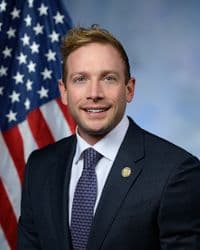
Max L. Miller
Republican · OH · Representative
Votes with party: 96.0% (646 recorded votes)
Full profile: /officials/M001222
Source: Congress.gov · FEC
Cosponsors (14)
Members who have signed on to support this bill since introduction. Source: Congress.gov.
- Aaron Bean (R-FL-4)Original· 2026-04-20
- Brian K. Fitzpatrick (R-PA-1)Original· 2026-04-20
- Carol D. Miller (R-WV-1)Original· 2026-04-20
- Claudia Tenney (R-NY-24)Original· 2026-04-20
- Debbie Dingell (D-MI-6)Original· 2026-04-20
- Debbie Wasserman Schultz (D-FL-25)Original· 2026-04-20
- Jodey C. Arrington (R-TX-19)Original· 2026-04-20
- Maria Elvira Salazar (R-FL-27)Original· 2026-04-20
- Michael Lawler (R-NY-17)Original· 2026-04-20
- Mike Carey (R-OH-15)Original· 2026-04-20
- Seth Moulton (D-MA-6)Original· 2026-04-20
- Terri A. Sewell (D-AL-7)Original· 2026-04-20
- Vern Buchanan (R-FL-16)Original· 2026-04-20
- Melanie A. Stansbury (D-NM-1)· 2026-04-29
Latest Action
The most recent step in the bill's legislative path. Committee Activity below shows referrals and reports; the full action-by-action history including floor proceedings lives at Congress.gov →
Committee Activity
Currently in
- House Committee on Energy and CommerceReferred To · 2026-04-20
Previously
- Energy and Commerce CommitteeReferred To · 2026-04-20
Plain-English Summary
This resolution designates April as a national month to raise awareness about cancer prevention and early detection, encouraging Americans to learn about healthy habits and screening options that can catch cancer earlier when treatment is often more effective. The measure aims to highlight the importance of preventive health practices and encourage people to talk with their doctors about cancer risk factors and screening recommendations. No new laws or funding are created; instead, it's a symbolic declaration meant to focus public attention on cancer awareness during that month.
AI-assisted summary generated from the official bill metadata (title, subjects, actions) sourced from Congress.gov. Cached and reviewed. Always verify against the official text linked below.
Subjects
Health
Full Bill Text
Verbatim text published on Congress.gov via GovInfo. Use Cmd+F / Ctrl+F to search within this excerpt.
[Congressional Bills 119th Congress] [From the U.S. Government Publishing Office] [H. Res. 1196 Introduced in House (IH)] <DOC> 119th CONGRESS 2d Session H. RES. 1196 Recognizing April as Cancer Prevention and Early Detection Month. _______________________________________________________________________ IN THE HOUSE OF REPRESENTATIVES April 20, 2026 Mr. Miller of Ohio (for himself, Ms. Sewell, Mr. Fitzpatrick, Ms. Wasserman Schultz, Mr. Buchanan, Mrs. Dingell, Mr. Arrington, Mr. Moulton, Ms. Tenney, Ms. Salazar, Mrs. Miller of West Virginia, Mr. Lawler, Mr. Bean of Florida, and Mr. Carey) submitted the following resolution; which was referred to the Committee on Energy and Commerce _______________________________________________________________________ RESOLUTION Recognizing April as Cancer Prevention and Early Detection Month. Whereas a renewed national commitment to disease prevention and early detection can play a transformative role in reducing the burden of cancer in the United States and improving long-term health outcomes for all Americans; Whereas, although overall cancer mortality rates across the United States have declined thanks to advances in early detection and treatment, persistent gaps in cancer screening exist and must be addressed to safeguard human life and public health in the Nation; Whereas access to cancer diagnoses at earlier, more treatable stages decreases the need for intensive intervention, abating overall healthcare costs and most importantly safeguarding human life, in tandem with technological innovation and unprecedented public awareness; Whereas, with over 2,000,000 cases of cancer diagnosed in 2025, the United States has an opportunity, through collaboration and dedication, to ensure that the life-saving benefits of modern cancer detection reach every American; Whereas early cancer detection practices in the United States, including routine medical visits and screenings, must be advanced, including by addressing obstacles in access to care stemming from a lack of knowledge of the benefits of screening, cost concerns, and other factors in the Nation's health care system; Whereas research shows that up to 50 percent of cancer cases, and about 50 percent of cancer deaths, are preventable with the knowledge available to Americans today; Whereas preventive actions, including understanding family health history, accessing risk-based screenings, avoiding tobacco and limiting alcohol use, protecting skin, increasing physical activity, maintaining a balanced diet, reducing exposure to cancer-related infections, and receiving recommended vaccinations, can significantly reduce cancer risk and improve early-detection outcomes; Whereas gaps in screening access affect every aspect of a patient's cancer journey, from prevention and early detection to diagnosis and successful treatment, and individuals who are disproportionately impacted or medically underserved often encounter unique challenges in pursuing care, including limited provider access, gaps in coverage, and lack of care; Whereas improving early cancer detection necessitates ensuring access to enhanced monitoring and interventions that can reduce that risk for those with known risk factors; Whereas many individuals today are diagnosed with cancer at later stages, leading to significantly more impactful and consequential outcomes, higher healthcare costs for all, and thousands of additional lives lost to late-stage cancers, all of which could be avoided through timely screening and intervention; Whereas cancer does not discriminate, impacting a range of socio-economic populations and reaching people under 50 years old at rising rates; Whereas Federal investment in early detection programs, especially those that focus on increasing screening rates in hard-to-serve populations, plays a pivotal role in tackling barriers to care that too many individuals still face; Whereas cancer reaches even those with broad public visibility in society, highlighting the need for elevated awareness and action; Whereas Federal agencies play an essential role in shaping the regulatory and administrative landscape for cancer screenings and early detection in the evaluation of technologies, providing streamlined approval of cancer products and access to novel medications and treatments; Whereas dedicated stakeholder…
Show the remaining 138 wordsHide the remaining 138 words
advocates, medical professionals, researchers, and policymakers working together can ensure that early detection of cancer saves lives and reduces long-standing health consequences; and Whereas April has been recognized as Cancer Prevention and Early Detection Month: Now, therefore, be it Resolved, That the House of Representatives-- (1) supports the goals and ideals of Cancer Prevention and Early Detection Month; (2) affirms a renewed national commitment to education on disease prevention and an emphasis on the reduction of chronic illness that will play a transformative role in reducing the burden of cancer and improving long-term health outcomes for all Americans; and (3) commends groundbreaking multi-cancer early detection efforts, paving a path forward to bring lifesaving innovation to Americans and the ability to move closer to a future where cancer is preventable and detectable and the Nation is ultimately cancer-free. <all>
Related legislation
Bills by the same sponsor or covering overlapping subjects.
- HR10786Civic Literacy in Higher Education ActReferred to Committee · 2026-10-09
- HRES1601Recognizing September as "Childhood Cancer Awareness Month".Referred to Committee · 2026-10-01
- HR9500Tax Relief for Fraud Victims ActPassed House · 2026-09-16
- HR10213To name the community-based outpatient clinic of the Department of Veterans Affairs in Medina County, Ohio, as the "Leland John Codding VA Clinic".Referred to Committee · 2026-09-08